
Polistes variabilis
Polistes variabilis
Description
How to identify
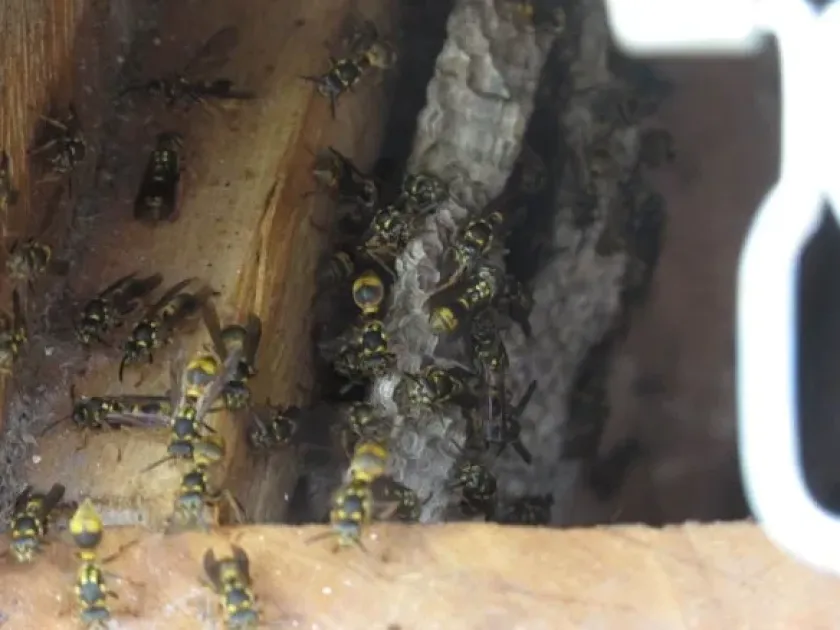
Polistes variabilis is a species of social wasp belonging to the Vespidae family. They are distinguished by their slender bodies, long hanging legs, and their characteristic umbrella-shaped nests.
These wasps are known for their phenotypic plasticity, showing variations in color patterns ranging from yellow to dark brown. Their social structure relies on a division of labor between the queen and workers.
Nests are typically built in sheltered areas, including vegetation, eaves, and agricultural structures. They consist of a single layer of hexagonal paper cells, lacking a protective external envelope.
The colony cycle is seasonal. After a period of winter dormancy, a single queen initiates the nest in spring and manages the first generation of workers to expand the colony.
Social interactions within the colony are complex, involving chemical and behavioral cues to maintain the hierarchy and optimize food gathering and brood care.
What it damages
While Polistes wasps can provide some benefit as predators of caterpillars, they become a significant nuisance when they turn to fruit as a primary carbohydrate source.
They target thin-skinned fruits like grapes, figs, peaches, and berries. By puncturing the skin, they feed on the internal juices, causing severe aesthetic and physical damage.
Feeding sites often become focal points for secondary infections such as fungal pathogens (e.g., grey mold) and bacteria, leading to the rapid decay of surrounding fruits.
Large colonies can cause substantial economic losses in commercial orchards and vineyards by destroying a significant percentage of the harvestable yield.
Field workers are often at risk of stings when conducting manual labor, as the wasps may aggressively defend their nests if disturbed during harvesting operations.
Control measures
Integrated pest management starts with the regular inspection of the farm perimeter to identify and remove nascent wasp nests early in the season.
The placement of bait traps containing fermented sugary substances is effective in reducing the population of foraging workers throughout the active season.
Strict sanitation protocols, including the immediate removal of dropped or overripe fruits, are crucial to prevent attracting wasps into the production area.
For high-value crops like table grapes, physical exclusion using protective mesh bags or screens is the most reliable method to prevent damage without chemical residues.
If direct control is necessary, applying approved insecticides directly to nests at night is recommended to ensure the highest mortality rate of the entire colony.
Taxonomy
- Latin name
- Polistes variabilis
- Order
- Hymenoptera
- Family
- Vespidae
- EPPO code
- POLEVA
Discussion
No discussions yet — be the first.