
Olive paper wasp
Polistes olivaceus
Description
How to identify
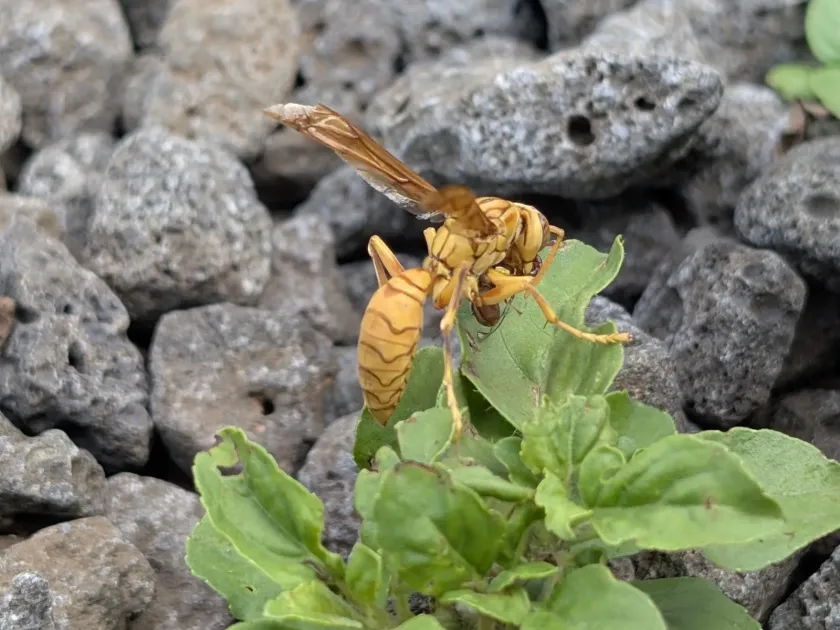
The olive paper wasp (Polistes olivaceus) is a member of the Hymenoptera order and Vespidae family. This social insect builds umbrella-shaped nests from plant fibers mixed with saliva.
Adult wasps are characterized by their olive-yellow coloration with dark markings on the abdomen and thorax. Workers typically measure 15–20 mm in length.
The colony is founded by a single queen that emerges from hibernation. She constructs the initial cells and rears the first generation of workers who later take over nest duties.
These wasps are highly adaptable and often choose human-made structures, dense tree canopies, or garden settings to establish their colonies.
Proper identification relies on observing their social behavior and specific morphological features, distinguishing them from solitary or other paper wasp species.
What it damages
Olive paper wasps are significant pests in viticulture and fruit farming, as they feed on high-sugar crops such as grapes, peaches, figs, and pears.
The wasps damage fruits by piercing the skin, which allows for secondary infection by bacteria, yeast, and various fungal pathogens, leading to rapid rot.
Marketable fruit loss can be extensive, as a single wasp colony can ruin large portions of a crop within a relatively short period during the harvest season.
Beyond crop damage, the wasps can be aggressive when defending their nests, posing a stinging threat to farm workers during harvest operations.
During dry spells, wasps are particularly attracted to juicy fruits as a primary source of water and carbohydrates, increasing the risk of infestation.
When it appears
The colony cycle begins in early spring, when overwintered queens search for suitable nesting sites to initiate the expansion of their population.
The population reaches its peak in mid-to-late summer, coinciding perfectly with the ripening stage of many valuable fruit crops.
During the summer months, the workforce of the colony grows rapidly, necessitating a higher intake of food to support both the larvae and the adults.
In early autumn, the colony shifts its focus to producing reproductive individuals, who subsequently leave the nest to find wintering spots.
Colony activity declines as temperatures drop, and the old nests are typically abandoned once the cold weather sets in for the winter season.
Signs of infestation
The primary sign of infestation is the presence of visible, gray or brownish, open-celled paper nests located in sheltered areas or tree branches.
Visible damage to fruits, characterized by ragged holes or chewed skin on grape bunches and ripening stone fruits, indicates active feeding.
Increased wasp traffic around orchards or vineyards during the day suggests that a nest is established nearby and is actively foraging.
Observation of high numbers of wasps feeding on waste fruit or compost heaps is a clear indicator of a significant local population.
Audible buzzing near fruit trees or trellises during warm days is a strong behavioral signal of their presence in the immediate vicinity.
Control measures
Integrated pest management is essential, focusing on the early detection and elimination of queen-started nests in the spring months.
The use of food-based baits combined with low-toxicity insecticides can effectively reduce the foraging population without causing widespread ecological harm.
- Installing protective mesh bags or netting over grape bunches.
- Maintaining field hygiene by removing fallen or damaged fruit regularly.
- Removing nests mechanically at night, when the wasps are lethargic and less defensive.
- Using sticky or light traps to monitor population levels and capture foraging adults.
Chemical control should be applied with caution to avoid impacting non-target species, particularly pollinators essential for crop production.
Excluding potential nesting sites by sealing gaps in structures and keeping the landscape tidy reduces the suitability of the area for new wasp colonies.
Taxonomy
- Latin name
- Polistes olivaceus
- Order
- Hymenoptera
- Family
- Vespidae
- EPPO code
- POLEOL
Discussion
No discussions yet — be the first.