
Polistes marginalis
Polistes marginalis
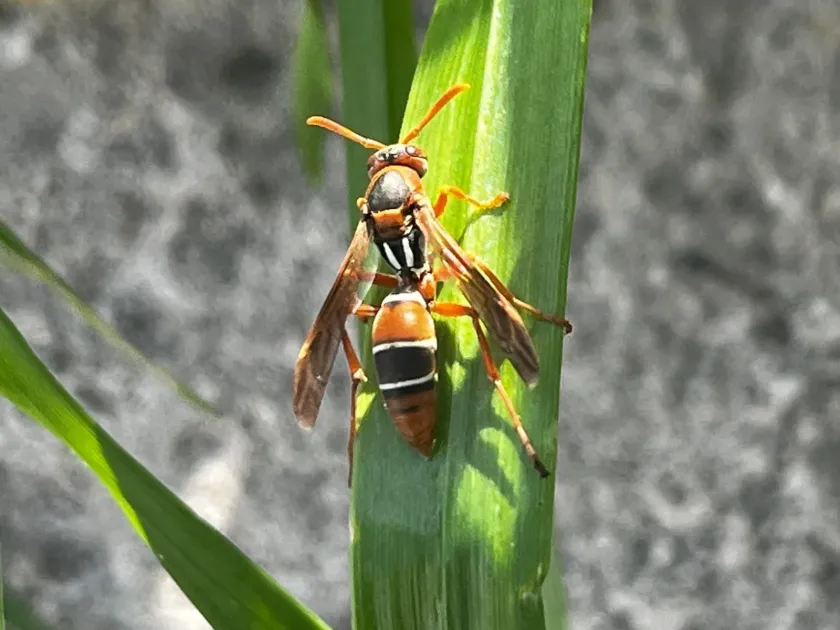
Description
How to identify
Polistes marginalis is a species of paper wasp belonging to the Vespidae family within the order Hymenoptera. They are slender insects known for their distinctively narrow waist (petiole).
The coloration of these wasps is typically a mix of black and yellow patterns. They are social insects that live in colonies, exhibiting a clear caste structure during their development.
The most recognizable feature of this species is their open-comb nest, which is constructed from a paper-like material made of chewed plant fibers mixed with saliva.
Nests are typically attached to plant stems, eaves, or sheltered areas, serving as the central hub for the colony’s activities and brood rearing.
While they are predators of other insects, they also require significant plant-derived materials for nest construction, making them a point of interest for agronomists.
What it damages
The primary damage caused by these wasps is mechanical injury to plants. They strip the surface layers of stems and shoots to collect fiber for nest construction.
This process creates open lesions on young plants, which can disrupt nutrient flow and serve as entry points for various bacterial and fungal pathogens.
Furthermore, these wasps feed on the sugary juices of ripening fruits. By chewing through the skin of fruits, they leave them susceptible to rot and secondary pest attacks.
In high densities, the presence of these wasps can lead to significant economic losses in fruit orchards and berry plantations due to widespread damage to the yield.
Beyond physical damage, the presence of wasp colonies near working areas poses a health risk to laborers, potentially disrupting essential agricultural operations.
When it appears
The colony cycle initiates in the spring when an overwintered queen emerges to establish a new nest and produce the first generation of worker wasps.
The colony grows rapidly throughout the summer months, with the population peaking in terms of activity and resource demand during the mid-to-late season.
This peak period aligns with the maturation of many fruit crops, increasing the likelihood of damage to harvests as workers seek out sweet food sources.
By autumn, the colony begins to decline, and the cycle concludes with the emergence of new queens that seek overwintering sites for the following year.
In warmer climates, these wasps may remain active for longer periods, potentially overlapping with late-season harvests and causing extended damage.
Signs of infestation
The most obvious sign of infestation is the presence of paper-like, open-comb nests on structures, trees, or vegetation throughout the field or garden.
Visible light-colored abrasions or scarred patches on the epidermis of young branches indicate that wasps have been harvesting material for their nests.
Fruits showing irregular holes or localized decay are strong indicators of wasp feeding activity, often attracting other pests to the damaged sites.
Frequent, high-density flight activity in specific areas of the garden during daylight hours suggests the presence of nearby nests or foraging routes.
Deformed or wilting shoots may be observed if the stripping of plant tissue by the wasps has been particularly intensive in certain areas of the plantation.
Control measures
Early identification and removal of nests are the most effective strategies for preventing a population explosion of Polistes marginalis within a site.
Implementing physical barriers, such as fine netting over fruit-bearing branches, provides effective protection for sensitive crops without the use of chemicals.
Maintaining high levels of sanitation, including the prompt removal of fallen or rotting fruit, reduces attractants and discourages wasps from staying in the area.
The use of baited wasp traps can help monitor population levels and capture a significant number of workers, thereby mitigating damage to fruits.
Chemical control should be treated as a last resort, using targeted, localized applications of insecticides only when necessary and in accordance with safety standards.
Taxonomy
- Latin name
- Polistes marginalis
- Order
- Hymenoptera
- Family
- Vespidae
- EPPO code
- POLEMR
Discussion
No discussions yet — be the first.