
Macao paper wasp
Polistes macaensis
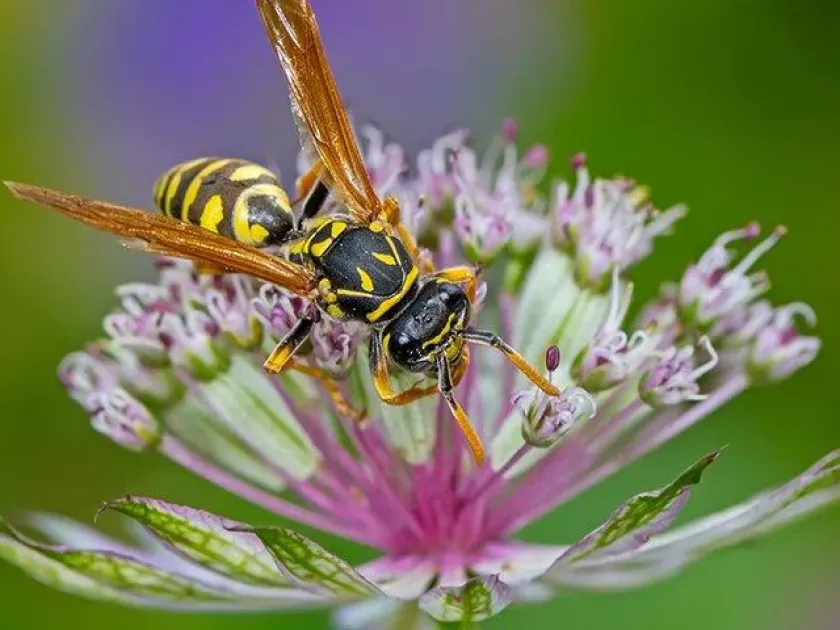
Description
How to identify
The Macao paper wasp is a social insect belonging to the family Vespidae, known for constructing nests from a paper-like material made of wood pulp and saliva.
These wasps are characterized by a slender body with distinct yellowish-brown markings, which provide effective camouflage within their natural environment.
The colony structure is centered around a queen, with workers responsible for nest expansion, foraging, and protecting the larvae from predators.
The nest consists of open, single-tier combs without an outer envelope, which is a structural hallmark of the Polistes genus.
Adult wasps typically reach lengths of 15 to 20 mm, exhibiting the graceful flight and agile behavior common to this specific group of insects.
What it damages
Agricultural damage occurs primarily when adult wasps seek sugary substances, leading them to feed on the flesh of ripening fruits.
Vineyards are particularly susceptible, as wasps puncture grape skins, allowing juice to leak and attracting secondary pests or promoting fungal rot.
Stone fruits and pome fruits, such as peaches and pears, often suffer from deep gouges that render the produce unsellable and promote premature drop.
The feeding activity creates entry points for pathogens and opportunistic insects, which can lead to rapid decomposition of the harvest.
In addition to physical damage, the presence of these wasps can discourage workers from harvesting fruits due to the risk of defensive stinging.
When it appears
The biological cycle commences in early spring when the hibernating queen emerges to establish a new nesting site.
Throughout the summer, the colony grows as the queen produces more workers, significantly increasing the demand for food sources.
The peak period of damage coincides with late summer and early autumn when fruit sugar levels are highest and natural prey availability decreases.
As temperatures decline, the colony enters a phase of producing reproductive individuals, eventually leaving the nest to seek overwintering sites.
Environmental factors, especially rainfall patterns, play a crucial role in regulating the survival rate and total population size of each colony.
Signs of infestation
The most obvious sign of an infestation is the presence of paper nests attached to structural elements like eaves, fences, or garden tree branches.
Visual inspection of the orchard may reveal irregular feeding holes on maturing fruits, often accompanied by signs of fermentation.
Frequent sightings of wasps flying in a direct path often indicate the location of a nearby nest that requires immediate attention.
Large gatherings of wasps on fallen fruit or near liquid refuse are clear indicators that the colony is actively foraging in the area.
Listening for the characteristic humming sound near dense foliage can help identify hidden nests before they grow to a problematic size.
Control measures
Chemical control involving professional-grade wasp sprays is highly effective when targeting the nest directly during the twilight hours.
Trapping techniques using sweet-based attractants can reduce the number of foragers near sensitive crops without the need for broad-spectrum spraying.
Cultural practices focused on garden hygiene are essential to limiting the availability of food and nesting opportunities.
- Regular monitoring of buildings and orchards for early nest detection.
- Sanitation by removing fallen and decaying fruit promptly.
- Physical exclusion techniques like netting for high-value crops.
- Sealing cracks and crevices in structures to deter nest establishment.
Always prioritize personal safety by wearing protective gear when managing or removing nests to prevent severe stings and allergic reactions.
Taxonomy
- Latin name
- Polistes macaensis
- Order
- Hymenoptera
- Family
- Vespidae
- EPPO code
- POLEMC
Discussion
No discussions yet — be the first.