
Jadwiga paper wasp
Polistes jadwigae
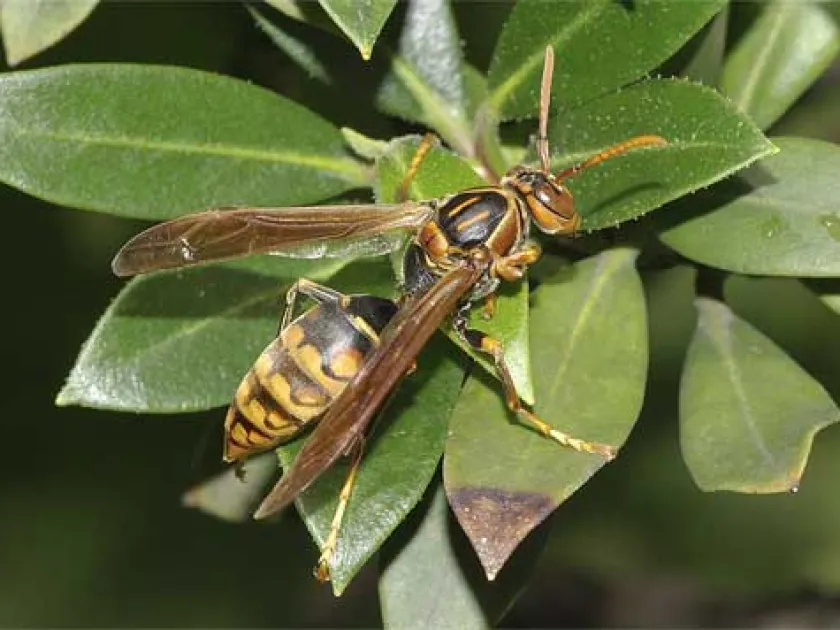
Description
How to identify
The Jadwiga paper wasp (Polistes jadwigae) is a member of the Vespidae family, well-known for constructing nests made from a paper-like material created by chewing plant fibers.
Adults are typically 15–20 mm long, featuring a slender body with distinctive yellow, black, and reddish-brown markings, particularly on the thorax and abdomen.
This social insect species initiates its colony in spring when the queen, having survived the winter, begins building the initial paper cells in a sheltered location.
The life cycle is holometabolous, progressing through egg, larval, pupal, and adult stages. Larvae are raised inside the cells and are fed a diet rich in protein by the worker wasps.
These wasps are highly adaptable and frequently establish colonies near human dwellings, agricultural buildings, and in orchard canopies.
What it damages
While adult wasps consume nectar and other sugar sources, they actively hunt to provide protein for their developing larvae, leading them to damage fruits and berries.
They commonly attack ripening grapes, peaches, apples, and pears, gnawing into the flesh, which causes significant cosmetic and physical damage to the harvest.
Damaged fruits often develop secondary rot caused by fungi and bacteria introduced by the wasps, leading to rapid spoilage of the fruit and potential loss of entire yields.
The presence of wasps creates dangerous working conditions during harvest, as the insects can be protective of their food sources and nests.
Farmers face significant financial losses due to the reduction in marketable produce caused by persistent wasp activity in orchards and vineyards.
Signs of infestation
The presence of paper nests under eaves, sheds, or within dense foliage is the most definitive sign of an active infestation within the garden area.
Evidence of feeding on fruit, specifically irregular holes in grapes or soft-skinned fruits, indicates that wasps are actively foraging in the immediate vicinity.
Increased flight activity around fruit-bearing trees during sunny, warm weather confirms that the colony is large enough to impact the crop significantly.
- Visible gray paper nests in protected areas.
- Clusters of damaged, rotting, or eaten fruits.
- Heavy wasp traffic on ripe berries and orchard fruits.
During hot, dry summers, wasps become more noticeable as they search for both moisture and sugar, making orchard inspections crucial during these periods.
Control measures
Manual removal of nests is most effective during early colony development, ideally conducted at dusk or night when the wasps are largely inactive and inside the nest.
Using baited traps filled with fermenting juice or sugar-based solutions can help capture workers and reduce the overall pressure on ripening fruits.
Bagging individual grape clusters or using fine-mesh netting on trees serves as an effective physical barrier against wasps, preserving the harvest safely.
Sanitation practices, such as clearing fallen fruit and harvesting ripe crops promptly, remove primary food sources, discouraging the wasps from remaining in the area.
Chemical control should be applied with extreme caution and focused exclusively on the nest to avoid contaminating food crops with insecticides.
Taxonomy
- Latin name
- Polistes jadwigae
- Order
- Hymenoptera
- Family
- Vespidae
- EPPO code
- POLEJA
Discussion
No discussions yet — be the first.