
Paper wasp
Polistes gallicus
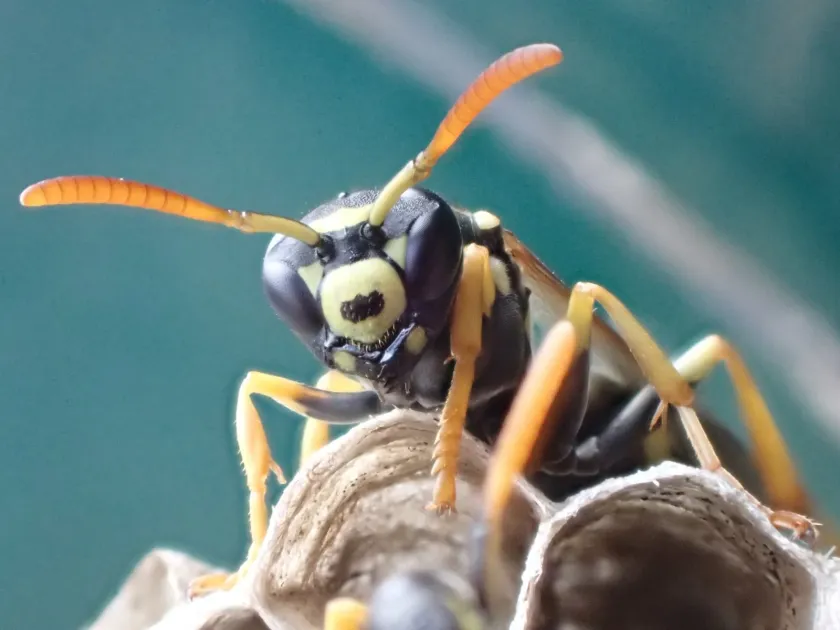
Description
How to identify
The paper wasp (Polistes gallicus) is a member of the Vespidae family within the order Hymenoptera. They are social insects known for building nests from paper-like material produced by mixing wood fibers with saliva.
These wasps are characterized by a slender body with a distinct narrow waist and yellow-black markings. The average length of a mature worker is between 12 and 18 millimeters.
Their nests are easily recognized as open-comb structures without a protective envelope, usually attached to twigs, eaves, or the underside of large leaves.
The lifecycle begins in the spring when an overwintered queen selects a nesting site and begins the process of laying eggs and rearing the first generation of worker wasps.
Colonies grow throughout the season, with activity peaking in late summer when the number of individuals increases and the workers actively seek out food sources for the colony.
What it damages
Paper wasps cause significant economic damage to horticulture by feeding on ripening fruits and berries, including grapes, apples, pears, plums, and apricots.
They chew through the skin of the fruit, consuming the pulp, which destroys the marketability of the produce and leaves it susceptible to secondary infections.
Damaged fruit often becomes a site for fungal growth and rotting, which can spread rapidly through the remaining healthy fruit in the cluster or tree.
Vineyards are particularly vulnerable during the final stages of ripening, as the high sugar content of the grapes makes them an ideal target for foraging wasps.
While paper wasps can sometimes prey on minor garden pests, this beneficial activity is outweighed by the direct destruction they cause to fruit crops during harvest.
When it appears
The seasonal cycle begins in April or May, when the queens emerge from their overwintering sites to establish new colonies and raise their first offspring.
During June and July, the focus of the colony is on expansion and larval development, meaning the workers are less interested in fruit sugar compared to protein sources.
August and September represent the period of highest risk, as the colony reaches its maximum size and foraging habits shift towards carbohydrates, leading to increased wasp pressure on ripening fruits.
By October, the reproductive cycle concludes, the colony begins to decline, and new queens seek protected areas to hibernate, ending the period of activity for the season.
Monitoring for nesting activity should start early in the spring to identify and remove new nests before the population reaches unmanageable levels.
Signs of infestation
The primary sign of infestation is the discovery of the distinctive gray, umbrella-shaped paper nests attached to garden structures, trellis supports, or branches.
Visual inspection of fruits and berries will show small holes or jagged openings where the wasp has chewed through the skin to reach the juice and pulp.
An increase in buzzing activity around orchards and vineyards, especially during warm, sunny days, indicates a high presence of foraging wasps.
The presence of fallen, rotting, or partially eaten fruit beneath the trees is a clear indicator that the wasp population is actively feeding on the crop.
Aggressive defensive behavior from wasps when humans or maintenance equipment approach the nesting site or fruit zone is a strong indicator of an active colony nearby.
Control measures
The most effective method for controlling paper wasps is the physical removal and destruction of nests, which should be performed at dawn or dusk when the wasps are least active.
Setting up bait traps filled with sugary liquids or fermenting fruit juices mixed with low-toxicity insecticides can significantly reduce the number of foraging adults.
Protecting grapes or individual fruit clusters with fine mesh bags provides an excellent barrier, preventing wasps from reaching the fruit without the need for chemical spraying.
Good orchard hygiene, including the prompt removal of fallen and overripe fruit, is crucial to minimize the attractants that draw wasps into the growing area.
In cases where nests are located near high-traffic areas, aerosol insecticides labeled for wasp control can be used, provided that appropriate safety equipment is worn during application.
Taxonomy
- Latin name
- Polistes gallicus
- Order
- Hymenoptera
- Family
- Vespidae
- EPPO code
- POLEGA
Discussion
No discussions yet — be the first.