
Paper wasp
Polistes foederatus
Description
How to identify
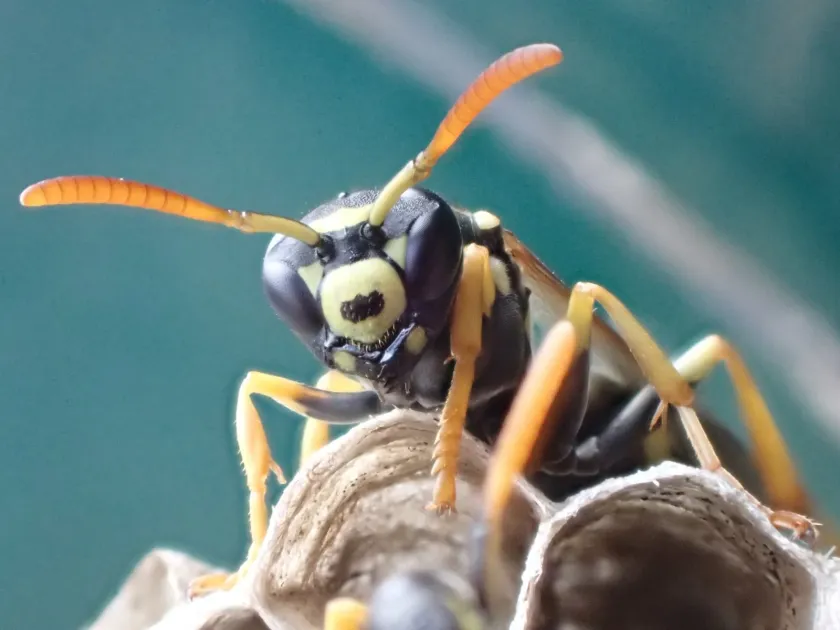
The paper wasp (Polistes foederatus) is a social insect belonging to the family Vespidae, known for its distinct paper-like nests constructed from wood fibers.
These wasps have a slender body, a yellow and black color pattern, and long, trailing hind legs that are visible during flight, distinguishing them from common yellowjackets.
Unlike other wasp species that build enclosed nests, paper wasps create open, umbrella-shaped honeycomb nests usually attached to sheltered areas under eaves or branches.
The colony cycle is initiated by a queen that survives the winter, who then begins to build the nest and raise the first generation of worker wasps in the spring.
Colonies are relatively small compared to other social wasps, but their proximity to human activity and fruit trees makes them significant agricultural pests.
What it damages
Paper wasps cause economic damage by feeding on the juice and pulp of ripening fruits, specifically targeting grapes, peaches, plums, and figs.
Their mandibles are strong enough to penetrate the tough skin of mature fruits, leaving the inner tissue exposed to fermentation and decay.
Once a fruit is punctured, it rapidly becomes susceptible to secondary infections, such as brown rot and various fungal pathogens, which spoil the entire harvest.
The feeding activity not only destroys individual fruits but also creates entry points for other pests, including vinegar flies and beetles, leading to mass infestation.
Because they are social insects, once a colony finds a food source, the entire worker population will continue to forage on the same trees until the crop is destroyed.
When it appears
The season begins in early spring when the queen emerges from hibernation to start the colony, followed by the peak activity of workers from mid-summer.
August and September represent the period of highest risk, as the need for sugar increases during colony expansion and coincides with the harvest of many fruit crops.
As the weather cools in autumn, the wasps become more desperate for carbohydrates, making them persistent and harder to deter from ripening orchards.
Activity usually ceases with the onset of cold nights and frost, which kills off the worker population and forces the new queens to seek hibernation sites.
Monitoring the garden for nests and increased flight activity during the late summer months is crucial for effective prevention of crop losses.
Signs of infestation
The most visible sign of infestation is the presence of small, ragged holes in the skin of grapes and stone fruits, often accompanied by leaking juices.
Increased wasp activity around specific trees or vine rows during the day indicates a nearby colony or a preferred feeding ground for the local wasp population.
The observation of paper-like honeycomb structures hanging from garden structures, sheds, or thick foliage confirms the presence of the species on site.
A noticeable sweet, fermenting smell coming from damaged fruit clusters is a reliable indicator that wasps have been feeding on the produce for some time.
Rapidly rotting fruit, even before it is fully harvested, often suggests that mechanical damage by wasps has allowed pathogens to colonize the crop.
Control measures
The most effective strategy is to locate and remove nests early in the spring, before the worker population becomes large enough to cause widespread damage.
Installing bait traps filled with sugary solutions, fruit juice, or diluted honey can significantly reduce the number of foraging adults around the orchard.
Physical barriers, such as protective mesh bags for grape clusters or fruit, provide a highly effective defense against wasp access to the maturing crop.
Good sanitation is essential; removing fallen, overripe, or damaged fruit prevents the creation of easy food sources that attract wasps to the area.
- Early season nest removal.
- Use of attractant traps.
- Physical bagging of fruit clusters.
- Strict orchard sanitation.
- Encouraging natural predators if possible.
Taxonomy
- Latin name
- Polistes foederatus
- Order
- Hymenoptera
- Family
- Vespidae
- EPPO code
- POLEFO
Discussion
No discussions yet — be the first.