
Red-headed paper wasp
Polistes erythrocephalus
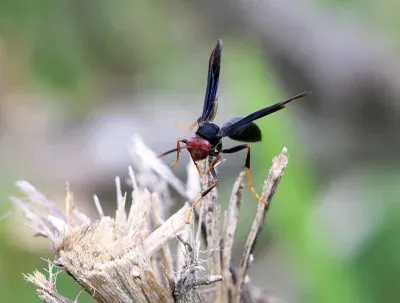
Description
How to identify
The red-headed paper wasp (Polistes erythrocephalus) is a social insect belonging to the family Vespidae. It is characterized by a distinctive reddish-brown color on the head and thorax, which serves as a primary diagnostic feature for identification in the field.
These wasps construct umbrella-shaped nests made of paper-like material, which they produce by masticating wood fibers. The nests are typically attached to substrates, such as tree branches, building eaves, or garden structures, by a single, thin, and durable stalk.
The biological cycle begins in the spring when a single overwintered queen initiates the nest construction and lays the first batch of eggs. As the season progresses, the colony expands, and the number of worker wasps increases significantly by mid-summer.
These wasps are highly active during the day and exhibit strong territorial behavior, particularly when defending their colony. They play a complex role in the ecosystem, but in agricultural settings, they are often considered major pests due to their feeding habits.
The development of the colony culminates in late summer and autumn when reproductive individuals are produced. After the queen's death, the colony gradually declines, although the presence of the wasps during the harvest season remains a primary agricultural concern.
What it damages
Red-headed paper wasps primarily damage high-sugar crops, including grapes, peaches, pears, and figs. They are attracted to the volatile compounds released by ripening fruit, making them particularly destructive during the harvest window.
The wasps damage the crops by feeding on the flesh, piercing the skin with their mandibles. This physical damage ruins the aesthetic quality of the fruit, rendering it unsellable for fresh market consumption and lowering its overall market value.
In addition to direct consumption, the feeding punctures provide entry points for secondary pathogens, such as yeasts, bacteria, and fungi. This often leads to rapid decay and fermentation, which can ruin an entire cluster or adjacent fruits in a short time.
The economic impact is most severe in commercial orchards and vineyards where the timing of the wasp population peak coincides with the maturity of the fruit. In such cases, the damage can reduce the total marketable yield by a significant percentage.
Furthermore, the presence of these wasps poses a serious health and safety risk for farm workers. Because they are defensive, accidental disturbances during manual harvesting often lead to multiple stings, potentially delaying or complicating agricultural operations.
Signs of infestation
The most reliable sign of an infestation is the visual detection of the paper-like nests in the orchard or near storage facilities. Regular inspections of building overhangs, fence posts, and dense foliage are essential for early detection.
Damage to the surface of the fruit is a clear indicator of wasp activity. Typical signs include small, deep cavities or irregular holes in the fruit's skin, often with several wasps actively feeding on the exposed pulp.
Increased aerial activity around fruit trees during sunny days is a common behavioral indicator. On vineyards, the presence of wasps hovering over ripe berries, especially those that have cracked, is a strong sign of a local infestation.
Gardeners and farmers may also observe wasps collecting building materials from wooden structures, such as fences or sheds, which indicates that a new colony is being established in the immediate vicinity.
Auditory signs, such as a localized, constant buzzing, can sometimes reveal the location of a hidden nest. In dense crops, these sounds can help workers pinpoint the source of the wasps before causing an accidental provocation.
Control measures
The most effective management strategy is the early removal of nests in the spring before the worker population reaches its peak. Eliminating the queen-led colony before it expands significantly reduces the pressure on the upcoming crop.
In commercial operations, the use of toxic bait stations can effectively reduce wasp populations without the need for broad-spectrum insecticide sprays. These stations should be placed carefully to target the pests while avoiding impact on beneficial insects.
Mechanical exclusion, such as bagging individual fruits or covering vine clusters with protective mesh, is highly recommended for small to medium-sized orchards. This prevents the wasps from physically accessing the fruit while allowing for normal ripening.
- Perform regular sanitation to remove fallen fruit, which acts as a primary food attractant.
- Prune tree crowns to improve light penetration and remove potential nest attachment sites.
- Utilize selective pheromone or food-based traps placed around the perimeter of the orchard.
When nests are discovered, professional disposal or careful manual removal wearing protective gear is advised. It is crucial to manage the environment surrounding the crops to minimize the presence of nesting sites and attractants.
Taxonomy
- Latin name
- Polistes erythrocephalus
- Order
- Hymenoptera
- Family
- Vespidae
- EPPO code
- POLEER
Discussion
No discussions yet — be the first.