
Paper wasp diabolicus
Polistes diabolicus
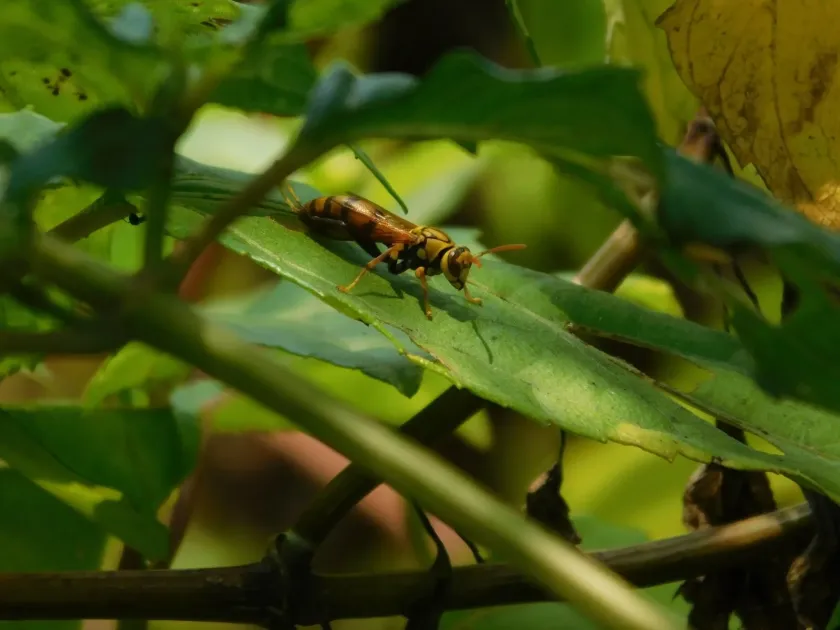
Description
How to identify
The paper wasp Polistes diabolicus belongs to the order Hymenoptera, family Vespidae. These social insects construct nests made of masticated plant fibers, which have a characteristic grey, papery appearance.
The insect features a slender body with a distinctive narrow waist between the thorax and abdomen. Its coloration is typically dark with bright yellow or reddish markings on the thorax and abdomen.
The wings are translucent with a subtle yellowish tint and are folded along the body when at rest. Adult wasps typically measure between 15 and 20 mm, with the queen being noticeably larger than the workers.
The life cycle begins in spring when a queen that has overwintered starts building a nest. She personally tends to the first brood of workers, which subsequently take over nest maintenance and brood care.
Colony development continues throughout the warm season, reaching peak population levels by mid-summer. By autumn, only the fertilized queens seek out sheltered locations for hibernation.
What it damages
The primary damage caused by paper wasps involves feeding on fruits high in sugar and juice. They bore into the skins of grapes, pears, apples, and peaches, rendering the fruit spoiled.
Damaged fruits quickly lose their commercial value and are prone to rapid decay. Feeding sites often serve as entry points for secondary infections like grey mold and various bacterial pathogens.
Besides direct consumption, wasps act as vectors for fungal and bacterial diseases, spreading spores among healthy fruits while foraging on damaged crops.
High levels of wasp activity in orchards and vineyards pose a significant safety risk for workers, as the insects can become aggressive when protecting their nests near harvest sites.
In regions with high populations, Polistes diabolicus can destroy a large percentage of the harvest, necessitating strict management practices during the fruit ripening period.
Signs of infestation
The first indicator of wasp presence is noticeable damage to ripening fruits and berries, appearing as deep, crater-like holes with uneven edges.
The discovery of grey, umbrella-shaped nests without a protective outer covering, built in trees or under structures, confirms the presence of this species.
A constant buzzing sound and increased activity around ripening fruits during the day indicate a high population of foragers.
Seeing significant numbers of wasps near harvest storage areas or drying facilities is a signal that an immediate inspection of the surroundings is necessary.
Identifying and removing active nests early in the season is the most effective way to prevent massive infestations during the peak harvest period.
Control measures
The primary control strategy involves regular monitoring of the property and the timely destruction of nests before the colony reaches a large size.
Utilizing traps filled with sugary attractants mixed with insecticides can effectively reduce the number of foraging workers without impacting beneficial pollinators.
To protect valuable fruit such as grapes, bagging individual clusters with fine mesh netting provides a physical barrier that prevents wasps from accessing the produce.
Maintaining good sanitation by promptly removing fallen fruit and damaged produce is essential, as these items attract wasps and encourage further infestation.
- Mechanical removal of nests at dawn or dusk when wasps are less active.
- Deployment of insecticide-based bait stations in safe locations.
- Installation of protective nets over fruit-bearing tree canopies.
Taxonomy
- Latin name
- Polistes diabolicus
- Order
- Hymenoptera
- Family
- Vespidae
- EPPO code
- POLEDI
Discussion
No discussions yet — be the first.