
Chinese paper wasp
Polistes chinensis
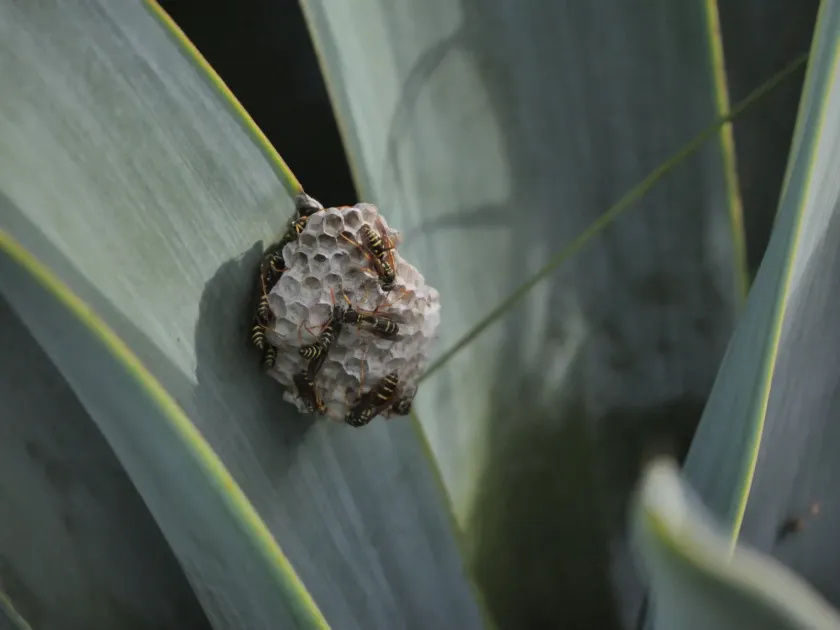
Description
How to identify
The Chinese paper wasp (Polistes chinensis) belongs to the Vespidae family and is characterized by a distinctive yellow and black color pattern.
These social insects are well-known for their unique nest-building behavior, creating exposed, papery nests out of chewed wood fibers and saliva.
They are highly adaptable and frequently establish colonies in gardens, orchards, and man-made structures near cultivated areas.
The lifecycle begins in early spring when the overwintering queen emerges to start a new nest and produce the first batch of workers.
As the season progresses, the colony expands, often reaching peak populations during the warmest months of the summer.
What it damages
The primary agricultural damage caused by these wasps is the consumption of ripening fruits, especially grapes, stone fruits, and various berries.
By chewing through the skin of fruits to feed on the sugary juices, they leave the produce vulnerable to secondary fungal and bacterial infections.
This feeding behavior results in significant crop losses, as the damaged fruit quickly decays and becomes unfit for consumption or storage.
Although they perform some predatory activity by feeding on other insects, this is often insufficient to outweigh the direct harm they cause.
Their defensive nature also poses a significant risk to workers and gardeners attempting to harvest produce from infested areas.
When it appears
The activity of the Chinese paper wasp typically begins in late spring, around May or June, following the emergence of the queen.
Mid-summer, specifically July and August, represents the period of maximum colony activity and expansion throughout the garden.
During these months, the demand for food to support the growing brood drives the wasps to actively forage on sweet-smelling fruits.
Activity levels start to decline as the weather cools in autumn, at which point the colony breaks up and queens seek overwintering sites.
Managing the wasp population is most effective when started early in the season before the colony reaches its full size.
Signs of infestation
The most visible indicator of a wasp presence is the iconic umbrella-shaped or comb-like paper nest attached to structures or plant leaves.
In the orchard, you can observe fruits with distinct entry holes and hollowed-out areas, which are classic signs of wasp feeding.
A noticeable increase in flying insects congregating around ripened fruits or standing water is a clear sign of nearby nesting activity.
Hearing a rhythmic buzzing sound near roofs or garden bushes often points toward the location of an active wasp colony.
- Hollowed-out fruits with visible feeding damage
- Grey, paper-like comb nests in sheltered areas
- Constant foraging traffic toward fruit crops
- Aggressive behavior when disturbed during harvest
Control measures
Physical removal of nests, preferably carried out during cool evening or early morning hours, is the most effective method for immediate control.
The use of liquid traps baited with sugar water or fruit juice can significantly reduce the number of foraging workers in a garden setting.
Targeted application of insecticides to nesting sites can be employed for larger infestations to eliminate the entire colony efficiently.
Maintaining a clean garden by removing debris and sealing small gaps in structures helps prevent wasps from establishing new colonies.
Installing protective netting over delicate crops like grapes provides a reliable barrier against wasp feeding and saves the fruit from destruction.
Taxonomy
- Latin name
- Polistes chinensis
- Order
- Hymenoptera
- Family
- Vespidae
- EPPO code
- POLECH
Discussion
No discussions yet — be the first.