
Carolina paper wasp
Polistes carolina
Description
How to identify
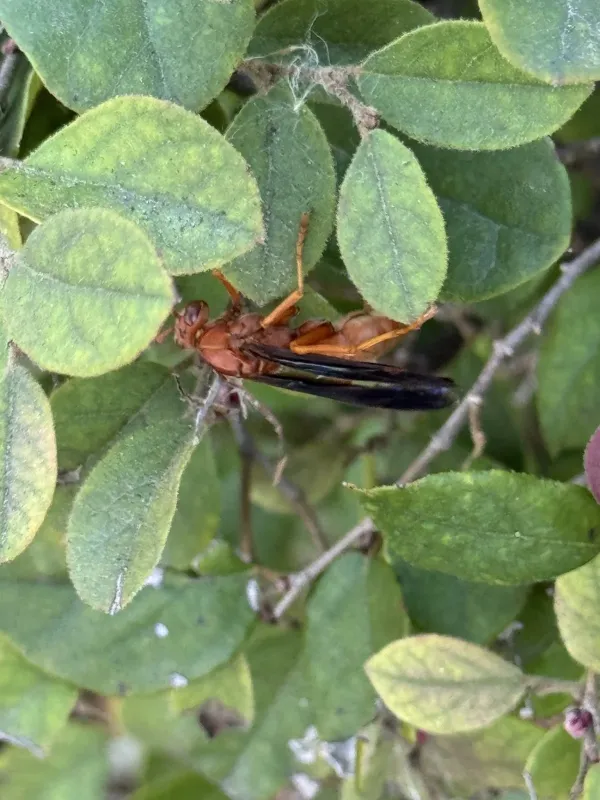
The Carolina paper wasp (Polistes carolina) is a species of social wasp belonging to the family Vespidae. It is characterized by a distinctive reddish-brown color, notably lacking the bright yellow stripes common in many other wasp species.
Adult wasps typically measure between 20 and 25 millimeters in length. Their slender bodies and dark, reddish-tinged wings are key morphological features that distinguish them from similar-looking wasps found in agricultural settings.
These wasps construct nests made of paper-like material, created from masticated wood fibers. The nest structure consists of open, exposed combs attached to a substrate by a single, thin stalk, usually situated in protected areas.
Being a social insect, they live in colonies headed by a founding queen. While the colonies are generally smaller than those of yellowjackets, they are highly defensive of their nests, especially when disturbed by human activity.
The biological development involves a larval stage inside the cells, which are fed by the adults. This species plays a dual role: they hunt caterpillars (beneficial) but also scavenge for sugar sources in orchards (pest behavior).
What it damages
Although they are considered beneficial predators that consume various garden pests, the Carolina paper wasp becomes an agricultural nuisance during the late summer when food sources become scarce and they target fruit.
They damage fruit crops by chewing through the skin to reach the succulent flesh. Common targets include grapes, peaches, plums, and pears, which are especially vulnerable as they ripen and their sugar content increases.
Injured fruit often becomes a site for secondary infections, such as fruit rot, brown rot, and fungal pathogens. This degradation makes the entire yield unmarketable and reduces the overall shelf life of the harvest.
The high density of these wasps during the harvest period creates a hazardous environment for farm workers and agronomists, as the risk of stings increases significantly near the fruit production zones.
Furthermore, these wasps occasionally strip thin bark from young shoots and saplings to gather nesting material, which can lead to localized damage, drying of branches, and reduced vigor of the young trees.
When it appears
The life cycle begins in early spring, when overwintered queens emerge from their hiding spots to initiate the construction of new nests. This is the optimal time for identifying and managing the initial population.
The colony growth accelerates throughout the summer, peaking in mid-to-late summer. During this time, the number of foraging workers increases, leading to higher levels of activity in orchards and vineyards.
In late summer and early autumn, the colony produces reproductive individuals, including new queens and males. This phase is characterized by increased scavenging activity as the wasps prepare for the dormant winter period.
As temperatures drop, the main colony dies off, and only the fertilized females seek overwintering sites. They typically hide in wall voids, crevices, under loose bark, or in other protected and insulated structures.
Because they are annual, nests are usually abandoned by winter. However, the proximity of a previous year's nest can attract future queens, making routine annual monitoring essential for long-term control on the property.
Signs of infestation
The presence of paper-like, umbrella-shaped nests attached to structures or hidden within dense shrubbery is the primary sign of an active colony. These nests are often found under eaves or in garden outbuildings.
Visible damage to ripening fruit is another key sign of infestation. Small, circular holes with ragged edges on the skin of peaches, plums, or grapes indicate that wasps are feeding on the fruit tissue.
Consistent flight paths of wasps traveling between a specific nest location and food sources are common indicators. Tracking these lines of flight can assist in locating the main nest for targeted control efforts.
Evidence of wood fibers being scraped away from wooden fences, poles, or stems suggests that workers are actively gathering materials for nest expansion, indicating a colony is thriving nearby.
Increased wasp activity near water sources, such as irrigation points or leaking faucets, is a strong indicator of a large, active colony nearby that requires immediate attention from an integrated pest management program.
Control measures
Early nest removal in the spring, before the colony reaches a large size, is the most effective cultural control method. Always prioritize safety equipment when attempting to remove or treat nests.
Setting up traps containing sugar-based attractants or fermenting fruit juice can significantly reduce the foraging population during the critical ripening period, protecting your fruit yield from wasp damage.
Maintaining a clean garden by timely harvesting, disposing of rotting fruit (fallen fruit), and sealing structural gaps in outbuildings helps to reduce the attractiveness of the site to nesting queens.
Utilizing physical barriers like netting over grape vines or bagging individual fruits is an eco-friendly and highly effective method for protecting high-value crops from wasp scavenging.
- Regular inspection of sheltered garden areas.
- Sanitation to remove overripe and fallen fruit.
- Use of approved insecticides in severe cases.
Taxonomy
- Latin name
- Polistes carolina
- Order
- Hymenoptera
- Family
- Vespidae
- EPPO code
- POLECR
Discussion
No discussions yet — be the first.