
Canadian paper wasp
Polistes canadensis
Description
How to identify
The Canadian paper wasp (Polistes canadensis) belongs to the family Vespidae. It is a social insect known for constructing nests from chewed vegetable fibers, resulting in a papery, honeycomb-like structure.
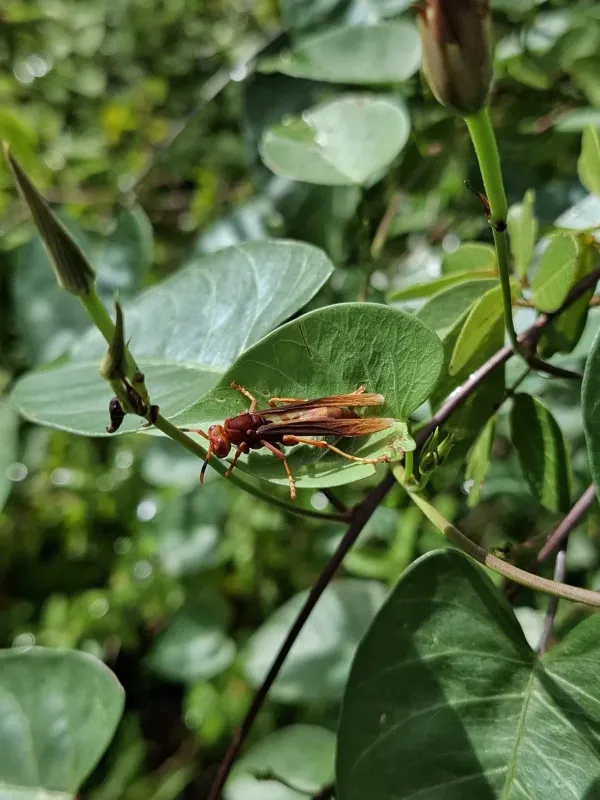
Adult wasps feature a slender body, reaching lengths of 20-25 mm, and display a reddish-brown coloration with distinctive yellow markings on the abdomen and thorax.
A key identifying feature is the wasp's habit of flying with its long, spindly legs trailing behind its body, making them easily distinguishable from other wasp species.
The colony structure is primitively eusocial, with females showing only slight morphological differences, yet they maintain a highly organized system for nest care and larvae feeding.
Nests are typically exposed and lack a protective outer shell, often attached to branches, leaves, or man-made structures by a single, sturdy stalk.
What it damages
As opportunistic feeders, these wasps can become significant agricultural pests when they damage high-value fruit crops to access sweet juices and moisture.
The wasps use their mandibles to tear into the skin of ripening fruits like grapes, peaches, and berries, leaving the fruit vulnerable to decay and secondary infections.
These damaged spots frequently become sites for fungal infections and rotting, rendering the entire fruit unsalable or inedible for the grower.
While they provide some benefit by hunting caterpillars, their tendency to congregate in large numbers on fruit during harvest season poses a significant risk to productivity.
In hot and arid climates, the damage increases as wasps seek out the water content found in ripe fruits to hydrate the colony's larvae during peak summer heat.
When it appears
The life cycle begins in early spring when solitary queens, having overwintered, emerge to find suitable nesting sites and start new colonies.
Colony population density peaks during the mid-to-late summer months, which often overlaps with the critical harvest period for many garden crops.
As autumn approaches and temperatures drop, the colony enters a decline phase, with workers dying off and newly mated queens seeking hibernation sites for the winter.
The presence of these wasps in the garden is most noticeable during warm, sunny weather when they are most active in foraging for sugar-rich food sources.
Monitoring for nesting activity should ideally begin before the onset of the main harvest to prevent the establishment of large, aggressive colonies.
Signs of infestation
The most reliable sign of a Canadian paper wasp infestation is the presence of exposed, umbrella-shaped paper nests located in sheltered areas around the property.
Fruit damage characterized by jagged, deep bite marks and subsequent browning or fermentation is a primary indicator of foraging activity by these wasps.
A high frequency of wasp sightings around fruit trees or vineyards during the day suggests that the insects have established a reliable food trail.
Aggressive defensive posturing, such as the wasps buzzing or flying toward perceived threats near the nest, confirms the presence of an active colony.
The accumulation of fermented fruit on the ground, accompanied by numerous wasps feeding on the remnants, is a clear sign that the population is established.
Control measures
The most effective strategy is the early detection and manual removal of nascent nests during the spring before the colony size becomes unmanageable.
Installing traps containing sugary attractants (such as fruit juice or diluted honey) can help reduce the number of foraging adults around the garden during harvest.
Maintaining a clean garden environment by promptly removing fallen or overripe fruit denies the wasps their primary food source, discouraging them from lingering.
Protecting ripening fruit crops with specialized netting prevents the wasps from physically damaging the skin of the produce during the maturation process.
- Regularly check rafters, eaves, and branches for nests.
- Use protective covers on vineyard clusters.
- Exercise caution when attempting to remove active nests.
- Sanitize the area around fruit trees to prevent rotting.
Taxonomy
- Latin name
- Polistes canadensis
- Order
- Hymenoptera
- Family
- Vespidae
- EPPO code
- POLECN
Discussion
No discussions yet — be the first.