
Golden paper wasp
Polistes aurifer
Description
How to identify
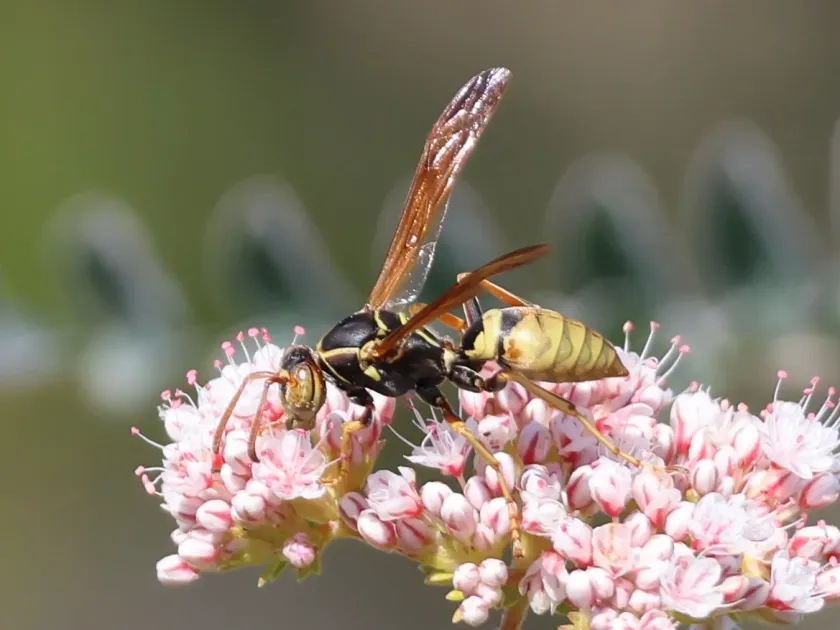
The Golden paper wasp (Polistes aurifer) is a social wasp species belonging to the Vespidae family. It is easily recognized by its distinctive golden-yellow coloration combined with black markings on the thorax and abdomen.
These wasps are known for building open, umbrella-shaped nests made from a papery substance, which is a mixture of chewed plant fibers and saliva. Unlike yellowjackets, their nests do not have an outer envelope.
The colony cycle is founded by a single queen in the spring, who constructs the initial cells and rears the first batch of workers. These workers then take over the duties of nest expansion and foraging while the queen focuses on egg-laying.
One of the key identification features of Polistes aurifer is their body structure; they have slender waists and long, trailing legs that are clearly visible while the insect is in flight.
While often considered beneficial in natural ecosystems due to their predation on caterpillars and other soft-bodied insects, they are frequently viewed as pests by commercial and home fruit growers due to their feeding habits on ripening crops.
What it damages
The economic impact of the Golden paper wasp is primarily related to the damage caused to ripening fruit. Preferred crops include grapes, peaches, apricots, pears, and plums, where the wasps seek out sugary juices.
Wasps use their mandibles to pierce the skin of the fruit, allowing them to feed on the sweet pulp inside. This action not only reduces the weight and marketability of the crop but also causes significant aesthetic damage.
Once the skin of the fruit is broken, it becomes a site for secondary infections. Yeasts, molds, and bacteria, particularly those responsible for sour rot or gray mold, quickly colonize the damaged area, often leading to the loss of entire fruit clusters.
In high-pressure years, especially during hot and dry summers when water and sugar sources are scarce, these wasps can destroy a significant portion of a harvest, causing considerable concern for growers.
Furthermore, the presence of these wasps during the harvest season poses a stinging hazard for laborers, which complicates the picking process and reduces the efficiency of orchard management tasks.
When it appears
The activity cycle of Polistes aurifer begins in early spring, following the emergence of overwintering queens. This period is dedicated to nest site selection and the initiation of a new colony.
As summer progresses, the number of workers increases, leading to a rise in foraging activity. By late summer and early autumn, the demand for sugars to fuel the colony's end-of-season activities drives the wasps into orchards.
The peak period of damage coincides with the maturation of fruit. In many regions, this spans from August through September, which is when the wasps are most visible and focused on sugar-rich food sources.
As autumn temperatures drop, the colony production of new reproductive individuals reaches its climax. The workers' interest in fruit peaks just before they begin to decline as the weather cools down.
Monitoring the wasp population density throughout the summer is essential for predicting the level of fruit protection needed. A warm, favorable spring typically results in larger colony sizes and higher potential for damage in late summer.
Signs of infestation
Visual identification of wasps flying around or landing on fruits is the most obvious sign of an infestation. Their constant movement between the nest and the fruit trees indicates an established foraging route.
Damage to the fruit surface appears as small, irregular holes or excavations. If you observe clusters of wasps feeding on the same fruit or bunch, it is highly likely that they have already initiated significant feeding damage.
The presence of open papery nests attached to eaves, rafters, or thick foliage near the orchard is a clear indicator that a colony is established in the immediate vicinity.
A sugary, fermented odor in the orchard during the late season often points to damaged fruits that are fermenting due to the presence of wasps and other sap-feeding insects.
An increased presence of secondary pests, such as ants, attracted to the juices leaking from wasp-damaged fruits, serves as a reliable secondary indicator of wasp activity.
Control measures
The use of liquid bait traps is one of the most effective mechanical control measures. Traps filled with a solution of sugar, honey, or fruit juice, sometimes with a dash of vinegar, attract wasps while minimizing risk to beneficial pollinators.
In vineyards, the most effective protection method is the use of mesh bags (fruit bags) placed over individual grape clusters. This creates a physical barrier that prevents wasps from reaching the berries.
Early-season nest removal is highly recommended. Inspecting structures and garden perimeters for new nests and removing them before the colony grows large can significantly reduce the wasp population in the vicinity.
Sanitation practices play a critical role in control. Promptly harvesting ripe fruit and clearing away fallen or damaged fruits from the orchard floor removes the primary food source that attracts wasps.
Chemical control should be avoided during the harvesting phase due to pesticide residue concerns. Focus on preventative measures, such as habitat management and mechanical exclusion, to keep the fruit crop safe and marketable.
Taxonomy
- Latin name
- Polistes aurifer
- Order
- Hymenoptera
- Family
- Vespidae
- EPPO code
- POLEAU
Discussion
No discussions yet — be the first.