
Apache paper wasp
Polistes apachus
Description
How to identify
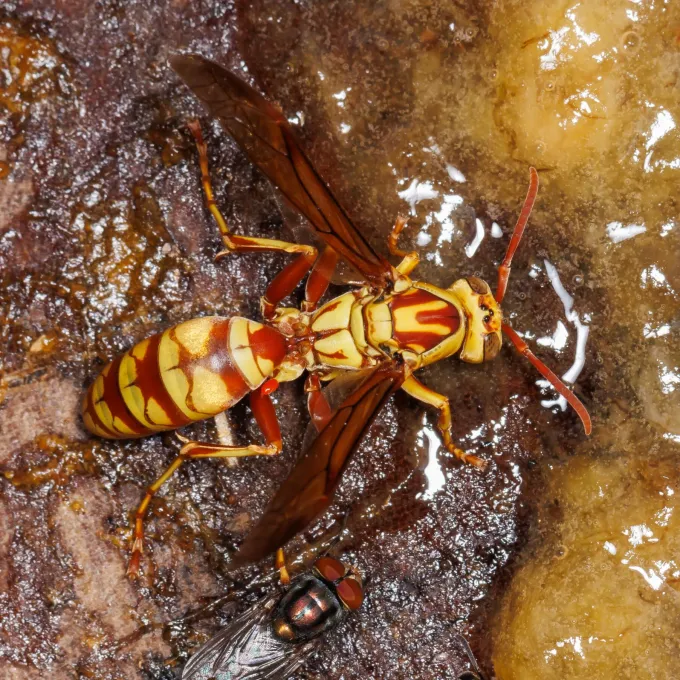
The Apache paper wasp Polistes apachus belongs to the order Hymenoptera and the Vespidae family. They are social insects typically 15–20 mm long, featuring a brownish-yellow coloration with reddish markings.
They construct their nests from a paper-like material made of chewed wood fibers mixed with saliva. Unlike some other wasp species, their nests remain uncovered, exposing the honeycomb structure.
The lifecycle begins in the spring when an overwintered queen selects a nesting site. As the colony grows through the summer, worker wasps maintain the nest and forage for food.
These wasps are highly territorial and defensive of their nests. Their activity levels peak during the mid-to-late summer, coinciding with the maturation of many fruit crops.
Colonies follow a seasonal pattern, with new reproductives produced by early autumn before the workers and old queens perish, leaving the fertilized queens to hibernate.
What it damages
The Apache paper wasp is primarily a pest of fruit crops, including grapes, peaches, pears, figs, and plums, as it damages the skin of ripening fruit to access the sugary interior.
By consuming the fruit flesh, these wasps create entry points for secondary pathogens, such as fungi and bacteria, leading to rapid rot and further degradation of the crop.
The damage caused is often severe enough to render entire harvests unmarketable, causing significant financial losses for both home gardeners and commercial fruit producers.
Beyond direct feeding damage, the presence of these wasps creates a difficult work environment for manual harvesting due to the risk of painful stings if the nest is disturbed.
The attracted secondary pests, such as vinegar flies (Drosophila), exacerbate the decay of the fruit, making the overall damage to the orchard even more extensive.
Signs of infestation
The most visible sign of an infestation is the presence of paper-like, open-comb nests tucked under eaves, in shrubs, or attached to fruit tree branches.
Inspection of fruit reveals distinctive, deep punctures or missing patches of skin where the wasps have chewed away the surface to reach the sweet pulp.
Increased wasp activity around water sources, such as garden hoses or irrigation drip sites, during hot summer afternoons indicates a nearby colony.
Rotting fruit hanging on trees, surrounded by swarming wasps, serves as a clear indication that a colony has established itself and is actively feeding on the crop.
Observing wasps entering and exiting a specific cavity or protected area under a roofline is a reliable sign of a developing colony that needs management.
Control measures
Effective control involves the direct removal or treatment of nests with insecticide sprays during the evening hours when all wasps are typically inside the colony.
Wasp traps baited with sugar water, fermented juice, or protein-based baits can significantly reduce the number of foraging workers in the vicinity of fruit trees.
Promptly harvesting fruit as soon as it ripens minimizes the opportunity for wasps to feed, thereby reducing the attractiveness of the garden to these pests.
Physical exclusion methods, such as bagging individual grape bunches or using protective netting over smaller fruit trees, are highly effective preventative measures.
Sanitation practices, including the regular removal of fallen fruit and cleaning up fermenting waste, are critical to discourage wasps from settling and feeding on your property.
Taxonomy
- Latin name
- Polistes apachus
- Order
- Hymenoptera
- Family
- Vespidae
- EPPO code
- POLEAP
Discussion
No discussions yet — be the first.