
Paper wasps
Polistes
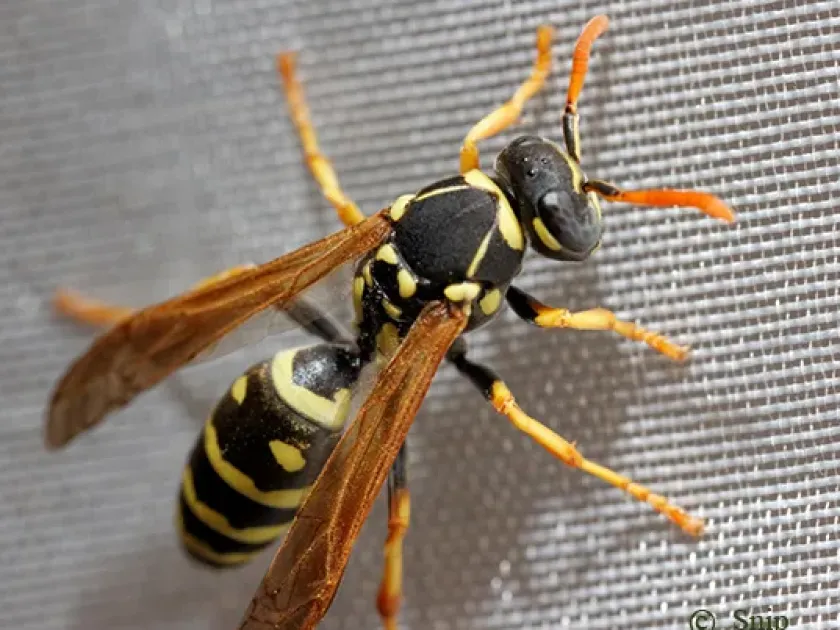
Description
How to identify
Paper wasps (genus Polistes) belong to the Vespidae family. They are social insects known for constructing umbrella-shaped nests made of a paper-like material created from chewed plant fibers.
These insects have a slender, elongated body with a distinct narrow waist and long legs. Their coloration typically features patterns of yellow, black, or reddish-brown.
Unlike yellowjackets, paper wasps are less aggressive, but they are opportunistic feeders. Their colonies are relatively small compared to other social wasps, usually numbering a few dozen individuals.
The life cycle begins in early spring when a queen emerges from hibernation to select a site for a new colony. She builds the first cells and raises the first generation of workers.
Paper wasps play a dual role in the ecosystem as predators of various caterpillars and as sugar-seekers, which leads them to visit gardens and orchards in search of nectar and fruit juices.
What it damages
The primary economic impact of paper wasps is the damage they cause to ripening fruit. They use their strong mandibles to pierce the skin of grapes, berries, and stone fruits.
Once the skin is broken, the wasps feed on the sugary juice. This action destroys the integrity of the fruit, making it highly susceptible to fungal pathogens like gray mold and secondary fermentation.
Crops such as vineyards, raspberries, blackberries, figs, and peaches are particularly vulnerable to attack, especially as the fruit nears full maturity and sugar content rises.
Beyond physical damage, the presence of these wasps often deters manual labor in orchards or vineyards, as the risk of being stung disrupts harvesting and maintenance activities.
In addition to direct consumption, the wasps contaminate the fruit with their waste and may facilitate the spread of bacteria, significantly reducing the market value of the harvested produce.
When it appears
The activity period for paper wasps starts in late spring as temperatures consistently remain above 10-15°C. At this stage, the focus is on colony establishment.
The peak of damage occurs in mid-to-late summer (July and August) when colony sizes are at their maximum and the demand for carbohydrates is high to support the growing brood.
High temperatures and dry conditions often drive wasps to seek moisture and sugar from fruits, increasing the frequency of attacks on vulnerable garden crops during these months.
Activity gradually declines as the weather turns colder in autumn. The colony produces queens for the following year, and the existing workers and the old queen slowly die off.
Monitoring for nesting sites in the spring allows gardeners to mitigate wasp problems before the fruit becomes attractive to these insects in the summer.
Signs of infestation
The most reliable sign of a paper wasp presence is the sighting of their characteristic open-comb nests attached to eaves, rafters, fences, or foliage in the garden.
Direct damage to fruit, appearing as small, circular, or irregular holes in the skin of berries and fruits, indicates that wasps are actively feeding on the crop.
Increased flight activity around fruit-bearing plants during sunny days is a clear indicator of a nearby colony or a strong attraction to the garden's food sources.
Finding "paper" debris or frass under building overhangs or structures where nests are hidden provides strong evidence of an active colony in the vicinity.
A persistent buzzing noise and the presence of wasps congregating on fermented or ripe fruit are reliable indicators that damage is already underway.
Control measures
Locating and removing nests early in the spring is the most effective way to manage the wasp population. This task should be performed at night when the insects are less mobile.
Installing traps containing sugar-based bait (such as juice or diluted syrup) with an added deterrent for bees, like vinegar, helps reduce the population of foraging workers.
For high-value crops like grapes, using protective mesh bags to cover clusters is a highly effective mechanical barrier that completely prevents wasp access.
Maintaining a clean garden by promptly harvesting ripe fruit and disposing of fallen or damaged produce removes the attractants that draw wasps into the cultivation area.
- Inspect buildings and structures for new nests frequently during the spring.
- Wear protective gear when approaching or removing wasp nests.
- Clear surrounding areas of debris to prevent wasps from finding sheltered nesting spots.
Taxonomy
- Latin name
- Polistes
- Order
- Hymenoptera
- Family
- Vespidae
- EPPO code
- POLESP
Discussion
No discussions yet — be the first.