
Pogonocherus fasciculatus
Pogonocherus fasciculatus
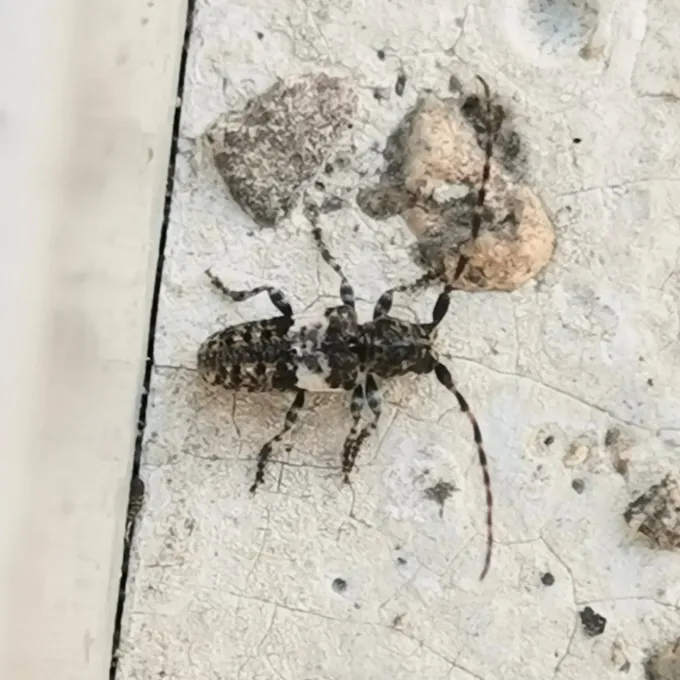
Description
How to identify
Pogonocherus fasciculatus is a species of longhorn beetle belonging to the family Cerambycidae. These beetles are relatively small, usually measuring between 5 to 9 mm in length, and are easily identified by the tufts of hair on their bodies.
Their coloration is cryptic, featuring a mix of brown and black tones that mimic bark surfaces. A distinct pale transverse band is often visible on the elytra, helping the insect remain hidden while resting on wood.
The larvae are typically cylindrical, legless, and white, equipped with specialized mouthparts for boring into woody tissue. They reside primarily beneath the bark, where they consume the nutrient-rich cambium layer.
Adults exhibit long antennae characteristic of the subfamily Lamiinae. They are generally active during the warmer months and are most commonly found in coniferous forests across Europe and Asia.
While often considered a secondary pest, Pogonocherus fasciculatus plays a part in the forest decomposition process, though it can become a significant nuisance in managed timber stands.
What it damages
This beetle primarily targets coniferous trees, with a strong preference for Scots pine (Pinus sylvestris) and occasionally spruce (Picea abies). They tend to infest weakened, stressed, or recently felled wood.
The larvae bore irregular, winding galleries beneath the bark. This activity disrupts the transport of water and nutrients, which can exacerbate the decline of trees already suffering from drought or disease.
Slash and logging residues are the most common breeding grounds for the species. If left in the forest, these materials provide ideal conditions for the beetle population to surge.
While the beetle rarely kills healthy, mature trees, it can cause severe physiological stress and open pathways for secondary pathogens and other wood-boring insects to attack.
Economic damage is largely related to the degradation of the outer wood layers, which can reduce the aesthetic and structural value of timber in lumber yards.
When it appears
Adult beetles emerge and become active from late spring through mid-summer, depending on regional temperatures and local climate conditions.
Mating occurs on the bark surface of host trees. Females select suitable sites, usually crevices in the bark, to lay their eggs, ensuring the larvae have immediate access to food upon hatching.
The developmental cycle of the larvae usually lasts one year, although it can extend to two years in cooler environments or when the larvae feed in thicker, more resistant wood.
Pupation takes place in specialized chambers constructed just beneath the bark surface. Once development is complete, the adult chews its way out through the bark.
The beetle's life cycle is strictly regulated by seasonal temperature changes, with activity peaking during the warmest months when the metabolic rate of the developing larvae is highest.
Signs of infestation
The most visible sign of an infestation is the presence of small, round exit holes on the surface of the bark, left by emerging adult beetles after they have completed their development.
Beneath the bark, one can observe tangled, winding galleries packed with frass (wood dust). This sawdust-like material is a clear indicator of larval boring activity.
Visible decline in tree health, such as premature needle discoloration or branch dieback, may occur in heavily infested trees, particularly in young saplings or weakened specimens.
In some cases, resin flow from bark crevices may be observed as the tree attempts to defend itself against the burrowing larvae, though this is less common in highly stressed trees.
Spotting adult beetles on the trunks or branches of host trees during the evening is a reliable indicator that the species is active and present in the area.
Control measures
The primary management strategy involves sanitary logging and the removal of infested material. Clearing deadwood and logging slash prevents the beetle from completing its life cycle.
Rapid removal and processing of felled timber are essential. Storing fresh logs away from susceptible stands minimizes the risk of the beetle migrating to living, healthy trees.
Monitoring using pheromone-based traps can help detect population spikes early, allowing forest managers to take targeted action before an infestation spreads.
In nurseries or high-value forest stands, insecticidal sprays applied during the adult flight period can provide temporary protection, although this is generally not feasible for large forest areas.
Promoting forest vigor through sustainable silviculture and maintaining appropriate stand density is the most effective long-term approach to preventing outbreaks.
Taxonomy
- Latin name
- Pogonocherus fasciculatus
- Order
- Coleoptera (beetles)
- Family
- Cerambycidae
- EPPO code
- POGNFA
Discussion
No discussions yet — be the first.