
Toad grasshopper
Poekilocerus bufonius
Description
How to identify
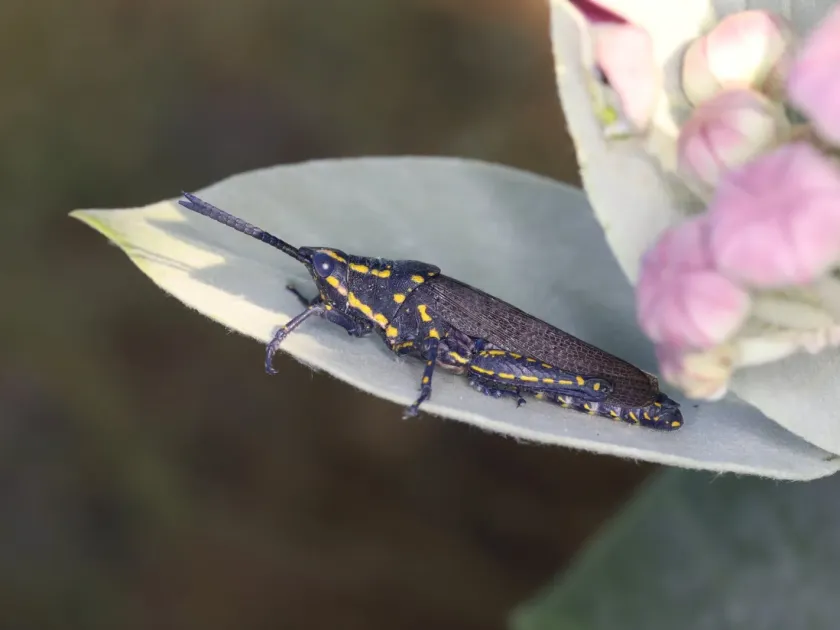
The toad grasshopper (Poekilocerus bufonius) belongs to the order Orthoptera and the family Pyrgomorphidae, characterized by its unique body shape.
As the name suggests, the insect has a stout, bumpy body that resembles a toad, which provides camouflage in arid environments.
Adults exhibit bright warning coloration, often yellow and black, signaling their toxicity to predators through chemical secretions.
Nymphs develop through several instars, gradually increasing in size while maintaining the distinct morphology of the mature grasshopper.
Unlike migratory locust species, this grasshopper tends to stay close to its host plant sources rather than performing long-distance swarm flights.
What it damages
This species is highly specialized, primarily feeding on plants of the Apocynaceae family, specifically those in the Calotropis genus.
When natural food sources are scarce, the toad grasshopper may feed on ornamental plants or agricultural crops, causing significant damage.
Both nymphs and adults consume large quantities of foliage, leading to rapid defoliation and weakened plant health.
Heavy infestations can lead to total loss of leaf area, affecting the photosynthesis and overall productivity of the targeted crops.
The physical damage to stems and shoots can also create entry points for secondary bacterial or fungal plant pathogens.
When it appears
The life cycle is closely tied to seasonal rainfall, which drives the vegetation growth required for the grasshopper's development.
Eggs hatch in the spring as temperatures rise, signaling the emergence of the first instar nymphs which feed on young greenery.
Active feeding peaks during the growth season, as the grasshoppers need sufficient resources to reach their reproductive stage.
Females lay egg pods in the soil, where they remain in diapause through the dry or cold season until the next favorable cycle.
Regional climate variability plays a key role in the speed of generation turnover and the number of active seasons per year.
Signs of infestation
Signs of infestation include irregular holes in leaves, skeletonized leaf margins, and the presence of frass beneath the plants.
- Extensive leaf tissue loss at the edges of the foliage.
- Visible presence of brightly colored nymphs during the day.
- Damage to apical buds and young shoots.
- A noticeable pungent odor emitted by the insects when disturbed.
Early identification of patches of damage is essential to prevent the spread of the population across the entire cultivated area.
Control measures
Mechanical control, such as manual collection and destruction of nymphs, is effective for small-scale gardens or early-stage outbreaks.
Biological control using entomopathogenic fungi like Metarhizium anisopliae offers an eco-friendly approach to population management.
Chemical applications should be limited to systemic insecticides applied directly to hotspots where high densities of larvae are detected.
Deep plowing of the soil during the non-breeding season helps destroy egg pods, significantly reducing the next generation's numbers.
Maintaining a weed-free perimeter around crops and monitoring host plants can prevent the toad grasshopper from migrating into sensitive plantations.
Taxonomy
- Latin name
- Poekilocerus bufonius
- Order
- Orthoptera (locusts)
- Family
- Pyrgomorphidae
- EPPO code
- POEIBU
Discussion
No discussions yet — be the first.