
Poekilocerus
Poekilocerus
Description
How to identify
Poekilocerus is a genus of insects belonging to the order Orthoptera and the family Pyrgomorphidae, known for their distinct appearance and chemical defenses.
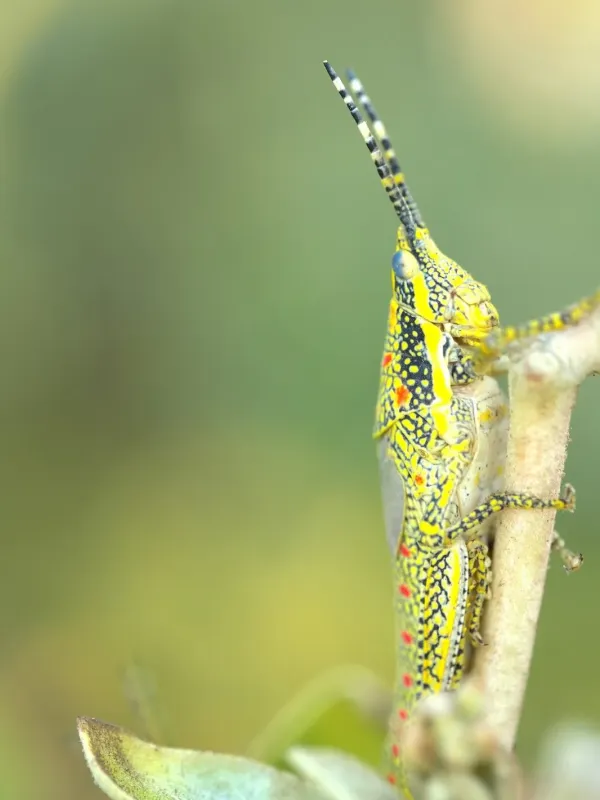
These insects are characterized by aposematic coloration, usually featuring bright yellow, orange, and black patterns that warn potential predators of their toxic chemical secretions.
The life cycle begins with eggs deposited in the soil, followed by several nymphal stages that gradually develop into winged adults capable of dispersal.
They are primarily found in arid and semi-arid environments where they have adapted to specific host plants, but they can easily shift to agricultural settings.
Identifying this pest is relatively straightforward due to their vibrant colors and tendency to aggregate on food plants during the warmer months of the year.
What it damages
While they have specific dietary preferences for certain wild vegetation, Poekilocerus can become a significant pest when their primary food sources are depleted.
They damage crops by feeding on leaves, young stems, and flowers, causing extensive defoliation that hinders plant growth and reduces agricultural yield.
High population densities can lead to the rapid destruction of patches within a field, making it difficult for affected plants to recover during the season.
The intense feeding activity of nymphs and adults removes the chlorophyll-rich tissues, significantly impacting the plant's ability to perform photosynthesis.
In addition to direct consumption, their presence can stress crops, making them more susceptible to other pests and opportunistic diseases.
Signs of infestation
The most evident sign of infestation is irregular, notched, or completely eaten leaf edges on various agricultural and horticultural crops.
Observing the insects directly, as they are often found basking or feeding on the foliage in large groups, is the primary indicator of their presence.
Fecal deposits (frass) found on the leaves or at the base of the plant provide clear evidence of an active colony feeding in the immediate vicinity.
Visible stunting of growth and the sudden yellowing of leaves following insect activity are common aftermaths of heavy feeding pressure.
In cases of severe infestation, one might notice a distinct odor emitted by the insects as a defense mechanism when they are disturbed.
Control measures
Monitoring is crucial to detect early colonization and prevent the population from reaching levels that require intensive chemical intervention.
Cultivation practices such as deep plowing can significantly reduce the population by destroying egg pods buried in the soil during the winter or off-season.
When necessary, chemical control using approved insecticides can be applied, targeting the early nymphal stages before they reach maturity.
- Maintaining clean field borders to remove weeds that serve as reservoirs.
- Using biological control agents that target Orthoptera nymphs.
- Implementing mechanical barriers to prevent migration into high-value crop areas.
Integrated Pest Management (IPM) strategies, combining preventative agricultural methods with targeted chemical or biological treatments, remain the best approach for long-term control.
Taxonomy
- Latin name
- Poekilocerus
- Order
- Orthoptera (locusts)
- Family
- Pyrgomorphidae
- EPPO code
- POEISP
Discussion
No discussions yet — be the first.