
Poecilobothrus nobilitatus
Poecilobothrus nobilitatus
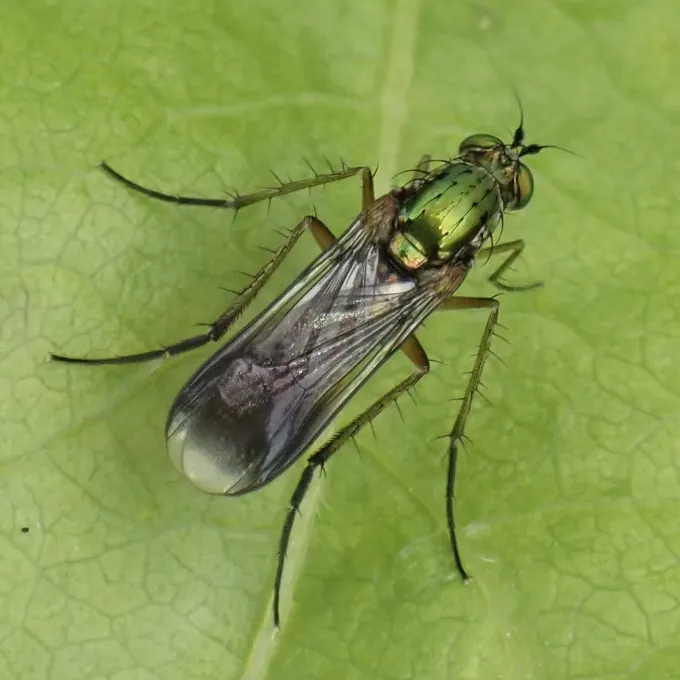
Description
How to identify
Poecilobothrus nobilitatus is a species of long-legged fly belonging to the family Dolichopodidae, known for its metallic and shimmering appearance.
The adults typically exhibit a vibrant green or coppery metallic sheen. Males are distinct from females by the dark patches on their wings and more ornate body coloration.
Their size generally ranges between 5 to 7 mm. They possess long, spindly legs which are characteristic of this fly family, aiding their movement on leaves.
Larvae of this species are rarely seen, as they develop within damp soil or decaying organic matter, making detection quite challenging for farmers.
These insects are widespread in temperate regions and are often found in agroecosystems that maintain sufficient soil moisture throughout the season.
What it damages
While adult flies are primarily predatory and feed on other small insects, the larval stages can cause damage to agricultural crops under specific conditions.
Larvae primarily affect plant root systems, leading to nutrient uptake impairment and overall reduced vigor of the host plant during early growth stages.
The damage often creates entry points for secondary pathogens like soil-borne fungi, which exacerbate the stress on young plants and seedlings.
Mass infestations are typically linked to fields with poor drainage or excessive soil moisture, which create ideal conditions for larval development.
Although they are not major primary pests in most high-intensity farming systems, their presence requires management to avoid opportunistic root damage.
When it appears
Adults are most active during the summer months, typically from June to August, when the weather is warm and conducive to their reproductive cycle.
Their population dynamics are strictly influenced by humidity levels; periods of heavy rainfall can lead to an increase in the abundance of the next generation.
The overwintering phase occurs in the soil as larvae or pupae, providing a robust defense mechanism against cold weather conditions in winter.
Spring activity begins once soil temperatures rise, facilitating the pupation of larvae and the subsequent emergence of the new generation of adults.
Daily activity cycles show peaks during sunny hours, as the flies occupy the canopy of crops for mating and hunting smaller arthropods.
Signs of infestation
The presence of metallic green flies resting on the foliage is the primary visual sign indicating an active population of this species in the field.
Plants showing signs of daytime wilting despite adequate irrigation should be examined for potential larval feeding damage to their roots.
Root system discoloration and the presence of small necrotic spots are diagnostic indicators that larvae have been feeding on the underground plant parts.
Uneven crop stands and reduced growth rates in moist field sections are common indicators that the pest is impacting plant vigor.
- Stunted primary growth
- Leaf yellowing in young seedlings
- Increased incidence of fungal root decay
Control measures
Crop rotation is the most effective cultural practice to disrupt the life cycle of the larvae by removing their stable food source and habitat.
Deep autumn plowing helps in bringing overwintering larvae to the soil surface, exposing them to environmental stress and natural predators.
Improving field drainage systems is crucial to mitigate soil saturation, which directly limits the environmental suitability for larval development.
Biological control using entomopathogenic fungi or beneficial soil nematodes can successfully suppress larval populations in an environmentally friendly manner.
Chemical control should be applied judiciously, focusing on systemic insecticides only when infestation thresholds are exceeded in vulnerable crop stages.
Taxonomy
- Latin name
- Poecilobothrus nobilitatus
- Order
- Diptera (flies)
- Family
- Dolichopodidae
- EPPO code
- POEBNO
Discussion
No discussions yet — be the first.