
Snow bunting
Plectrophenax
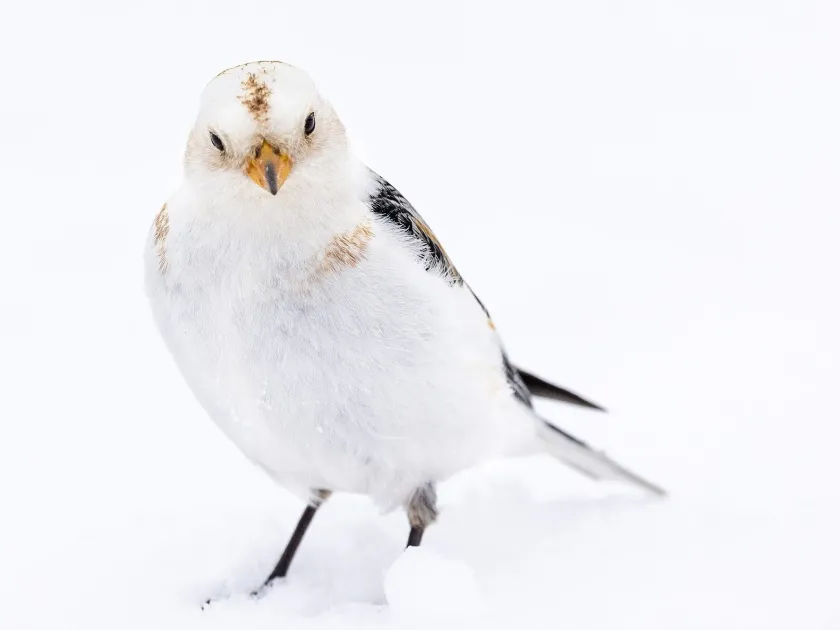
Description
How to identify
The snow bunting (Plectrophenax nivalis) is a passerine bird in the Calcariidae family. Known for its striking black and white plumage, it is a hardy species that breeds in the high Arctic and winters in temperate regions.
These birds are highly social and often form large flocks, especially when searching for food in open fields during the cold months. Their white wing patches make them easily recognizable during flight.
Snow buntings are primarily ground-dwelling birds, frequently observed foraging on stubble fields. They are cautious and highly reactive to disturbances, often taking flight as a coordinated group.
Their biology is centered around open habitats, which is why they are common visitors to farmland in winter. They rely heavily on ground-foraging behaviors to survive the harsh winter conditions.
Systematically, they are distinct from sparrows and finches due to their unique physiological adaptations to cold, allowing them to remain in northern latitudes longer than other migratory species.
What it damages
Agricultural damage from snow buntings is generally categorized as minor. They feed primarily on seeds, including those of wheat, barley, and other grain remnants left on the soil surface after harvest.
The main risk involves the consumption of sown seeds if they are not properly covered by soil. This can lead to localized thinning of crops, particularly in fields where minimum tillage practices left seeds exposed.
In most farming scenarios, the volume of seeds consumed by snow buntings is negligible compared to total crop yields. Furthermore, their diet includes a significant portion of weed seeds, which provides an incidental benefit to farmers.
Unlike major agricultural pests, snow buntings do not damage green plant tissues or plant roots. Their impact is limited to the winter period when crops are either dormant or not yet at a vulnerable growth stage.
There are no documented cases of snow buntings causing significant economic losses that would require large-scale intervention or pest management protocols in standard crop production.
Control measures
No specific pest control measures are required for snow buntings in an agricultural context. Their presence is usually transient and does not constitute a significant threat to commercial farming operations.
Best practices for seed management, such as ensuring proper planting depth and effective coverage, are sufficient to prevent any potential feeding issues during the sowing phase.
Maintaining clean fields with minimal post-harvest grain residue helps reduce the attraction of fields for foraging flocks, making the environment less appealing to birds during winter.
If deterrents are necessary due to extremely high bird concentrations, visual scaring devices can be used. However, their efficacy is limited, and they should be used sparingly to respect wildlife.
Conservation and ecological balance should be considered, as these birds play a role in managing weed populations in the field through seed predation throughout the dormant season.
Taxonomy
- Latin name
- Plectrophenax
- Family
- Emberizidae
- EPPO code
- PLEXSP
Discussion
No discussions yet — be the first.