
Silver-studded blue
Plebeius argus
Description
How to identify
The Silver-studded blue (Plebeius argus) belongs to the Lycaenidae family. It is a small butterfly species frequently observed in meadows and agricultural field edges.
The wingspan of the adult ranges between 20 and 30 mm. Males are recognized by their bright blue upper wings with distinct black borders, while females are generally brown.
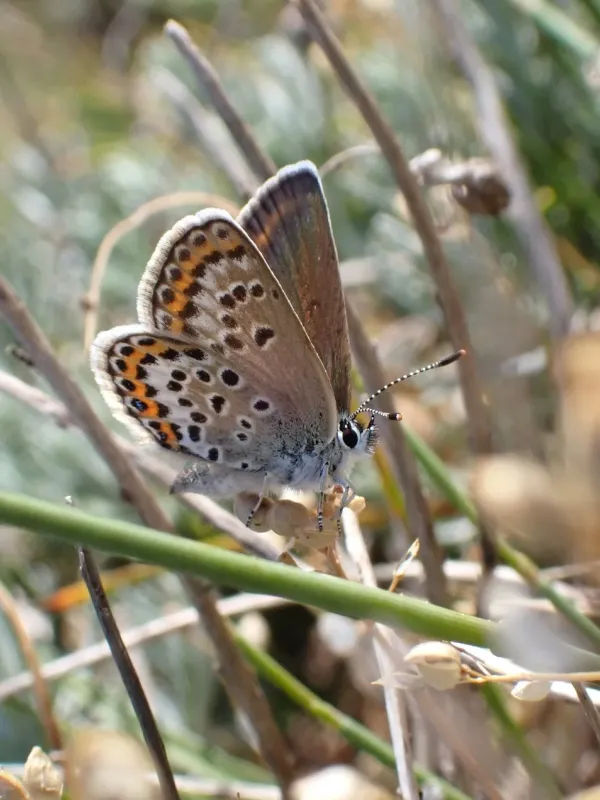
The underside of the wings features a pattern of small black spots with metallic-blue or green scales, which gives the species its common English name.
The larvae are typically green with white lateral stripes, allowing them to blend perfectly with the foliage of their host plants, such as various legumes.
A unique aspect of its biology is its obligate mutualism with ants, which protect the larvae in exchange for carbohydrate-rich secretions produced by the caterpillars.
What it damages
The primary damage is caused by the larval stage, which feeds on the foliage and buds of various leguminous crops, including alfalfa, clover, and vetch.
Heavy feeding activity can lead to a significant reduction in biomass, which is particularly detrimental in fields intended for hay production or forage.
In addition to leaves, the larvae may consume flower buds, directly affecting the plant's ability to produce seeds and reducing overall harvest quality.
While often considered a meadow insect, the species can invade crop fields located near wild habitats, especially in years when the population density is high.
Plant weakening caused by severe defoliation makes the crops more susceptible to environmental stress and opportunistic plant diseases.
When it appears
The life cycle typically spans one or two generations per year, depending on the local climate, temperature, and the length of the growing season.
The species overwinters as larvae in the early stages, often staying in plant debris or near the root zone of the host plants to survive cold weather.
Adult flight usually occurs during the warm summer months, typically spanning from June to August, when mating and egg-laying take place.
Favorable conditions, such as warm spring weather, facilitate the early emergence of larvae and rapid population growth throughout the season.
The cycle concludes as the larvae enter a period of dormancy, preparing for the transition into winter before resuming activity in the following season.
Signs of infestation
Early signs of infestation include irregular holes or chewed leaf margins, which are often indicative of caterpillar feeding activity in the canopy.
The presence of ant colonies moving actively along stems and leaves of legumes is a strong indicator of the presence of larvae, as they are protected by ants.
Frass (larval excrement) appearing as small, dark pellets on the leaves below the feeding area is another clear diagnostic sign for field monitoring.
Severe infestations often result in stunted plant growth and visible thinning of the crop stand, which can be observed during field walk-throughs.
In cases of bud damage, the flowers may appear withered or fail to develop properly, which can be confirmed by inspecting the generative parts of the plants.
Control measures
Effective management begins with strict field hygiene, including mowing of field edges and surrounding weeds to reduce potential host habitats for the pest.
Crop rotation and selecting resistant legume varieties are recommended practices to minimize the buildup of the population over successive growing seasons.
Biological control methods, including the encouragement of natural predators like parasitic wasps, can help keep the pest population below economic damage levels.
When monitoring indicates that the economic threshold has been exceeded, targeted applications of approved insecticides are used to protect the crop yield.
Using pheromone traps during the flight period of the butterflies allows farmers to monitor population levels and apply control measures precisely when needed.
Taxonomy
- Latin name
- Plebeius argus
- Order
- Lepidoptera (butterflies)
- Family
- Lycaenidae
- EPPO code
- PLEBAR
Discussion
No discussions yet — be the first.