
Plebeius
Plebeius
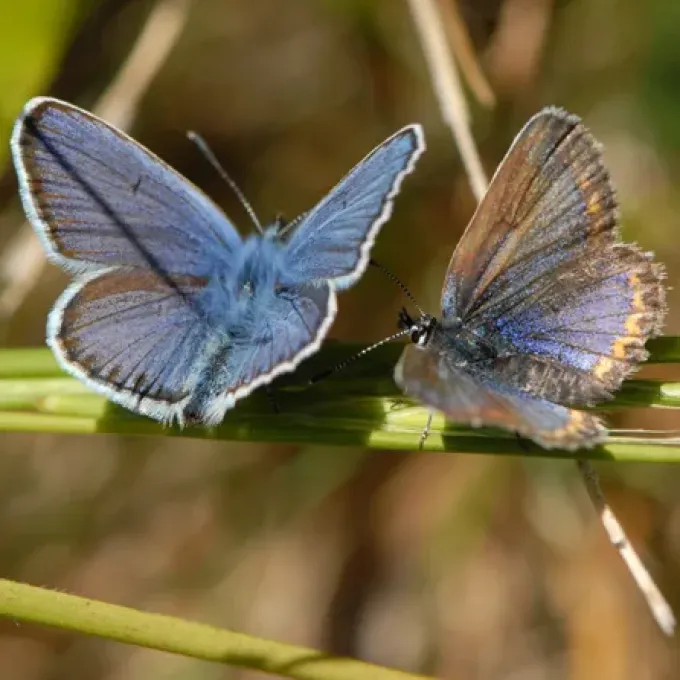
Description
How to identify
Plebeius is a genus of butterflies within the Lycaenidae family, commonly known as blues. These butterflies exhibit distinct sexual dimorphism, with males typically displaying brilliant blue wing coloration, while females are usually brown with blue scaling.
The larvae, or caterpillars, have a flattened, woodlouse-like shape and are covered in fine, short hairs. Their coloration is predominantly green or olive, providing them with excellent camouflage against the foliage of their host plants.
Their biological life cycle consists of four stages: egg, larva, pupa, and adult. They undergo complete metamorphosis, with adults being most active during warm, sunny days, which facilitates their mating and egg-laying activities.
A fascinating aspect of their biology is myrmecophily, where caterpillars form a symbiotic relationship with ants. They secrete sugary substances that ants consume, while the ants, in turn, offer protection against predators and parasitoids.
These insects generally overwinter in the larval stage, hiding within plant litter or near the base of host plants. They resume activity in the spring as soon as temperatures become favorable for growth.
What it damages
The Plebeius genus primarily targets plants in the Fabaceae (legume) family. They are considered pests in agricultural settings where alfalfa, clover, vetch, and sainfoin are cultivated for fodder or seed production.
The primary damage is caused by the larval stage, which feeds on the foliage. Caterpillars chew irregular holes in the leaves or skeletonize them, which reduces the total leaf surface area available for photosynthesis.
In addition to foliage, larvae are known to feed on reproductive structures, including flower buds and young developing pods. This feeding behavior significantly reduces crop yields, especially in fields dedicated to seed production.
Heavy infestations can lead to substantial loss of green biomass, which weakens the plants and leaves them more susceptible to other diseases or environmental stressors.
While the adults feed exclusively on nectar and do not cause direct crop damage, their presence in large numbers is a reliable indicator that high populations of larvae will follow, potentially impacting crop health.
Signs of infestation
The most visible sign of an infestation is the appearance of notched or holey leaves on legume crops. The plants may appear ragged, especially along the edges of the leaflets where feeding is most intense.
The presence of ants on the stems of legume plants is a strong indicator of larval activity. Since the caterpillars share a symbiotic relationship with ants, finding many ants in areas where leaves are damaged confirms the presence of the pests.
Damaged or prematurely dropping buds and flowers are a critical sign of larval feeding. If you inspect these buds closely, you may find the caterpillars hidden inside or evidence of their frass (excrement).
Regular field scouting to identify the presence of adult blue butterflies is essential, as it allows farmers to prepare for potential larval surges before significant crop damage occurs.
Patches of stunted or chlorotic growth within a field often point to areas where larval density is highest, signaling that the caterpillars have been feeding on the plant tissue for an extended period.
Control measures
Crop rotation is a fundamental agronomical practice to manage Plebeius populations. By alternating legume crops with non-host plants, the life cycle is disrupted, preventing the buildup of larvae in the soil.
Effective weed management, specifically the removal of wild legumes along field borders, serves to eliminate alternative hosts and reduces the potential for migration into the main crop.
Biological control options include the use of microbial insecticides, such as products containing Bacillus thuringiensis, which target the caterpillars while remaining safe for beneficial pollinators and predators.
If chemical intervention becomes necessary due to exceeding economic injury levels, selective insecticides should be chosen to minimize the impact on natural enemies like parasitoid wasps and predatory insects.
Field monitoring using sticky traps or simple visual surveys helps to identify the start of the egg-laying season, allowing for timely applications of control measures that target the most vulnerable early larval stages.
Taxonomy
- Latin name
- Plebeius
- Order
- Lepidoptera (butterflies)
- Family
- Lycaenidae
- EPPO code
- PLEBSP
Discussion
No discussions yet — be the first.