
Platypleura kaempferi
Platypleura kaempferi
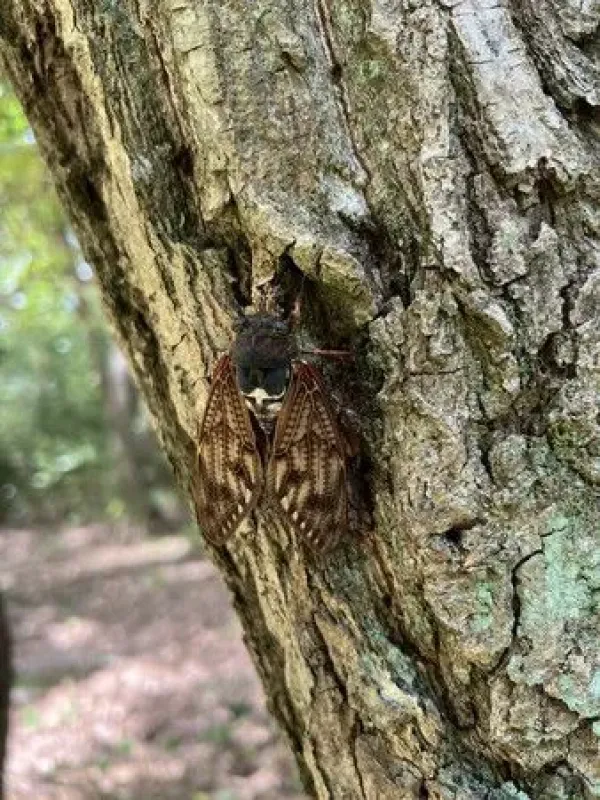
Description
How to identify
Platypleura kaempferi is a prominent member of the Cicadidae family, belonging to the order Hemiptera. These insects are easily recognized by their robust bodies and wingspans often exceeding 7–8 cm, displaying complex camouflage patterns.
The adults feature broad heads with large compound eyes and transparent wings marked with brownish patterns, which provide excellent camouflage against tree bark. Their morphology is perfectly adapted for life in forest and plantation environments.
The immature stages, known as nymphs, spend several years underground, feeding on plant roots. They possess specialized, shovel-like forelegs that are highly efficient for digging through compacted soil to reach food sources.
Male cicadas are known for their loud, distinctive, and persistent songs, produced by specialized organs called tymbals. This acoustic signaling is the primary method for attracting mates and often gives away their presence in an orchard.
The life cycle of this species is complex and long-lasting, often requiring 3 to 5 years for a single generation to reach maturity, which makes managing their populations a long-term challenge for growers.
What it damages
These cicadas are known to feed on a wide variety of woody plants, including various fruit trees, tea shrubs, and nut-bearing species. They are considered significant pests in several East Asian agricultural regions.
Adults cause damage by piercing the bark of young shoots and stems with their mouthparts to extract sap. This feeding activity disrupts the transport of water and nutrients, leading to the wilting and eventual dieback of infested branches.
Nymphs residing in the rhizosphere feed on root sap. While individual damage might be minor, large populations can significantly weaken the overall health of the tree, reducing its growth rate and susceptibility to secondary infections.
Oviposition damage, where females insert eggs into twigs, leaves behind scars that serve as entry points for various fungal pathogens and bacteria, often resulting in localized necrosis and branch breakage.
In high-density infestations, the cumulative effect of adult feeding and larval root damage can lead to substantial yield losses and, in extreme cases, the death of young saplings or weakened mature trees.
Signs of infestation
The most obvious indicator of a Platypleura kaempferi infestation is the loud, rhythmic chirping of males in the tree canopy, which is particularly intense during warm, sunny daylight hours.
Exuviae, the shed exoskeletons of the final nymphal instar, are commonly found attached to the lower trunks of trees, indicating that the nymphs have emerged from the soil to undergo metamorphosis.
Visible damage to twigs often appears as longitudinal splits or series of puncture marks where females have deposited their eggs. These sites can show discolouration or signs of sap leakage.
Branch wilting during the peak of summer is a classic sign of adult feeding activity. When a large number of cicadas congregate on a single branch, the sudden loss of sap causes the leaves to droop rapidly.
Exit holes in the soil, approximately 1 cm in diameter, found beneath the canopy are clear evidence of nymphs leaving the soil, marking the start of the adult activity period for the season.
Control measures
Cultural control is essential; this includes the removal and destruction of infested branches containing egg clusters to reduce the future population of nymphs before they reach the soil.
Chemical control involving systemic insecticides can be effective when applied during the peak emergence of adults. Treatments should be timed to hit the insects before they have the chance to lay eggs.
Tilling the soil around the base of trees in autumn or spring can disrupt the habitat of nymphs and kill those preparing to emerge, significantly reducing the number of adults in the upcoming cycle.
Light traps are a proven method for monitoring and mass-trapping adults at night, effectively reducing the mating potential of the population when used consistently throughout the emergence period.
Promoting overall tree vigor through proper fertilization, balanced irrigation, and pruning helps plants withstand damage better. A healthy tree can recover from cicada feeding far more effectively than one under stress.
Taxonomy
- Latin name
- Platypleura kaempferi
- Order
- Hemiptera (bugs, aphids, leafhoppers)
- Family
- Cicadidae
- EPPO code
- PLARKA
Discussion
No discussions yet — be the first.