
Hampson's cicada
Platypleura hampsoni
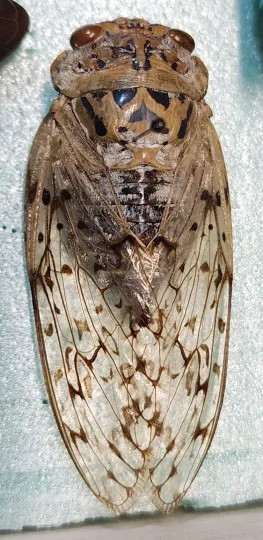
Description
How to identify
Hampson's cicada (Latin: Platypleura hampsoni) belongs to the order Hemiptera and the family Cicadidae. This insect features a robust body, a broad head, and well-developed, translucent wings with intricate venation characteristic of the genus.
Adults possess effective camouflage, allowing them to blend in with tree bark. They are equipped with a piercing-sucking mouthpart, which they use to feed on plant sap during their adult stage.
The life cycle consists of the egg stage, several larval instars, and the adult phase. Larvae live underground, feeding on the roots of host plants, and can remain in the soil for several years.
Females are equipped with a sharp ovipositor, which they use to slit the bark of young branches to deposit their eggs. This act is the primary way the species ensures the survival of its offspring.
These cicadas are typically found in tropical and subtropical forest regions, where they act as both a part of the ecosystem and, in agricultural settings, a potential pest.
What it damages
This pest affects a wide range of woody plants and shrubs. Fruit orchards, nut-producing trees, and valuable timber species are particularly susceptible to their feeding activities.
Larvae living in the soil damage root systems, which results in the loss of vigor, stunted growth, and a significantly weakened immune response in the host plant.
Adults feed on the sap of young shoots and twigs. This leads to metabolic disruption, foliage yellowing, and general stress on the plant, making it more susceptible to other stressors.
The oviposition sites are a major concern, as the physical damage to the bark creates entry points for secondary infections, such as fungi, bacteria, and wood-boring insects.
High populations in orchards can lead to the deformity and drying of young branches, which severely impacts the overall health and yield potential of the trees.
When it appears
The activity of Hampson's cicada adults is seasonal and coincides with the warmer months of the year, typically beginning in the early summer when temperatures rise.
Adults are most active during daylight hours, characterized by the loud, rhythmic calling songs used for mate attraction. The reproductive phase lasts for a period of several weeks.
Larvae remain active throughout the year within the soil. The underground environment provides a stable temperature, protecting them from the surface climate fluctuations.
The emergence of adults is highly dependent on environmental factors, particularly soil moisture levels and temperature patterns that trigger the final larval molt.
Due to the long-lived nature of the larval stage, the emergence of adult cicadas is often cyclical rather than annual, appearing in large numbers in certain years.
Signs of infestation
The most prominent sign of infestation is the loud, distinct buzzing or chirping sound made by adults, which is easily heard in infested orchards during the summer.
Look for scars or micro-fissures on the bark of young twigs. These are caused by the female's ovipositor during egg-laying and are often the first visible symptom.
A decline in tree vitality, including yellowing leaves, slowed shoot growth, or an overall thinning of the canopy, can indicate that the root system is under stress from larval feeding.
In some species, oozing sap or premature drying of terminal branches can occur as a direct response to the physical damage caused by the adults and their reproductive activities.
The presence of exuviae (cast-off larval skins) clinging to tree trunks at the base is a clear indication that a new generation of cicadas has successfully emerged from the soil.
Control measures
Managing Hampson's cicada requires an integrated approach that targets both the vulnerable larval stage in the soil and the adult insects in the canopy.
- Pruning and removing branches showing signs of egg-laying to prevent population buildup.
- Regular cultivation of soil around the base of trees to disrupt larval development.
- Encouraging natural predators such as insectivorous birds and parasitic wasps to help balance the population.
- Applying systemic insecticides during peak adult emergence if populations reach damaging thresholds.
- Maintaining optimal tree health through proper fertilization and irrigation to help trees recover from feeding injuries.
Taxonomy
- Latin name
- Platypleura hampsoni
- Order
- Hemiptera (bugs, aphids, leafhoppers)
- Family
- Cicadidae
- EPPO code
- PLARHA
Discussion
No discussions yet — be the first.