
Ramshorn snail
Planorbarius corneus
Description
How to identify
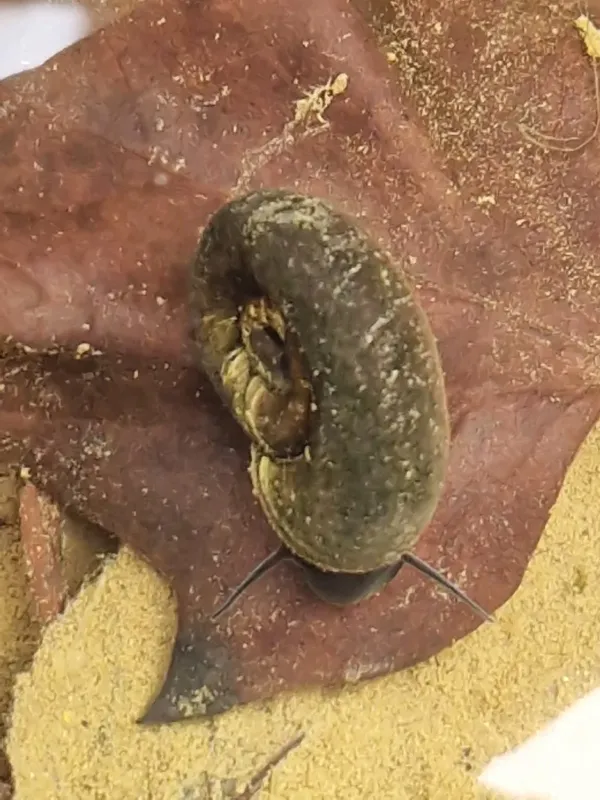
The ramshorn snail (Planorbarius corneus) is a common freshwater gastropod mollusk belonging to the Planorbidae family, recognizable by its spirally coiled shell.
The shell is shaped like a flat spiral, resembling a ram's horn, which gives the species its common name. Adults typically measure between 25 and 35 mm in diameter.
These mollusks are hermaphroditic, meaning each individual can reproduce, which contributes to their rapid population growth in favorable environments.
They possess a lung-like organ and a pseudobranch, allowing them to extract oxygen both from the water and the air, enhancing their survival capabilities.
Their bodies are dark in color, ranging from deep brown to black, enabling effective camouflage against organic substrates and plant debris.
What it damages
While often considered ornamental, in hydroponic or aquatic plant cultivation, ramshorn snails can cause significant damage to tender vegetation.
They feed on young shoots, leaves, and seedlings, often grazing away the epidermis and underlying tissues, leaving skeletonized remains.
By consuming root systems or damaging the stems, they weaken the plants, making them more susceptible to secondary fungal and bacterial infections.
In high-density populations, their excrement accumulates in the nutrient solution, leading to increased organic load and potential clogging of irrigation systems.
The presence of mucus secretions can coat plant surfaces, reducing the efficiency of photosynthesis and promoting the growth of undesirable biofilms.
When it appears
In controlled environments like greenhouses or aquaculture systems, ramshorn snails are active year-round as they are not subject to seasonal dormancy.
Growth and reproduction are highly dependent on water temperature; higher temperatures accelerate their metabolic rates and shorten the lifecycle.
In natural outdoor settings, their activity decreases as temperatures drop, with snails retreating to the bottom or entering a state of hibernation.
Because they can thrive in various water quality conditions, they can easily maintain constant population levels without distinct seasonal interruptions.
Their rapid generation turnover means that populations can reach levels requiring intervention in a very short period under optimal indoor conditions.
Signs of infestation
The earliest sign of an infestation is the presence of small, clear, gelatinous egg clutches attached to the undersides of leaves or container surfaces.
Direct visual observation of the snails moving on the foliage or grazing on plant tissues is the most obvious indication of their presence.
Notched or ragged edges on young leaves are a hallmark of snail feeding damage, as they preferentially target succulent plant parts.
The accumulation of dark, pellet-like fecal matter at the base of plants or within the filtration system suggests a well-established colony.
Wilting of leaves, accompanied by visible holes or slime trails on the stems, confirms that the snails are actively consuming the plant material.
Control measures
Manual removal is the most reliable method for small-scale infestations; collecting snails and eggs by hand ensures direct reduction of the population.
Implementing a strict quarantine procedure for new plants prevents the introduction of snail eggs into the cultivation system.
Biological control, such as introducing fish species that feed on snails, can naturally regulate the population without chemical interference.
Keeping the system clean of dead leaves and organic debris eliminates the primary food source for the snails, effectively limiting their growth.
Chemical control using molluscicides should be used only as a last resort, ensuring that chosen products are safe for the target plant species.
Taxonomy
- Latin name
- Planorbarius corneus
- Order
- Molluscs
- Family
- Planorbidae
- EPPO code
- PLAOCO
Discussion
No discussions yet — be the first.