
River limpet
Ancylus fluviatilis
Description
How to identify
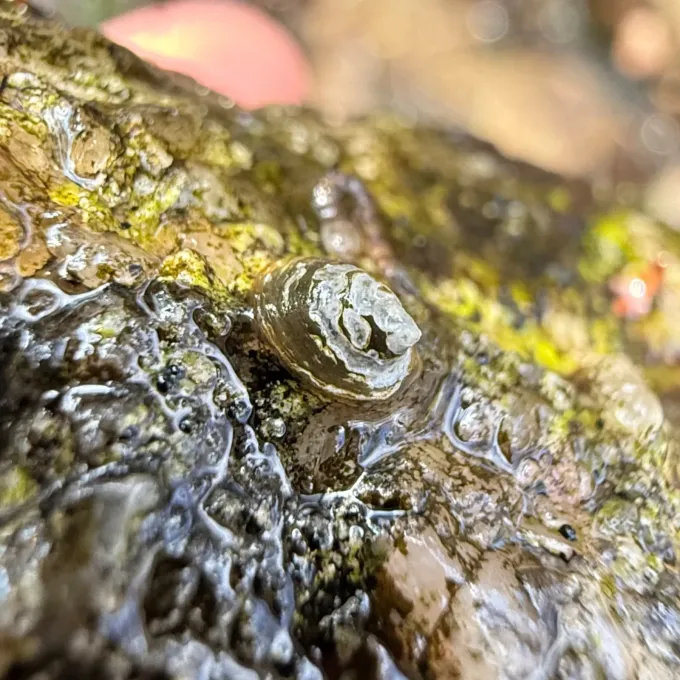
The river limpet (Ancylus fluviatilis) is a small freshwater mollusk that belongs to the order Basommatophora and the family Ancylidae.
This pest is characterized by a tiny, cap-shaped shell, usually measuring between 5 to 8 millimeters in length, that clings tightly to surfaces.
The shell is generally brown or greyish and has a cone-like structure, often asymmetrical, which provides excellent camouflage on stones and submerged vegetation.
Unlike many other freshwater snails, the river limpet has a strong muscular foot designed to resist the forces of flowing water in rivers and streams.
Taxonomically, it is recognized as a member of the pulmonate snail group, uniquely adapted to oxygen-rich, fast-flowing aquatic environments.
What it damages
The river limpet can become a nuisance in agricultural settings, particularly in flooded fields where it may negatively impact rice cultivation and aquatic crops.
While their primary diet is periphyton, they frequently scrape the epidermis and soft tissues of young crop plants while feeding, leading to structural damage.
These feeding lesions create entry points for opportunistic fungal and bacterial pathogens, which can severely weaken or kill tender seedlings.
Heavy infestations can significantly reduce the vitality of crops, resulting in stunted growth and uneven stand establishment across the flooded fields.
The cumulative effect of tissue loss and secondary infections often leads to substantial yield losses if the mollusk population is not controlled.
When it appears
The life cycle of the river limpet is continuous throughout the growing season, with activity peaking when water temperatures reach optimal levels.
Reproduction occurs throughout the spring and summer, with eggs being deposited in gelatinous masses on submerged stems and leaves.
The species thrives in warm, stagnant, or slow-moving water, which is common in irrigated rice paddies during the active growing phase.
As water temperatures drop in the autumn, their metabolic activity slows, and they move to deeper, more stable sections of the water system to overwinter.
Understanding these seasonal dynamics is crucial for timing agricultural interventions effectively before the population reaches damaging thresholds.
Signs of infestation
Signs of infestation include visible scrapings or skeletonized tissue on the surfaces of submerged leaves and plant stems.
Small cap-shaped shells can be observed attached to the foliage, appearing as distinct, rigid bumps or crusts upon close inspection.
Affected crop areas often exhibit chlorosis or wilting, reflecting the damage inflicted on the plant's vascular and epidermal systems.
Large numbers of individuals may cause localized turbidity in the water column due to their constant grazing activities on the plant surfaces.
The presence of clear, jelly-like egg masses on the lower parts of plants is a key indicator of an active and growing population of this pest.
Control measures
Integrated pest management, starting with water level manipulation and drying periods, is the most effective way to suppress limpet populations.
Clearing irrigation channels of weeds and debris prevents the establishment of breeding sites and removes food sources for the mollusks.
Biological controls, including the introduction of natural predators like certain fish species or waterbirds, can help maintain population balance.
Chemical intervention should be considered only as a last resort, using approved molluscicides that comply with environmental safety regulations.
Regular monitoring of field edges and submerged structures is essential to identify early population buildup and implement management before damage occurs.
Taxonomy
- Latin name
- Ancylus fluviatilis
- Order
- Molluscs
- Family
- Planorbidae
- EPPO code
- ANCUFL
Discussion
No discussions yet — be the first.