
Great Ramshorn Snail
Planorbarius
Description
How to identify
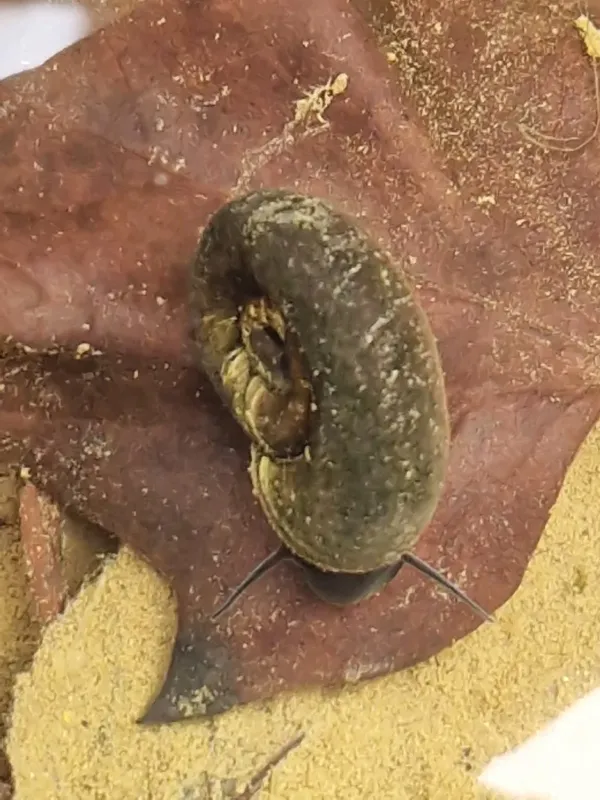
The Great Ramshorn Snail (Planorbarius corneus) is a freshwater gastropod belonging to the family Planorbidae. It is characterized by its distinct discoid shell coiled in a single plane.
The shell typically displays a dark brown or horny appearance, which inspired the common name. Adults can reach a size of 30–35 mm in diameter.
The snail's body is dark-colored and equipped with a strong muscular foot, allowing for efficient locomotion across aquatic plants and substrate surfaces.
A key biological feature is the pulmonary sac, which enables the snail to breathe atmospheric air by surfacing periodically.
They reproduce by laying eggs in transparent, jelly-like capsules securely attached to plant leaves, stems, or underwater equipment.
What it damages
This snail is considered a significant pest in hydroponics, aquaponics, and ornamental pond environments. They are phytophagous and actively feed on fresh plant tissues.
Snails consume the soft parts of leaves, often skeletonizing them and leaving only tough vascular veins, which drastically reduces the plant's photosynthetic capacity.
Seedlings and young shoots of aquatic crops are particularly vulnerable, as a high density of snails can rapidly destroy entire plant populations.
Beyond physical consumption, these snails often act as vectors for fungal and bacterial pathogens, spreading infections throughout the plant system.
In industrial systems, their presence can cause mechanical issues by clogging filters, pumps, and irrigation nozzles, disrupting operations.
When it appears
The activity of the Great Ramshorn Snail is highly dependent on water temperature. As temperatures rise above 10–12 degrees Celsius in spring, they begin active feeding and breeding.
Peak biological activity occurs during the summer months when metabolism and reproductive rates are at their highest.
Under optimal conditions, the species can produce multiple generations within a single growing season, leading to rapid population explosions.
As temperatures decline in autumn, activity decreases, and adults prepare to hibernate within the bottom sediment layer.
In greenhouses or heated hydroponic facilities, the life cycle remains uninterrupted, allowing for year-round damage to crops.
Signs of infestation
The first indicator of an infestation is the appearance of small, irregular perforations or missing tissue on the leaves of aquatic plants.
The direct observation of adult snails or juveniles on the underside of leaves and near the root crown confirms their presence.
The discovery of transparent egg clusters on tank walls or leaf surfaces is a clear signal that the population is actively breeding.
Stunted growth and chlorosis in plants, coupled with damaged vegetation, are common secondary symptoms of significant snail pressure.
- Ragged or missing leaf margins.
- Presence of egg capsules on plant stems.
- Skeletonized leaf patches.
Control measures
Manual removal is the most environmentally friendly method for small populations; frequent collection significantly reduces the pressure on crops.
Biological control involves introducing natural predators, such as mollusk-eating fish, which can significantly suppress snail numbers in larger setups.
Modifying water parameters, such as adjusting pH levels or calcium hardness, can make the environment less favorable for the snails' shell development and reproduction.
While chemical molluscicides are available, they should be used with extreme caution to avoid harming other beneficial organisms or the plants themselves.
Strict quarantine protocols and disinfection of all new plant material are essential measures to prevent the introduction of this pest into pristine systems.
Taxonomy
- Latin name
- Planorbarius
- Order
- Molluscs
- Family
- Planorbidae
- EPPO code
- PLAOSP
Discussion
No discussions yet — be the first.