
Japanese pirkimerus
Pirkimerus japonicus
Description
How to identify
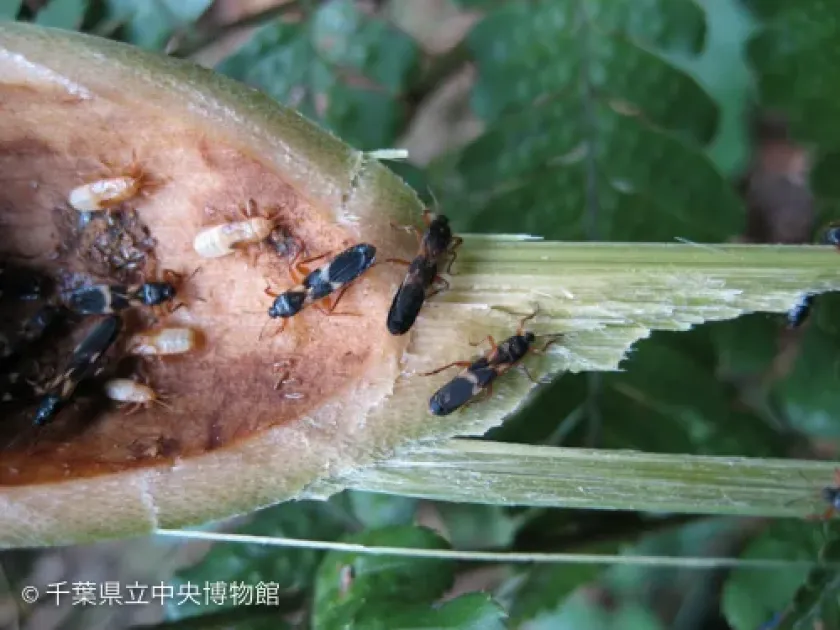
The Japanese pirkimerus (Pirkimerus japonicus) is a member of the Hemiptera order and the Miridae family, commonly known as plant bugs. These insects are characterized by a specialized piercing-sucking mouthpart designed to feed on plant juices.
Adult insects are typically small, with elongated bodies and soft exoskeletons. Their coloration often ranges from dark brown to black, allowing them to blend in with the foliage of host plants, making visual detection difficult.
Nymphs go through five developmental stages. They closely resemble adults but lack functional wings and full reproductive development. Their size increases with each molt, and their pigmentation becomes more defined as they reach maturity.
As a specialized pest, its presence in agricultural fields is closely tied to the availability of its preferred host crops. It thrives in diverse environmental conditions, often expanding its population rapidly when host plants are abundant.
To identify the pest in the field, agronomists typically use sweep nets to sample vegetation or place yellow sticky traps at the canopy level to monitor adult flight activity and density throughout the growing season.
What it damages
The primary hosts for Pirkimerus japonicus are legume crops, such as soybeans and beans. The pest feeds by piercing the epidermis of leaves and succulent stems to extract vital plant sap.
During the feeding process, the insect injects saliva containing enzymes into the plant tissues. This reaction causes cellular damage, manifesting as localized necrotic spots, leaf chlorosis, and stunted growth of the affected plant parts.
Heavy infestations result in significant physiological stress to the plant. This often leads to premature leaf senescence, reduced photosynthetic efficiency, and compromised development of reproductive structures, ultimately impacting seed yield.
The feeding sites act as entry points for secondary infections, including fungal pathogens and bacteria. This exacerbates the damage, leading to poor seed quality and potential market losses for producers.
The severity of the damage is often correlated with the timing of the infestation. Plants at the seedling and reproductive stages are particularly vulnerable to the impact of the pest's sap-feeding habits.
When it appears
The activity of the Japanese pirkimerus begins in late spring as temperatures rise, signaling the emergence of adults from overwintering sites. Its biological cycle is heavily influenced by ambient air temperatures and humidity.
Peak population levels typically occur during the summer months. This period aligns with the rapid vegetative growth and flowering stages of many legume crops, providing an ideal food source for the pest's reproductive cycle.
Under optimal climate conditions, the species can produce multiple generations within a single growing season. This cumulative increase in population density can lead to sudden, severe infestations if not managed correctly.
As autumn approaches and temperatures drop, the pests prepare for diapause. They seek shelter in plant debris, soil crevices, or field margins, where they remain dormant throughout the winter months until the next season begins.
Strategic monitoring throughout the season is essential for effective management. Early detection of the first generation allows for the implementation of control measures before the population reaches damaging levels.
Signs of infestation
Initial signs of infestation appear as tiny, pale, chlorotic spots on the upper leaf surface, corresponding to the insect's feeding punctures. Over time, these spots can coalesce, leading to a mottled or stippled appearance.
Affected plants may exhibit signs of wilting, leaf curling, or general yellowing. In severe cases, the plant's overall architecture becomes stunted, and the development of new shoots is noticeably restricted.
- Presence of stippling and chlorotic spots on foliage.
- Leaf margins curling or twisting under stress.
- Stunting of stems and inhibited terminal growth.
- Presence of insect waste (frass) on the undersides of leaves.
- Visible sightings of nymphs or adults during canopy inspection.
These symptoms are often accompanied by a loss of turgor pressure in leaves, giving the plant a dehydrated appearance even when soil moisture is adequate. Regular scouting is required to distinguish these signs from nutrient deficiencies.
Identifying the pest requires careful examination of the underside of the leaves and the plant's growing points. The characteristic damage patterns usually serve as a primary indicator for field diagnostics.
Control measures
Effective management of Pirkimerus japonicus requires an integrated approach that combines cultural practices, biological monitoring, and judicious use of chemical controls only when necessary.
Cultural control measures focus on removing alternate weed hosts around field boundaries and practicing thorough post-harvest soil cultivation to eliminate overwintering sites, thereby disrupting the pest's life cycle.
Biological control relies on preserving natural predators and parasitoids within the agroecosystem. Beneficial insects such as lacewings and predatory bugs play a crucial role in maintaining pest populations below economic thresholds.
When infestation levels exceed the economic threshold, chemical intervention is required. Systemic insecticides are generally the most effective, as they offer sustained protection against sap-feeding insects.
Application of insecticides must be handled with care to minimize risks to pollinators and other beneficial non-target organisms. Always follow the product label instructions, including safe handling and pre-harvest interval requirements.
Taxonomy
- Latin name
- Pirkimerus japonicus
- Order
- Hemiptera (bugs, aphids, leafhoppers)
- Family
- Lygaeidae
- EPPO code
- PIRKJA
Discussion
No discussions yet — be the first.