
Piezostethus
Piezostethus
Description
How to identify
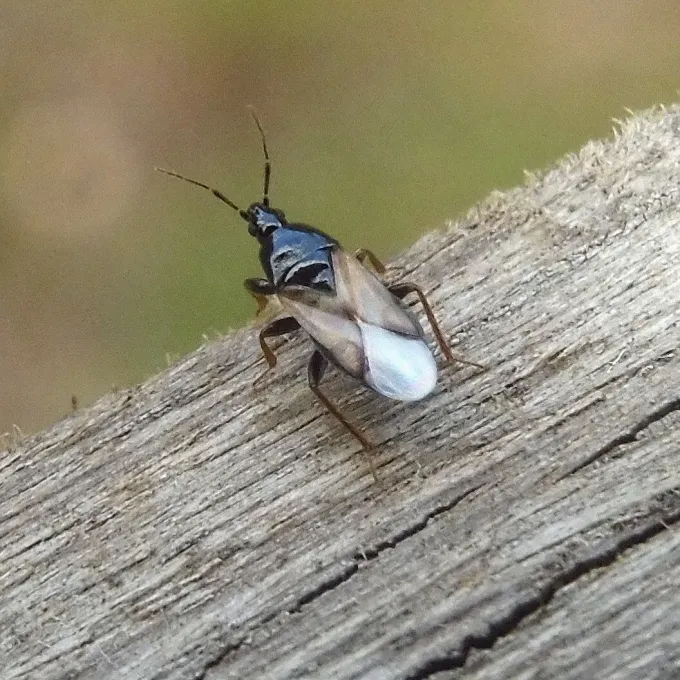
Piezostethus is a genus of predatory bugs belonging to the Anthocoridae family within the Hemiptera order. These are typically small insects, measuring roughly 2 to 4 mm in length, characterized by an elongated or oval-shaped body.
Adult individuals usually display dark coloration, ranging from brownish to black, which serves as effective camouflage while they search for prey on foliage or tree bark.
The head features a distinctively robust proboscis, essential for both feeding and defensive mechanisms. They possess fully developed wings that allow for significant dispersal across agricultural landscapes.
Nymphs undergo five developmental instars, gradually increasing in size and complexity while remaining wingless until they reach their final maturity stage.
The compound eyes are highly developed, allowing these bugs to effectively detect movement and prey within dense vegetation, even in conditions with limited natural light.
What it damages
While often recognized as beneficial entomophages that control smaller pest populations, Piezostethus can engage in facultative phytophagy when their natural prey becomes scarce.
Key crops susceptible to their feeding include various cereal grains, corn, and several types of vegetables, where they may puncture delicate tissues to extract nutrients.
Mechanical damage caused by these punctures can lead to distorted leaf growth, stunted development, and the formation of necrotic spots on tender green stems.
The primary concern regarding their pest potential is the transmission of plant pathogens that gain entry into the plant through the wounds created by the bugs' proboscis.
Environmental stress, such as drought, often triggers this shift towards plant-based feeding, as the bugs seek moisture and nutrients when their usual insect hosts are unavailable.
When it appears
Piezostethus activity typically commences in early spring, as temperatures rise sufficiently to trigger the emergence of insects from their overwintering shelters.
Population density often peaks mid-summer, aligning with the highest abundance of aphids and other small prey species upon which these predatory bugs depend for survival.
The life cycle is relatively rapid, allowing for multiple generations per growing season, depending on regional temperature variations and host availability.
Overwintering occurs primarily in the adult stage, with insects seeking refuge in leaf litter, bark crevices, or the upper layers of soil beneath protective debris.
As autumn progresses and daylight hours decrease, the insects exhibit reduced mobility and begin migrating toward their hibernation sites to survive the colder winter months.
Signs of infestation
Early symptoms of infestation include the appearance of tiny, pinpoint-sized necrotic lesions on leaf surfaces, which may later aggregate into larger, irregularly shaped discolored areas.
Leaf curling and the wilting of apical growth tips are frequent visual markers of concentrated feeding activity in specific parts of the canopy.
Careful inspection of the undersides of leaves often reveals exuviae (shed exoskeletons) left behind by nymphs after molting, serving as a clear indicator of a breeding population.
Detection in cereal crops is best achieved by sweeping techniques or by tapping plant stems over a white tray to dislodge the bugs for easier identification.
Secondary infections, such as fungal or bacterial pathogens, are common in areas damaged by the bugs, appearing as rotting or spreading lesions surrounding the initial puncture points.
Control measures
Effective management focuses on integrated pest management (IPM) strategies that maintain the ecological balance rather than seeking total eradication of the species.
Cultural practices, such as removing crop debris and managing weed reservoirs during the off-season, are crucial for reducing the number of available overwintering sites.
Selective use of pesticides is advised to prevent significant harm to natural predators, which play a major role in keeping Piezostethus populations at manageable levels.
Implementing crop rotation helps disrupt the life cycle of the pest, preventing it from establishing a persistent presence in the same field year after year.
- Monitoring local populations using sticky traps.
- Encouraging the presence of natural enemies and parasites.
- Maintaining optimal irrigation to prevent drought-induced phytophagy.
Taxonomy
- Latin name
- Piezostethus
- Order
- Hemiptera (bugs, aphids, leafhoppers)
- Family
- Anthocoridae
- EPPO code
- PIETSP
Discussion
No discussions yet — be the first.