
Forkbeard
Phycis phycis
Description
How to identify
It is crucial to clarify that Phycis phycis, commonly known as the Forkbeard, is a species of marine fish in the family Phycidae, not a plant pest.
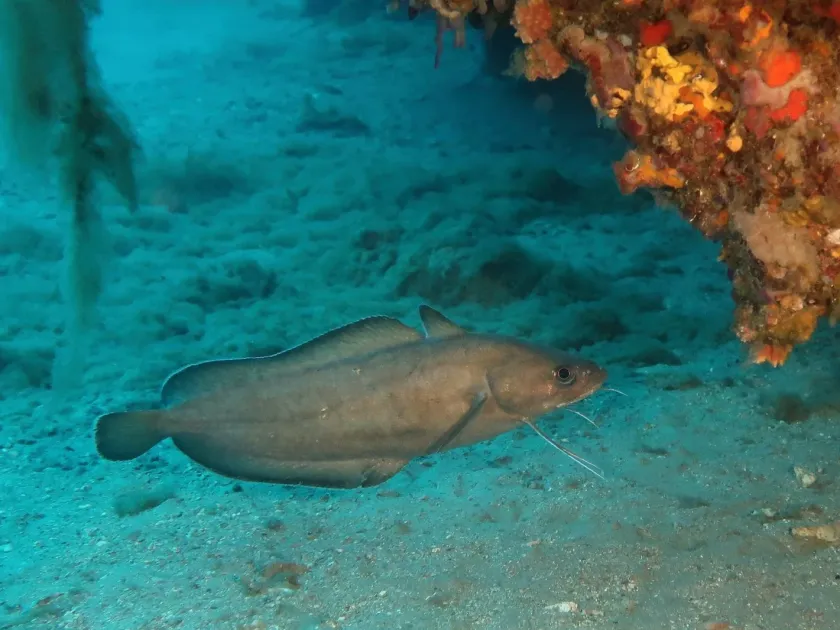
This species is characterized by its elongated body, distinctive pelvic fins, and dark brown coloration, typical of deep-water marine organisms.
Taxonomically, it belongs to the order Gadiformes (cods and relatives). It resides exclusively in marine environments, such as the Atlantic Ocean and the Mediterranean Sea.
Misclassifying this fish as a pest is a common error in digitized agricultural databases, likely due to misinterpreted scientific nomenclature.
For agronomists and plant protection specialists, it is important to ignore this species in any agricultural threat assessments, as it has no interaction with terrestrial vegetation.
What it damages
This biological organism causes zero damage to crops, vegetables, or fruit trees as its entire life cycle is restricted to underwater habitats.
The diet of Phycis phycis consists of crustaceans, mollusks, and small fish, which confirms it has no herbivorous tendencies.
There are no recorded instances in agricultural history where this species has negatively impacted plant health or crop yields.
Any reports claiming that this fish is a pest should be considered inaccurate, as they lack any entomological or botanical foundation.
The organism poses no threat to the agricultural economy, and there is no reason for concern regarding its presence in local water bodies near farmland.
Control measures
Since Phycis phycis is a marine fish and not a plant pest, no control measures or plant protection protocols are applicable or necessary.
The use of pesticides, herbicides, or any crop protection chemicals against this species is not only useless but also environmentally harmful.
The correct professional approach is to remove this entry from any lists of agricultural pests to ensure the accuracy of farm management software.
When conducting phytosanitary checks, specialists should rely on verified international databases like EPPO to avoid common nomenclature errors.
Focusing on verified pest lists will improve the efficiency and accuracy of integrated pest management (IPM) strategies on your farm.
Taxonomy
- Latin name
- Phycis phycis
- Family
- Gadidae
- EPPO code
- PYISPH
Discussion
No discussions yet — be the first.