
Atlantic cod
Gadus morhua
Description
How to identify
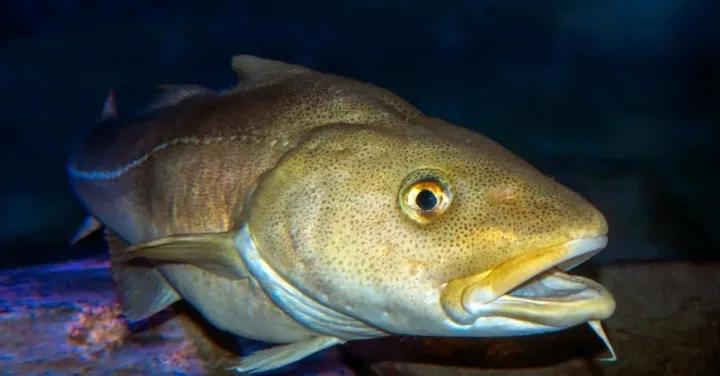
The Atlantic cod (Gadus morhua) is a member of the Gadidae family and is widely recognized for its three dorsal fins and a prominent barbel on its chin.
It is a cold-water fish found in the North Atlantic, typically reaching lengths of 60 to 120 centimeters depending on the specific population and environment.
The species displays a mottled color pattern that varies between gray, brown, and green, allowing it to blend into its seabed surroundings.
Taxonomically, it is categorized within the order Gadiformes, and it plays a critical role as a top predator in the marine food web.
Its biological structure is optimized for efficient movement through current-rich ocean waters, where it hunts for smaller fish and crustaceans.
What it damages
The Atlantic cod is not a plant pest. It exists entirely in aquatic environments and has no interaction with agricultural or horticultural crops.
However, byproducts from the cod industry, such as fishmeal and fish bones, are highly valued in agriculture as rich sources of organic matter.
These byproducts are processed into fertilizers that provide essential phosphorus and nitrogen to improve soil fertility and promote plant growth.
When used correctly, these organic supplements enhance the productivity of various crops and support sustainable cultivation practices.
There is no record of this species acting as a threat to plants, reinforcing its status as a beneficial natural resource rather than a nuisance.
When it appears
The seasonal development of Atlantic cod is largely driven by temperature fluctuations and the availability of prey in their northern habitats.
Spawning typically takes place in late winter and spring, as the fish congregate in specific spawning grounds to release their eggs.
Adult cod undergo seasonal migrations to follow the movement of their prey, which is heavily influenced by changes in ocean currents.
The intensity of these seasonal cycles is a key subject of marine biology, helping researchers predict changes in the health of the Atlantic ecosystem.
Understanding these timeframes is vital for managing commercial fishing levels to ensure the species' long-term survival.
Control measures
No pest control measures are applicable or necessary for the Atlantic cod, as it does not interfere with the health or development of crops.
Conservation efforts are actually focused on protecting cod stocks from overfishing to maintain the stability of the Atlantic ecosystem.
In agricultural settings, the main focus is the safe and effective application of fish-based amendments to enrich soil nutrient profiles.
Growers are encouraged to follow recommended dosage guidelines to avoid potential nutrient imbalances when applying fish-derived organic inputs.
By treating these biological resources with care, farmers can contribute to a cycle of sustainable production that respects marine biodiversity.
Taxonomy
- Latin name
- Gadus morhua
- Family
- Gadidae
- EPPO code
- GADUMO
Discussion
No discussions yet — be the first.