
Pacific cod
Gadus macrocephalus
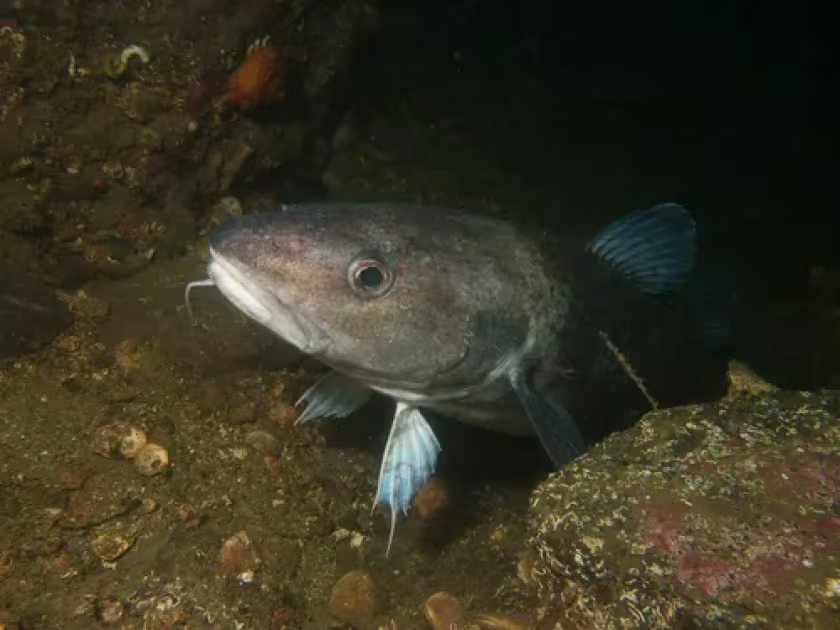
Description
How to identify
The Pacific cod (Gadus macrocephalus) is a prominent marine species belonging to the family Gadidae, which is within the order Gadiformes.
The species is physically characterized by its large, robust head, a heavy body, and a distinct barbel on its chin, which differentiates it from other cod species.
Its coloration typically ranges from brownish to gray, often with mottled patterns that allow for effective camouflage along the ocean floor.
Pacific cod inhabit cold, deep waters in the North Pacific Ocean, usually residing near the bottom of the continental shelf and slopes.
As a predatory fish, its biological existence is strictly tied to marine aquatic environments, where it feeds on various crustaceans, cephalopods, and smaller fish.
What it damages
It is vital to state that Pacific cod is not a plant pest; it possesses no biological capacity to interact with or damage terrestrial or hydroponic crops.
Because the species is exclusively aquatic and marine, it never encounters or feeds upon agricultural vegetation, fruits, or root systems.
There is zero recorded agricultural damage caused by this species, as its habitat and dietary requirements are completely incompatible with land-based farming.
Labeling this fish as a pest in an agronomic context is biologically inaccurate and reflects a fundamental misunderstanding of its ecological niche.
Farmers and researchers do not consider this species a threat, as it lacks the physiological tools, such as mandibles for plant grazing, required to affect crop health.
Control measures
There are no pest control or management strategies required for Pacific cod in agriculture, as it poses absolutely no risk to crops.
Instead of control measures, the Pacific cod is managed through fisheries science and international conservation policies to ensure the sustainability of its population.
No herbicides, pesticides, or biological control agents should ever be applied in relation to this species, as such actions would be environmentally damaging and useless.
Agronomic monitoring protocols for pests do not include this species, given that its geographic range is strictly limited to oceanic ecosystems.
Professionals in the agricultural sector should focus their efforts on managing verified pests that pose a genuine risk to plant growth and production.
Taxonomy
- Latin name
- Gadus macrocephalus
- Family
- Gadidae
- EPPO code
- GADUMA
Discussion
No discussions yet — be the first.