
Fivebeard rockling
Ciliata mustela
Description
How to identify
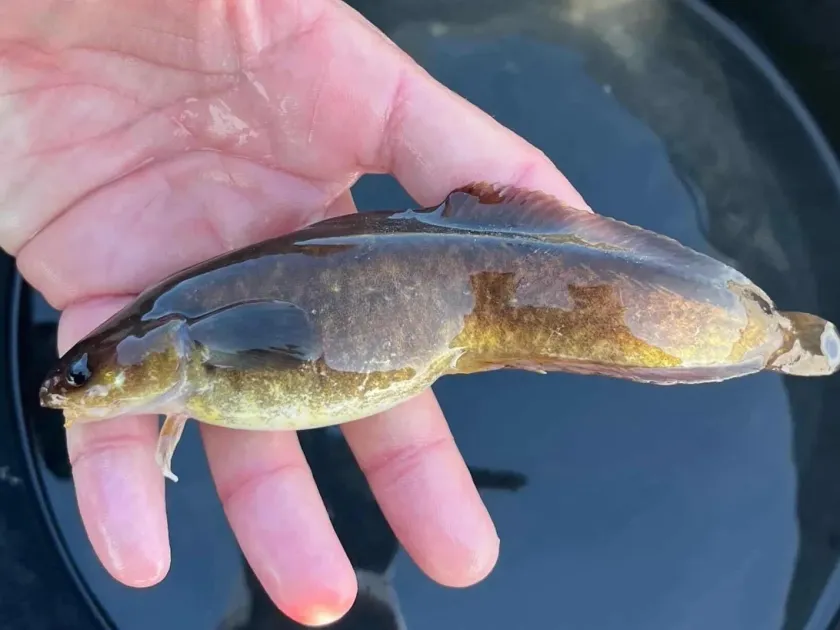
The fivebeard rockling (Ciliata mustela) is a marine fish belonging to the family Gadidae. It is strictly a saltwater species that lives in coastal waters and is not associated with any terrestrial agricultural ecosystems.
The fish features a distinctive long body with five sensory barbels around its mouth, which it uses to locate prey along the seabed. These physical adaptations are suited exclusively for an underwater environment.
Taxonomically, it is classified within the order Gadiformes, a group of fish that are economically relevant in commercial fisheries but irrelevant to land-based crop production.
It cannot survive outside of its aquatic habitat; therefore, it cannot interact with crops or participate in the life cycles of typical terrestrial agricultural pests.
Any classification of this species as a plant pest is scientifically incorrect and does not reflect its biological role as a marine predator and scavenger.
What it damages
The fivebeard rockling does not damage agricultural crops. It lacks the specialized mouthparts needed to consume foliage, roots, or any other plant tissues.
Its diet consists of small invertebrates like crustaceans and polychaetes. It has no biological incentive or ability to feed on agricultural products or damage cultivated fields.
In the context of agricultural science, this species is not listed as a pest because it does not affect crop health, development, or yield in any way.
There are no documented instances of this species interacting with farming activities, as its ecological niche is entirely separated from terrestrial crop cultivation.
Farmers and agronomists do not need to account for this fish when managing crop protection, as it is biologically impossible for it to interfere with farming operations.
When it appears
The biological cycle of the fivebeard rockling is regulated by marine seasonal changes and water temperatures, which are unrelated to the agricultural calendar.
Spawning and movement patterns of this fish occur in deep-water or coastal marine zones throughout the year, independent of the sowing or harvesting seasons.
There is no correlation between the growing season of crops and the life history of this marine fish.
Agricultural planning is based on the lifecycles of actual pathogens, weeds, and insect pests, none of which include marine fish species.
The temporal presence of the fivebeard rockling is dictated by marine ecosystem dynamics, far removed from the fields where crops grow.
Signs of infestation
There are no signs of plant damage or soil infestation that can be attributed to the fivebeard rockling, as it does not inhabit or interact with agricultural land.
Field diagnostics for crop pests focus on insects, mites, nematodes, and fungal spores; marine fish fall outside the scope of such diagnostic protocols.
Finding this species in an agricultural field would be an extreme environmental anomaly and would have no connection to crop production or pest management.
Any observations of damaged plants should be investigated through standard entomological or phytopathological practices, which will reveal causes unrelated to this species.
Standard field inspections do not monitor for marine species, as they are not valid subjects of agricultural concern.
Control measures
Control measures for the fivebeard rockling are non-existent in agriculture because the species is not a pest.
Management strategies should focus on proven, economically harmful pests rather than misidentified marine organisms.
Agricultural education emphasizes the importance of correctly identifying organisms to avoid the misuse of pesticides or labor for non-existent threats.
Farmers should rely on verified pest management literature that focuses on organisms capable of causing economic damage to their specific crops.
The fivebeard rockling is a component of marine biodiversity and holds no status as an agricultural threat, requiring no intervention from agronomists.
Taxonomy
- Latin name
- Ciliata mustela
- Family
- Gadidae
- EPPO code
- CILIMU
Discussion
No discussions yet — be the first.