
Burbot
Lota lota
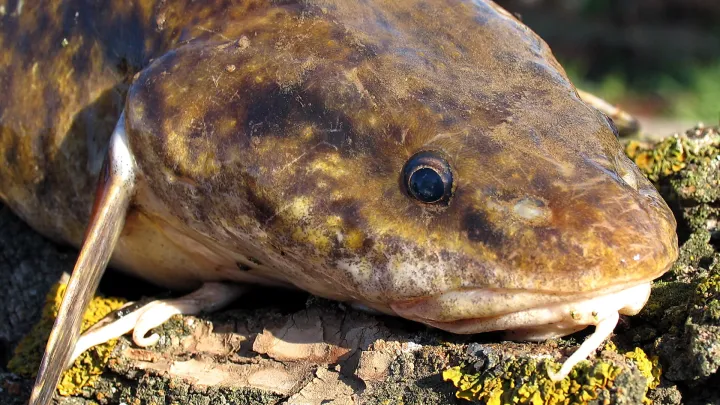
Description
How to identify
The burbot (Lota lota) is a unique freshwater fish belonging to the Gadiformes order and the Lotidae family.
It is characterized by a long, slender body covered in small scales, a flat head, and a single chin barbel.
Its coloration ranges from olive to brown with dark, mottled patterns, providing excellent camouflage on the riverbed.
As a predatory fish, it thrives in cold, well-oxygenated water with rocky or sandy bottoms, away from sunlight.
It is important to clarify that this species is not an agricultural pest and does not feed on vegetation.
What it damages
Burbot species do not cause any damage to agricultural crops, ornamental plants, or forestry resources.
They are purely carnivorous predators, feeding primarily on small fish, crustaceans, and aquatic insect larvae.
From an agronomic perspective, the presence of Lota lota in irrigation systems or reservoirs poses zero risk to crops.
They do not possess the biological apparatus to consume or damage plant tissues, making them non-factors in pest management.
Consequently, there are no reported damages or economic losses associated with burbot in the field of crop production.
When it appears
Burbot is a cold-water specialist, with peak biological activity occurring during the winter months.
They are known for spawning in mid-winter, often under ice cover, which is a distinctive ecological feature for this species.
During the summer, when water temperatures rise, they become inactive and seek refuge in deep, cool, and dark areas.
Their seasonal life cycle is entirely decoupled from the planting, growing, and harvesting cycles of commercial agriculture.
Temperature sensitivity restricts their distribution, keeping them far from the shallow, warm waters often found in irrigation channels.
Signs of infestation
There are no diagnostic signs of damage to plants as the burbot does not interact with vegetation in any harmful capacity.
In aquatic studies, the species is tracked through biological monitoring to assess the water quality and ecosystem health.
The absence of plant damage is consistent with the burbot's diet and habitat requirements as an aquatic predator.
Ecologically, the presence of healthy burbot populations is often an indicator of high water quality and an unpolluted habitat.
Therefore, no field diagnostic methods are necessary for this species in an agronomic or crop protection context.
Control measures
No pest control measures are required for the burbot as it is not considered an agricultural pest species.
Protection of aquatic environments from agricultural chemical runoff is the primary recommendation to maintain the health of these fish.
The use of pesticides or herbicides near habitats populated by Lota lota should be strictly controlled to prevent environmental contamination.
In aquaculture settings, specific management plans for fish populations may be applied, but this does not relate to plant protection.
- Maintenance of water quality
- Prevention of agrochemical runoff
- Environmental habitat conservation
Taxonomy
- Latin name
- Lota lota
- Family
- Gadidae
- EPPO code
- LOTALO
Discussion
No discussions yet — be the first.