
Tusk
Brosme
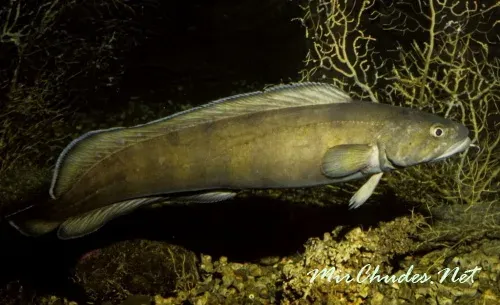
Description
How to identify
The Tusk (Brosme brosme) is a marine fish species classified within the cod family (Gadidae) and the order Gadiformes.
It is crucial to understand that Brosme brosme is not a plant pest; it is a deep-sea fish inhabiting the cold waters of the North Atlantic.
The fish is characterized by a long, single dorsal fin that extends to the tail, and it possesses a single barbel on its chin.
Typically found at depths ranging from 100 to 1,000 meters, it prefers rocky, uneven bottoms where it feeds on benthic organisms.
Adult specimens generally reach lengths of up to 120 centimeters and represent a significant species for commercial fisheries in Norway and Iceland.
What it damages
The Tusk does not damage any crops, plants, or agricultural produce, as it resides exclusively in a marine environment.
The classification of this organism as a plant pest is entirely erroneous and stems from a misunderstanding of the Latin nomenclature.
As a predatory fish, it does not possess mouthparts or digestive systems capable of consuming or damaging vegetation in any way.
No agricultural damage has ever been recorded in relation to this species, as it has no contact with terrestrial flora.
Any query linking this fish to agricultural destruction is factually incorrect and lacks any scientific evidence.
Control measures
No pest control measures are required, as the Tusk poses zero threat to agriculture, greenhouses, or open-field crops.
There is no need for insecticides, traps, or any phytosanitary interventions regarding this marine fish species.
Agronomists should ignore any claims suggesting that Brosme brosme affects plant health or crop yields.
The species should be respected as a component of marine biodiversity and a valuable resource for the fishing industry.
If you encounter misinformation about this species as a pest, please rely on verified taxonomic databases for clarification.
Taxonomy
- Latin name
- Brosme
- Family
- Gadidae
- EPPO code
- BROSSP
Discussion
No discussions yet — be the first.