
Phrissogonus laticostata
Phrissogonus laticostata
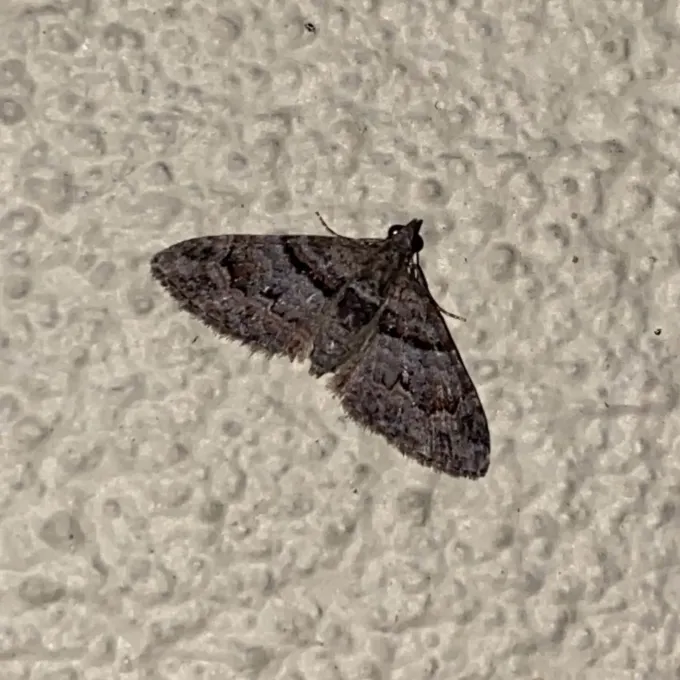
Description
How to identify
Phrissogonus laticostata is a species of moth belonging to the Geometridae family, order Lepidoptera. This insect is a nocturnal pest, meaning the adults are rarely seen during the day, as they rely on cryptic coloration to blend into tree bark and foliage.
The adult moth typically has a wingspan ranging from 15 to 20 mm. Its wings are patterned with shades of grey, brown, and black, providing excellent camouflage against natural surfaces, which helps it avoid predators and detection by growers.
The larvae, known as loopers or inchworms, exhibit the characteristic looping movement of the Geometridae family. They are highly adaptable and often change their skin color to match their host plant, making them exceptionally difficult to spot in dense foliage.
The life cycle follows a complete metamorphosis consisting of four stages: egg, larva, pupa, and adult. The speed of the life cycle is highly temperature-dependent, allowing for multiple generations in warmer climates throughout the growing season.
Overwintering usually occurs in the pupal stage, buried in the soil or protected under leaf litter. This dormancy allows the species to survive harsh winter conditions and emerge in early spring as temperatures rise.
What it damages
This pest is a polyphagous insect, capable of feeding on a diverse range of plant species. It is particularly notorious for damaging fruit trees in the Rosaceae family, including apples, pears, cherries, and plums, as well as various ornamental plants.
Larvae primarily attack the reproductive parts of plants, such as flower buds, young blossoms, and immature fruit. Feeding on these structures causes direct yield loss by preventing the development of fruit and damaging the plant's future production potential.
In addition to reproductive organs, larvae feed on young leaves. Heavy infestations can lead to the near-total skeletonization of foliage, which weakens the plant significantly and reduces its overall vigor.
The feeding sites often serve as entry points for pathogens, including bacteria and fungi, which can lead to secondary infections and tissue necrosis, further complicating the plant's health.
While often unnoticed at low densities, the cumulative impact of Phrissogonus laticostata can be severe in orchards or gardens if left unmonitored during the critical spring flowering period.
Signs of infestation
One of the earliest signs of infestation is the presence of buds that fail to bloom. Upon closer inspection, these buds often show small holes or hollowed-out interiors where the larva has been feeding.
Larvae often use silk threads to tie leaves together or to webbing buds, creating protective nests. The presence of such silk, combined with small dark pellets of larval excrement (frass), is a reliable indicator of their activity.
Deformed shoots and stunted growth are common symptoms observed on plants suffering from prolonged larval feeding. These structural abnormalities occur as the plant attempts to compensate for damaged growing points.
If branches are gently shaken, larvae may descend on fine silk threads. This behavioral response is a useful diagnostic technique for growers to verify the presence of the pest in the canopy.
Leaf discoloration, specifically the appearance of brown or necrotic patches on foliage, indicates feeding damage that has compromised the plant’s photosynthetic capacity.
Control measures
Effective management requires an integrated pest management (IPM) approach. Cultivation practices, such as tilling the soil beneath host plants in late autumn or early spring, can destroy overwintering pupae hidden in the ground.
Sanitation is critical; removing debris and fallen leaves around the base of trees limits available overwintering sites. Additionally, managing weeds in the orchard helps remove alternative host plants that support the pest population.
Chemical control should be timed to match the early larval stage. It is recommended to use selective insecticides that minimize impact on beneficial insects and pollinators while effectively targeting the moth larvae.
Biological control methods, such as utilizing microbial pesticides containing Bacillus thuringiensis, offer an eco-friendly way to manage populations without the risk of long-term chemical residue buildup.
- Deploy pheromone traps to monitor adult flight activity and determine optimal spray timing.
- Use light traps to track population fluctuations throughout the season.
- Encourage natural predators and parasitoids by planting flowering species near orchard borders.
Taxonomy
- Latin name
- Phrissogonus laticostata
- Order
- Lepidoptera (butterflies)
- Family
- Geometridae
- EPPO code
- PHRULA
Discussion
No discussions yet — be the first.