
Common Eastern Firefly
Photinus pyralis
Description
How to identify
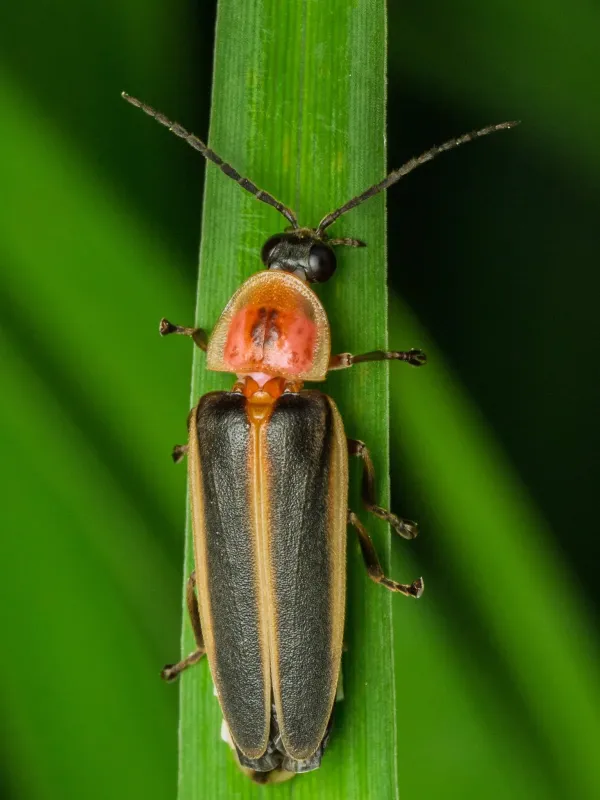
The common eastern firefly (Photinus pyralis) is a beetle belonging to the Lampyridae family. It is easily recognized by its dark elytra with light margins and the yellow-orange pronotum, typically measuring about 15 millimeters in length.
This species is well-known for its bioluminescent signaling. Males fly at dusk, emitting rhythmic light flashes to attract females, which remain on the ground or low vegetation, responding with their own light patterns.
The larval stage of Photinus pyralis is predatory and primarily soil-dwelling. They possess specialized mandibles that allow them to inject digestive enzymes into their prey, which is a characteristic of their hunting behavior.
Their life cycle consists of egg, larva, pupa, and adult stages. The larvae often spend more than a year developing in the soil, depending on the environmental conditions and the availability of food sources.
In terms of agricultural assessment, this species is considered a beneficial insect. It plays a significant role in the ecosystem by predating on various soft-bodied organisms that might otherwise become garden pests.
What it damages
Photinus pyralis does not feed on cultivated crops. Adults of this species usually consume little to no food, focusing their energy solely on reproduction, meaning they pose zero threat to foliage or harvests.
Larvae, being predatory, are highly beneficial to gardens and agricultural plots. Their diet consists primarily of slugs, snails, and other small soil-dwelling invertebrates that often damage vegetables and ornamental plants.
Consequently, the economic impact of the common eastern firefly on farming is positive rather than negative. They act as natural regulators of pest populations, functioning as an essential part of an integrated pest management strategy.
There are no documented instances where this beetle causes injury to agricultural products. Misidentifying this insect as a pest can lead to the inappropriate application of toxic chemicals, which causes more harm than good.
Agronomists suggest viewing the presence of fireflies as a sign of high environmental quality. Promoting their habitat is a recommended practice for sustainable and ecologically friendly agricultural management.
Control measures
Since the common eastern firefly is a beneficial insect, no control measures are necessary. On the contrary, farmers should focus on conservation efforts to support their populations.
Avoiding the use of broad-spectrum insecticides is crucial. These chemicals often kill beneficial beetles, including fireflies, leading to an increase in secondary pest problems due to the removal of natural predators.
Creating suitable habitats is the best way to support these insects. Maintaining leaf litter, mulch, and undisturbed soil provides the necessary cover and food sources for larvae to complete their development.
Light pollution mitigation is also vital for firefly conservation. Excessive outdoor lighting at night interferes with their signaling and mating behavior, which can lead to a decline in their numbers.
- Reduce chemical insecticide use.
- Maintain undisturbed mulch or leaf litter.
- Minimize night-time light pollution.
- Encourage biodiversity in the garden.
- Provide damp, natural soil habitats.
Taxonomy
- Latin name
- Photinus pyralis
- Order
- Coleoptera (beetles)
- Family
- Lampyridae
- EPPO code
- PHOTPY
Discussion
No discussions yet — be the first.