
Firefly
Luciola
Description
How to identify
Fireflies (family Lampyridae, genus Luciola) are beetles well-known for their bioluminescence. Adult insects typically have an elongated, soft body measuring between 5 and 20 mm.
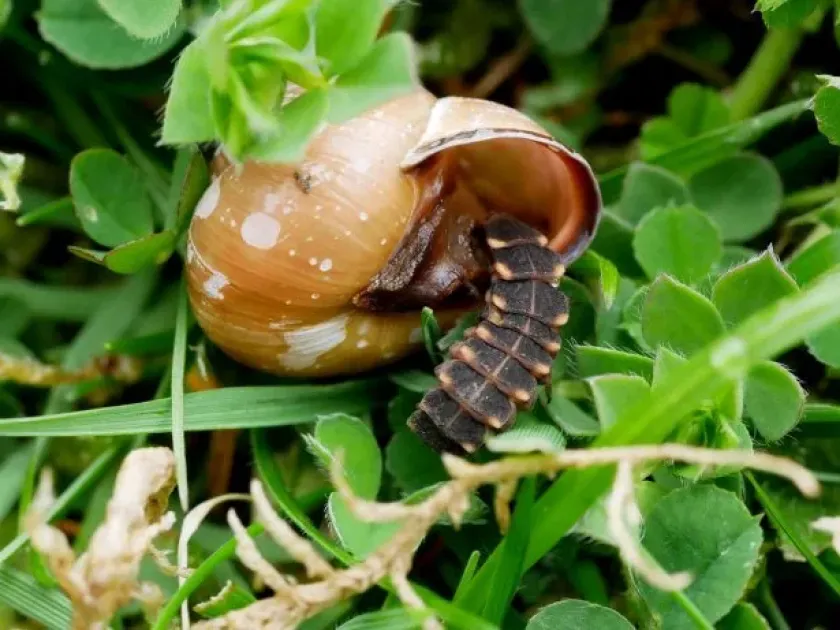
The larvae of fireflies are often flattened with strong, biting mouthparts. They are highly specialized predators that navigate through soil and leaf litter efficiently.
In terms of agricultural classification, fireflies are not considered plant pests. They belong to the order Coleoptera and occupy the role of predators rather than herbivores.
Adult fireflies often do not eat at all, relying on energy reserves accumulated during their larval stage, or they feed exclusively on nectar and pollen.
The most distinctive feature of these insects is their light production, which serves as a communication tool for mating in nocturnal environments.
What it damages
Fireflies do not cause any damage to crops, vegetables, or fruit trees. They do not feed on plant foliage, stems, or root systems, and they do not affect harvest quality.
Their presence in a garden is an indicator of ecological stability. By preying on slugs and snails, they help reduce the number of true garden pests.
There is no economic loss associated with the presence of fireflies. They are purely beneficial organisms within a healthy agricultural ecosystem.
Misidentifying fireflies as pests is a common mistake for amateur gardeners. It is crucial to recognize their role as natural controllers of gastropod populations.
Applying insecticides to eliminate fireflies is counterproductive as it disrupts natural predator-prey dynamics and leads to an increase in harmful slugs.
When it appears
Adult firefly activity is most prominent during the summer months, specifically at dusk and throughout the night when they are visible due to their glow.
Larvae remain active throughout the growing season, preferring moist and shady environments where their prey, such as snails, is abundant.
The life cycle encompasses four distinct stages: egg, larva, pupa, and adult. Larvae overwinter in sheltered locations within the soil or under organic debris.
Pupation typically occurs in the spring, allowing the adults to emerge as temperatures and humidity levels become optimal for their life cycle.
Higher moisture levels during the season correlate with increased populations, as moist soil is vital for the survival of both the fireflies and their prey.
Control measures
Control measures are not required for fireflies. They are beneficial insects, and agricultural practices should aim to protect rather than eradicate them.
If you wish to manage their population, simply maintain tidy garden beds and remove excess rotting vegetation, which acts as their habitat.
Avoid the indiscriminate use of broad-spectrum pesticides, which will kill these beneficial beetles and negatively impact the overall garden health.
Encouraging biodiversity is the best strategy for sustainable gardening. Fireflies represent a high-value biological control agent for slug management.
To reduce their nighttime visibility, minimize bright artificial lighting in the garden to ensure you do not interfere with their natural mating behavior.
Taxonomy
- Latin name
- Luciola
- Order
- Coleoptera (beetles)
- Family
- Lampyridae
- EPPO code
- LUCLSP
Discussion
No discussions yet — be the first.