
Common glow-worm
Lampyris noctiluca
Description
How to identify
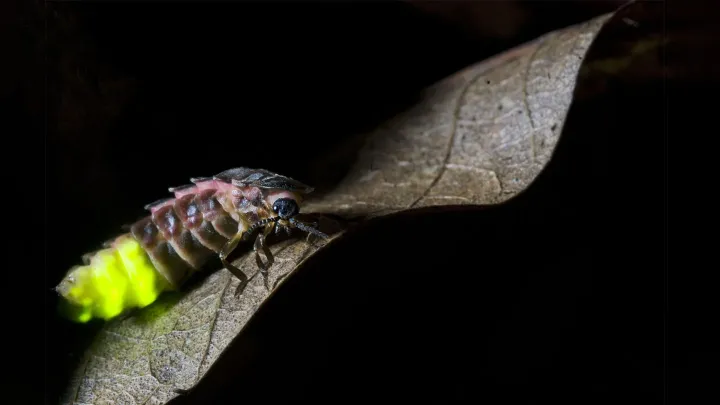
The common glow-worm, scientifically known as Lampyris noctiluca, is a member of the Lampyridae family. The species is characterized by striking sexual dimorphism: the males are winged beetles, while the females resemble larvae and are wingless, using bioluminescence to attract mates at night.
The larvae are dark in color, flattened, and highly mobile. They are primarily nocturnal and favor moist habitats such as dense undergrowth, leaf litter, or protected areas under stones, where they can search for food safely.
The life cycle of Lampyris noctiluca can extend up to three years. Most of this time is spent in the larval stage, where they feed continuously and grow before finally reaching adulthood to reproduce.
These insects are an integral part of a healthy garden ecosystem. They are widely recognized by entomologists and agronomists as specialized predators, not pests.
Identifying them correctly is crucial, as their presence should be encouraged by gardeners rather than suppressed by chemical interventions.
What it damages
The common glow-worm does not cause any damage to agricultural or garden crops. They are exclusively predatory in their larval stage and do not feed on plant tissues.
Their primary diet consists of terrestrial gastropods, specifically slugs and snails. By hunting these mollusks, glow-worm larvae provide a valuable service in controlling common garden pests.
Unlike traditional insect pests that eat foliage or roots, the glow-worm acts as a biological regulator. It helps keep slug populations in check, protecting vegetables, flowers, and ornamental plants.
There is no record of Lampyris noctiluca harming crops, and the misconception that they are pests stems from a misunderstanding of their predatory role in the garden food web.
In essence, their presence is a sign of a balanced and sustainable gardening environment, where predatory insects effectively manage the pest population naturally.
When it appears
Adult glow-worms are typically active during the mid-summer months, specifically June and July. During this time, the glowing females can be seen in meadows and gardens at night.
The larvae are active throughout the growing season, provided that moisture levels are sufficient. They remain active as long as their primary prey, slugs, are present.
As the weather cools in autumn, the larvae retreat into the soil, under debris, or into crevices to enter a period of dormancy, or diapause, lasting through the winter.
The reproduction phase occurs in the summer, with eggs laid in moist soil. The newly hatched larvae continue to grow until the weather turns cold, resuming their lifecycle the following spring.
Their activity period aligns perfectly with the time when slugs are most problematic, making the glow-worm an effective natural seasonal control agent.
Control measures
As a beneficial predator, the common glow-worm requires no control measures. Instead, gardeners should focus on conservation strategies to foster a healthy population.
To encourage glow-worms, minimize the use of harsh chemical pesticides, particularly molluscicides, which can kill both the target slugs and their natural predators.
Maintaining diverse habitats such as log piles, leaf litter, and areas with tall grass provides essential shelter and foraging grounds for the larvae to hunt effectively.
Avoid excessive night lighting in the garden during the summer months, as artificial light interferes with the females' ability to signal to males and inhibits successful reproduction.
- Reduce or eliminate chemical pesticide use.
- Keep areas with native vegetation and leaf litter.
- Avoid night-time artificial illumination in the garden.
- Promote biodiversity to support natural predator-prey cycles.
Taxonomy
- Latin name
- Lampyris noctiluca
- Order
- Coleoptera (beetles)
- Family
- Lampyridae
- EPPO code
- LAMPNO
Discussion
No discussions yet — be the first.