
Photinus fireflies
Photinus
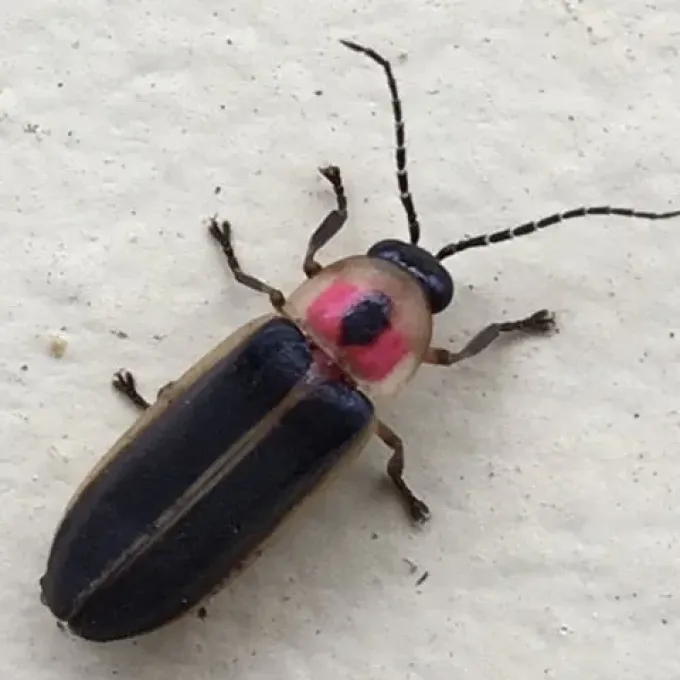
Description
How to identify
Fireflies of the genus Photinus belong to the family Lampyridae within the order Coleoptera. They are globally recognized for their bioluminescent signaling.
Adults typically feature soft wing covers and an elongated body, often with distinctive orange or yellow markings on the pronotum.
The larvae, which are frequently found in moist soil or leaf litter, possess flattened bodies and are adapted for a cryptic lifestyle.
Taxonomically, they are categorized as beetles, and their presence is often a sign of a biodiverse and healthy ecosystem.
The life cycle involves complete metamorphosis, where the larvae can spend up to two years developing before pupating into adult beetles.
What it damages
Strictly speaking, Photinus fireflies are not considered agricultural pests because they do not feed on plant tissues, stems, or roots.
They are primarily carnivorous insects that hunt other small invertebrates, such as slugs, snails, and worms in the soil.
Any damage attributed to them is incidental and usually occurs only when larvae forage for prey in close proximity to vulnerable seedling roots.
There are no documented cases of Photinus causing significant economic loss to major agricultural crops or garden plants.
As they do not damage crops, they should not be targeted by standard pest control programs or chemical interventions.
When it appears
Adult Photinus fireflies are most active during the summer months, with their peak bioluminescent activity occurring during the dusk and early night hours.
Larvae remain active throughout the warmer months, typically dwelling in moist environments such as under mulch, rocks, or garden debris.
Their life cycle is highly dependent on environmental moisture, meaning their peak activity often follows periods of rainfall.
During the onset of colder weather, larvae prepare for hibernation by burrowing deeper into the soil or retreating into dense organic matter.
Activity resumes in the spring once soil temperatures consistently rise above the threshold required for metabolic stimulation.
Signs of infestation
The most obvious indicator of Photinus presence is the characteristic rhythmic pulsing of yellow-green light in gardens during late spring and summer nights.
Larvae can often be spotted by carefully clearing away moist mulch or examining the underside of damp boards and garden waste.
The lack of common plant damage symptoms—such as chewed leaves or wilted stems—serves as a primary indicator that these insects are not harming the plants.
The presence of empty mollusk shells in the vicinity of larvae often suggests that these fireflies are actively controlling populations of garden snails.
High biodiversity, including the presence of fireflies, often indicates that the soil environment has not been overly degraded by synthetic pesticides.
Control measures
There are no recommended control measures for Photinus fireflies in professional agronomy because they are not recognized as crop pests.
Using insecticides to eliminate fireflies is highly discouraged as it destroys beneficial predators and disrupts the ecological balance of the garden.
If their presence is undesirable in certain areas, simple physical clearing of debris and management of soil moisture are sufficient to naturally discourage them.
Maintaining good soil aeration and drainage reduces the damp conditions that attract larval stages to specific areas of a landscape.
It is strongly advised to protect Photinus populations as they serve as natural predators of snails and slugs, which are actual garden pests.
Taxonomy
- Latin name
- Photinus
- Order
- Coleoptera (beetles)
- Family
- Lampyridae
- EPPO code
- PHOTSP
Discussion
No discussions yet — be the first.