
Black carrion beetle
Phosphuga atrata
Description
How to identify
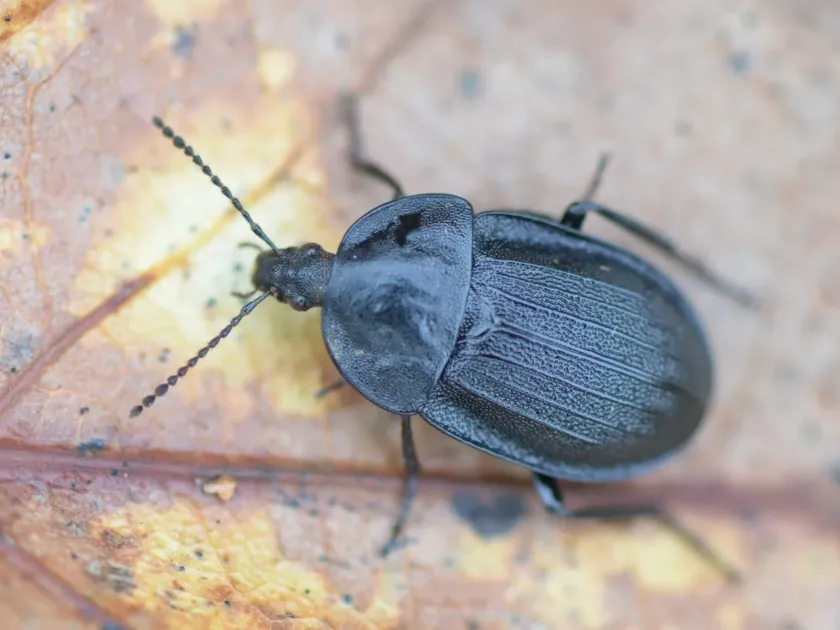
The black carrion beetle (Phosphuga atrata) belongs to the Silphidae family, order Coleoptera. It is easily recognized by its unique pronotum, which narrows significantly towards the head.
Adult beetles are typically 10-15 mm long and have an entirely black color. The elytra are densely punctured, giving them a distinct matte appearance compared to other scavenger beetles.
The larvae are flat, dark-colored, and resemble woodlice in shape. They are highly mobile and adapted to life in humid environments, such as leaf litter and soil surfaces.
These beetles are primarily nocturnal, preferring to spend the daylight hours hiding under debris, stones, or within the upper soil layers to avoid desiccation.
Unlike most of its relatives that feed exclusively on carrion, this species is known for its predatory behavior, specifically targeting gastropods.
What it damages
The primary food source for P. atrata consists of terrestrial snails and slugs. They act as natural biological control agents by reducing populations of these destructive mollusks.
However, during periods when their primary prey is scarce, both adults and larvae may shift their diet to plant matter, causing damage to various crops.
Leafy greens like lettuce, cabbage, and soft fruits such as strawberries are particularly vulnerable to their feeding activity when these beetles are abundant.
Damage typically manifests as irregular holes or gouges on leaves and fruits, which can impact the marketability and general health of the affected plants.
While they are not considered primary agricultural pests in most cases, their potential to feed on crops makes them a concern in high-density populations.
When it appears
The activity of the black carrion beetle begins in early spring as soil temperatures rise, prompting overwintering adults to emerge from their dormancy.
Peak activity and mating occur during late spring and early summer, typically May and June, when egg-laying takes place in moist soil environments.
Larval development occurs throughout the summer months, with the duration of the life cycle heavily influenced by humidity levels and the availability of prey.
By late summer, larvae pupate in the soil, and a new generation of adults emerges, which will eventually seek out sheltered areas to survive the winter months.
Extended periods of rainfall and mild summer weather generally favor the proliferation of this species in gardens and vegetable patches.
Signs of infestation
Key indicators of their presence include damaged plant foliage and the finding of empty, damaged snail shells, which point to successful hunting in the vicinity.
During the night, adults can be spotted near the base of plants or on low-hanging leaves using a flashlight, revealing their nocturnal feeding habits.
Larvae are often found under mulch, damp boards, or organic debris, where they seek moisture and protection during the day.
Observations of irregular, pit-like damage on strawberries or leafy vegetables indicate that the beetles have turned to plant tissues due to a lack of prey.
Large aggregations found in cool, damp garden corners during dry days are a strong signal that the population density is significant.
Control measures
Cultural control strategies focus on reducing excess moisture and maintaining a tidy garden to eliminate potential hiding spots for the beetles.
Regular soil cultivation disrupts the life cycle of the larvae by exposing them to the elements and destroying their burrowing channels in the root zone.
- Use bait traps to monitor and reduce populations of slugs and beetles.
- Manual collection of beetles in the evening hours for small-scale infestations.
- Removal of thick mulch or debris near susceptible vegetable beds.
Biological control using entomopathogenic nematodes can be an effective and environmentally friendly way to reduce both slug and beetle larvae populations.
Chemical intervention should be restricted to severe outbreaks and managed carefully to avoid harming other beneficial insects present in the garden ecosystem.
Taxonomy
- Latin name
- Phosphuga atrata
- Order
- Coleoptera (beetles)
- Family
- Silphidae
- EPPO code
- PHOGAT
Discussion
No discussions yet — be the first.