
Lesser glow worm
Phosphaenus hemipterus
Description
How to identify
The Lesser glow worm (Phosphaenus hemipterus) is a species of beetle belonging to the Lampyridae family, known for its unique life cycle and appearance.
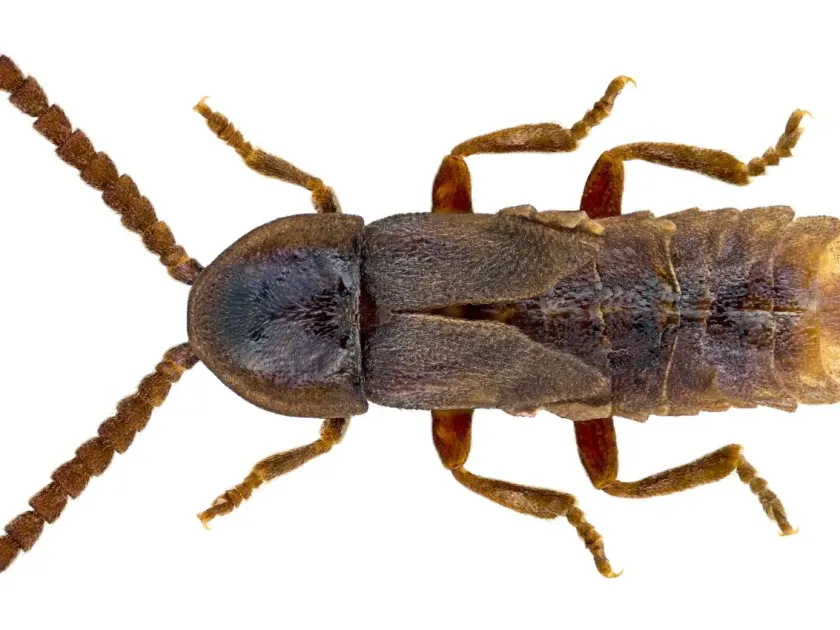
Adult beetles typically measure between 7 to 10 mm in length and exhibit significant sexual dimorphism, with males having functional wings while females are wingless.
The body is covered in fine hairs and has a dull, dark brown to black coloration, which serves as camouflage within soil and leaf litter.
Unlike many other members of the Lampyridae family, the Lesser glow worm does not produce bioluminescence in its adult stage.
A key identifying feature is the pronotum, which partially covers the head, a common characteristic of fireflies that aids in visual recognition.
What it damages
While often overlooked, the Lesser glow worm acts as a predator that targets soil invertebrates, specifically earthworms and small slugs.
By preying on earthworms, these beetles can negatively affect soil structure, aeration, and the natural decomposition process of organic matter.
In high populations, these larvae may disrupt the balance of the soil food web, which can indirectly influence the health of the plant root zone.
The damage is considered ecological, as the reduction of earthworm activity leads to reduced soil fertility and nutrient cycling efficiency.
Agricultural areas that rely heavily on earthworm-maintained soil health may see a decline in productivity if the Lesser glow worm population becomes excessive.
When it appears
The life cycle of the Lesser glow worm is relatively long, often spanning multiple years from egg to the final adult stage in the soil.
Adult beetles are most commonly observed during late spring and early summer when mating and egg-laying activities take place.
The larvae, which are the primary predatory stage, remain active throughout the warmer months, hunting prey in the top layers of the soil.
Overwintering occurs primarily in the larval stage, deep within the soil or protected under thick layers of mulch or decomposing vegetation.
The emergence of the new generation is highly dependent on environmental variables such as soil temperature and moisture levels.
Signs of infestation
A primary indicator of their presence is a noticeable decline in earthworm numbers in garden beds without any application of chemical soil treatments.
Adult beetles can be detected during garden maintenance or when turning over the soil, particularly in the evening hours when they are most mobile.
The presence of flattened, brownish larvae in the topsoil is a direct sign of a well-established population within the area.
Fragmented remains of soil invertebrates found near the root zone of plants can indicate that predatory larvae are actively feeding nearby.
Observing wingless females moving slowly across the surface during late spring confirms that the population is currently in the reproductive phase.
Control measures
Control strategies for the Lesser glow worm focus on cultural practices to maintain a balanced soil ecosystem rather than eradication.
- Avoid over-watering to keep soil conditions less favorable for excessive larval activity.
- Practice regular, shallow soil cultivation to disrupt larval movement and development.
- Enhance soil health with organic compost to encourage a high turnover of organic matter.
- Manually remove adult beetles if they appear in high concentrations during the spring.
Chemical intervention is rarely recommended or necessary, as it would cause collateral damage to beneficial soil fauna, including earthworms.
Encouraging a diverse ecosystem helps keep the population of predatory larvae in check naturally, ensuring that the soil remains productive and healthy.
Taxonomy
- Latin name
- Phosphaenus hemipterus
- Order
- Coleoptera (beetles)
- Family
- Lampyridae
- EPPO code
- PHOHHE
Discussion
No discussions yet — be the first.