
Pale brindled beauty
Phigalia
Description
How to identify
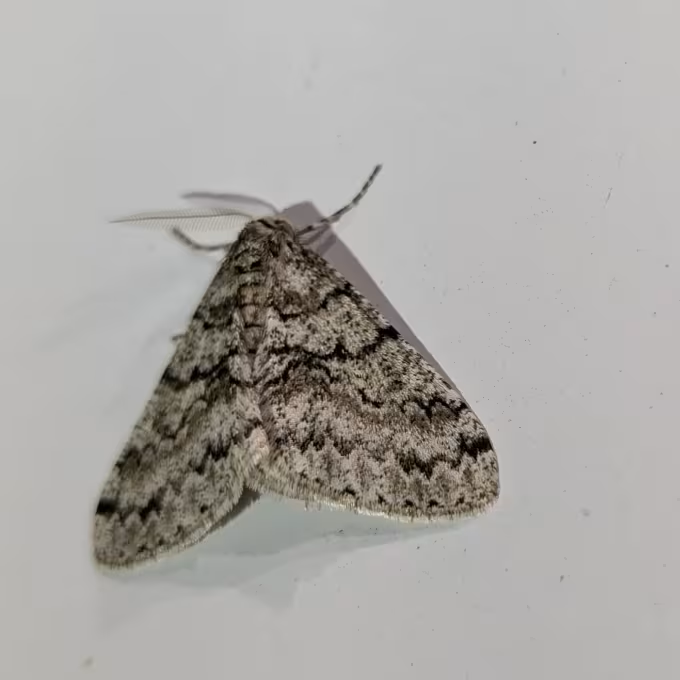
The Pale brindled beauty (Phigalia pilosaria) is a moth belonging to the family Geometridae within the order Lepidoptera. While the males possess brownish-grey wings with a span of 35-45 mm, the females are largely flightless, possessing only vestigial wings and remaining on the bark of trees.
The larvae, known as loopers due to their characteristic movement, grow to about 30-40 mm in length. They exhibit protective coloration, usually in shades of green or brown, allowing them to blend seamlessly with the foliage of their host plants.
The life cycle begins in late autumn when the adults emerge. After mating, the females deposit their eggs in crevices of tree bark. These eggs remain dormant throughout the winter, which allows the species to thrive in temperate climates.
Pupation occurs in the soil, usually at a depth of 10-15 cm. The pupae stay in the ground throughout the summer months, undergoing diapause until the cooler temperatures of autumn trigger the emergence of the adult moths.
Taxonomically, the species is a notorious defoliator. It is well-documented in agricultural and forestry literature as a pest capable of causing significant damage to broad-leaved trees if its population density spikes.
What it damages
This moth is polyphagous, meaning it feeds on a wide range of host plants. Primary agricultural targets include fruit trees such as apple, pear, plum, cherry, and apricot, where the larvae feed on both buds and young leaves.
Beyond the orchard, the larvae are frequently found on common forest trees like oak, birch, lime, and beech. Proximity to these woodland areas often increases the risk of infestation for nearby cultivated fruit crops.
Early-season damage is the most critical: the newly hatched caterpillars bore into the swelling buds. This feeding behavior destroys the fruit-bearing potential of the tree before the blossoms even have a chance to open.
As the larvae mature, they consume the leaves, often leaving behind only the tough leaf veins. This process, known as skeletonization, significantly reduces the plant's photosynthetic capacity and weakens overall tree health.
Severe and repeated defoliation can lead to stunted growth, increased susceptibility to secondary pests and diseases, and eventually the dieback of weaker branches or whole sections of the canopy.
When it appears
Adult moth activity typically peaks during November and December. Unlike most other Lepidoptera, they remain active in cold weather, often flying during temperatures that would be fatal to most other insect species.
The egg stage is the wintering phase of the insect. This adaptation ensures that the larvae are prepared to hatch precisely when the host plants begin their spring growth, maximizing the availability of fresh food.
Caterpillar emergence coincides with the green-bud phase of fruit trees. This timing is disastrous for fruit production as the larvae consume the most sensitive parts of the developing tree.
The larval feeding stage lasts approximately 4 to 6 weeks. By late spring, the caterpillars descend to the ground to pupate in the soil, completing their active growth phase before the heat of midsummer arrives.
Monitoring should therefore focus on two windows: the late autumn period to prevent egg-laying and the early spring period to intercept the caterpillars before they cause extensive foliage loss.
Signs of infestation
One of the earliest indicators of an infestation is the failure of buds to develop correctly or the appearance of deformed, ragged leaves shortly after the buds have opened.
Presence of caterpillar excrement, which appears as small dark pellets on the leaves or the ground beneath the tree canopy, is a classic sign of high larval activity in the upper branches.
In cases of heavy infestation, you may observe silk threads hanging from the branches, as the larvae often use silk to anchor themselves or move between leaves to feed during the night.
Observing the wingless females on tree trunks during late autumn is a definitive sign that a new generation of pests is about to be established for the following season.
At night, the larvae may be found feeding in the canopy. Using a flashlight after dark can reveal the caterpillars moving in their characteristic looping motion, confirming the identity of the pest.
Control measures
The installation of sticky bands (grease bands) on tree trunks in late autumn is a highly effective, non-chemical method. This traps the flightless females as they crawl up the tree to lay their eggs.
For spring control, biological insecticides containing Bacillus thuringiensis are recommended. These are effective against the larvae while remaining safe for beneficial pollinators and predators.
If population levels exceed the economic injury threshold, targeted chemical treatment with systemic or contact insecticides may be necessary, timed specifically for the bud-burst stage.
Cultural practices, such as autumn and early-spring soil cultivation beneath the tree canopy, help to expose and destroy pupae, making them vulnerable to predators and environmental factors.
Encouraging natural predators, particularly insectivorous birds like tits or robins, can significantly reduce caterpillar numbers. Bird boxes and winter feeding stations are excellent tools for managing these pests naturally.
Taxonomy
- Latin name
- Phigalia
- Order
- Lepidoptera (butterflies)
- Family
- Geometridae
- EPPO code
- PHIGSP
Discussion
No discussions yet — be the first.