
Japanese cockroach
Periplaneta japonica
Description
How to identify
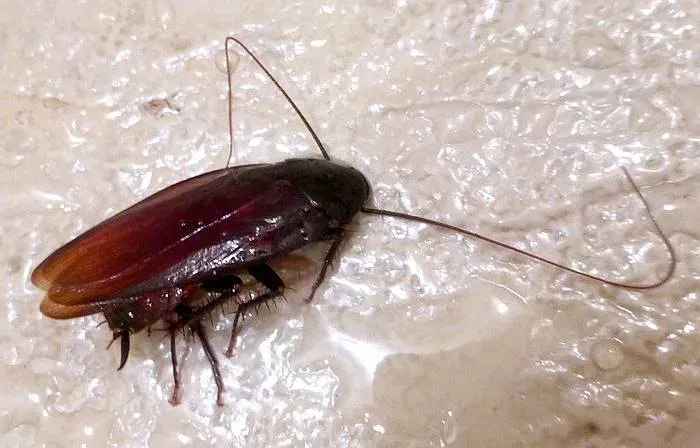
The Japanese cockroach (Periplaneta japonica) belongs to the order Blattodea, family Blattidae. It is smaller and darker than many domestic cockroach species, typically appearing dark brown or black.
This species is uniquely adapted to cold climates, making it capable of surviving outdoors during winter, unlike other common cockroach species that prefer strictly indoor environments.
The life cycle proceeds from egg to nymph and finally to adult. Females lay oothecae, or egg capsules, in moist, protected environments such as damp wood or leaf litter.
Nymphs undergo several molts as they grow. Their development rate is strongly influenced by ambient temperatures, which dictate the speed at which they reach maturity.
Adults possess functional wings and are quite agile, primarily inhabiting soil surfaces and decomposing organic matter where they find shelter and moisture.
What it damages
As a scavenger and generalist feeder, the Japanese cockroach can inadvertently become a pest in agricultural and horticultural settings by feeding on plant tissues.
They often target young seedlings, chewing on leaves and stems, which can stunt plant growth and, in severe cases, cause the death of young plants.
Fruit crops that come into contact with the ground are particularly vulnerable, as the insects may chew into the fruit, creating wounds that facilitate the entry of rot-inducing pathogens.
Root systems of young transplants can also be damaged, as the insects feed on decaying organic matter and roots in the upper soil layers, stressing the plants.
Beyond direct feeding damage, they act as mechanical vectors for various bacteria and fungi, spreading plant diseases across the garden or greenhouse.
When it appears
The Japanese cockroach begins its seasonal activity in early spring, as soon as soil temperatures provide sufficient warmth for the nymphs and adults to emerge from hibernation.
Population numbers usually peak during the summer months when high humidity and an abundance of vegetation provide ideal conditions for breeding and development.
As autumn approaches, the insects increase their feeding activity to accumulate energy reserves for the upcoming winter period in their cold-tolerant dormant state.
Their movement patterns are often dictated by moisture availability; during dry spells, they migrate towards shaded, damp areas, often bringing them into cultivated beds.
With the onset of freezing temperatures, they retreat deeper into the soil or into man-made structures, entering a state of dormancy until the following spring.
Signs of infestation
Visual identification of frass (excrement) in the form of small, dark, pepper-like spots on leaves or surrounding soil is a common early indicator of their presence.
The discovery of brown, leathery egg cases (oothecae) under mulch, rocks, or near compost piles confirms that the insects are actively reproducing on the site.
Irregular, jagged feeding damage on leaves, particularly on lower-growing plants, which occurs primarily at night, serves as another behavioral sign of their activity.
Direct sightings during night-time inspections using a flashlight in gardens or near compost heaps are the most reliable way to confirm an infestation.
Damage to the surface of roots or low-hanging vegetables, characterized by shallow feeding marks, is a frequent sign during higher population densities.
Control measures
The primary control strategy involves garden sanitation, specifically the removal of organic debris, damp wood, and excess mulch that serve as habitats for the insects.
Mechanical traps, such as sticky traps or bait stations, are highly effective at reducing local populations without the need for broad-spectrum chemical insecticides.
If chemical intervention becomes necessary, use targeted insecticides labelled for outdoor use, being careful to avoid contaminating harvestable crops or edible plant parts.
Biological control methods, including the application of entomopathogenic nematodes to the soil, can help manage the nymph population effectively.
- Regular soil cultivation to expose eggs;
- Maintaining clear ground around vegetable beds;
- Proper composting techniques to prevent insect nesting.
Taxonomy
- Latin name
- Periplaneta japonica
- Family
- Blattidae
- EPPO code
- PERIJA
Discussion
No discussions yet — be the first.