
Florida skunk cockroach
Eurycotis floridana
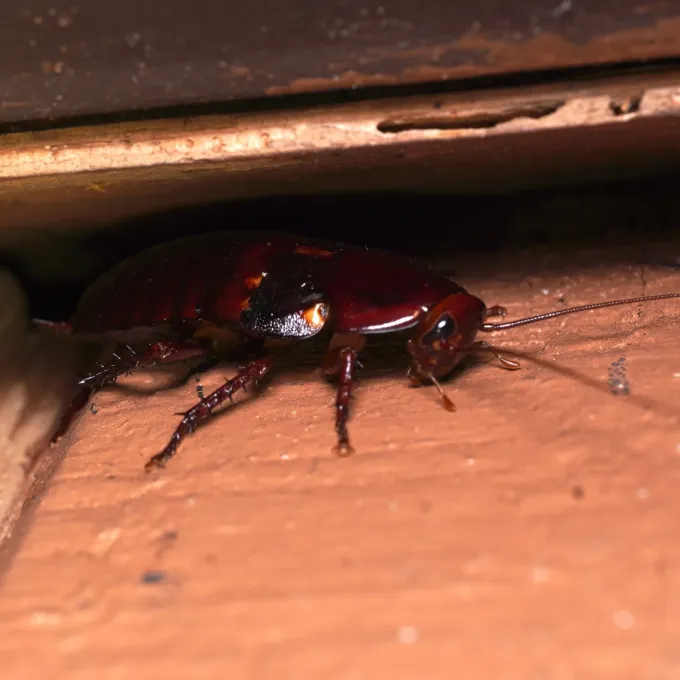
Description
How to identify
The Florida skunk cockroach (Eurycotis floridana) belongs to the order Blattodea and the family Blattidae. These are large insects, typically ranging from 30 to 40 mm in length, with a reddish-brown to black chitinous exoskeleton.
Adults possess short, vestigial wings and are incapable of flight. A distinctive trait of this species is its ability to emit a potent, foul-smelling secretion from abdominal glands when threatened, which serves as a defensive mechanism.
The life cycle consists of the egg, nymph, and adult stages. Females produce oothecae (egg cases), from which nymphs emerge. These nymphs resemble smaller versions of the adults and undergo several molts before reaching maturity.
This species thrives in warm, humid environments. They are commonly found in leaf litter, under tree bark, or within dense vegetation. In agricultural settings, they seek shelter in areas rich in organic debris.
They are primarily nocturnal insects, which often makes early detection difficult in greenhouses or nursery environments. They exhibit high tolerance to diverse environmental conditions.
What it damages
Florida skunk cockroaches are polyphagous, meaning they consume a wide variety of organic matter, including living plant tissues. They can cause significant damage to seedlings, ornamental plants, and various crops under protected cultivation.
They preferentially feed on succulent parts of plants, young shoots, and foliage, leaving irregular holes and frayed edges. This feeding behavior weakens the plant's structural integrity and diminishes its aesthetic value.
In greenhouse settings, they are particularly dangerous to young seedlings. By damaging the plant tissue, they facilitate the entry of secondary pathogens, such as fungi and bacteria, leading to rot.
The impact is exacerbated by the accumulation of insect frass, which contaminates plant surfaces, disrupts photosynthesis, and promotes the growth of mold in humid conditions.
Furthermore, these cockroaches may feed on fruits, leaving deep gouges or cavities that render the produce unmarketable and susceptible to spoilage.
Control measures
The primary control strategy involves rigorous sanitation practices. Removing plant debris, fallen leaves, and general waste is essential, as these provide both harborage and food sources for the pests.
To prevent migration into greenhouses or indoor growing areas, it is important to seal all gaps, cracks, and structural openings. Installing fine-mesh screens on ventilation openings can also serve as an effective barrier.
Glue traps baited with attractants are useful for monitoring population densities and providing a non-toxic method for reducing the number of adult cockroaches in a specific area.
In cases of severe infestation, targeted application of contact or stomach-action insecticides, approved for use on specific crops, may be necessary to manage the population effectively.
- Conduct routine inspections during night hours.
- Deploy insecticide-based bait stations or gels.
- Modify environmental conditions to reduce humidity.
- Introduce biological control agents like entomopathogenic fungi.
Taxonomy
- Latin name
- Eurycotis floridana
- Family
- Blattidae
- EPPO code
- EURCFL
Discussion
No discussions yet — be the first.