
Brown cockroach
Periplaneta brunnea
Description
How to identify
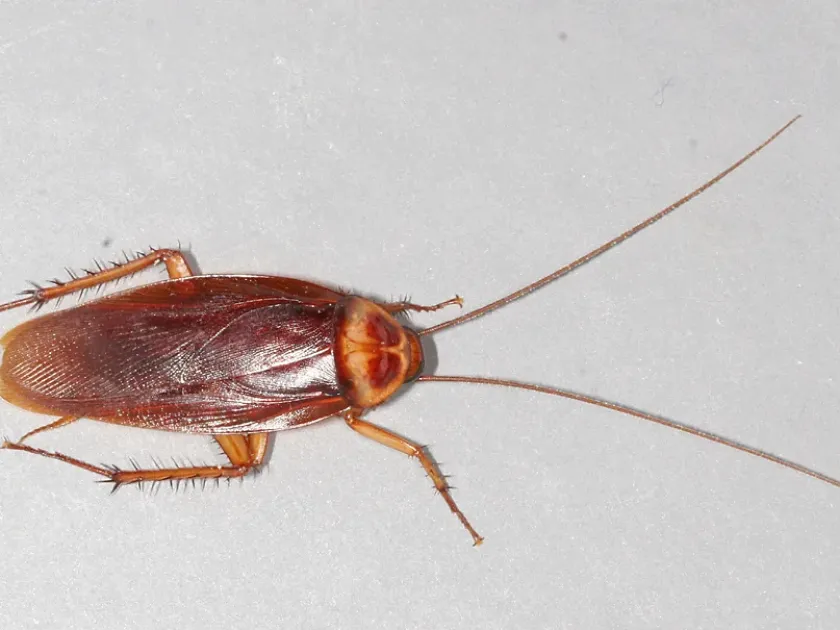
The brown cockroach (Periplaneta brunnea) is a significant pest belonging to the family Blattidae, characterized by its reddish-brown color and adult body length of 25–40 mm.
Morphologically, this species is very similar to the American cockroach, but it can be distinguished by specific anatomical features of the male genitalia and cerci structure.
These insects possess well-developed wings, enabling them to fly short distances, which facilitates their movement between plants and across different sections of a greenhouse.
The life cycle proceeds through gradual metamorphosis: egg, nymph, and adult. The oothecae are particularly durable, dark, and resistant to environmental stress.
They are nocturnal creatures that thrive in warm, humid microclimates, making greenhouse environments ideal for their sustained reproduction and survival.
What it damages
As generalist feeders, brown cockroaches cause extensive damage to various greenhouse crops, including flowers, vegetables, and seedlings.
They feed on plant foliage, often leaving irregular holes, and can cause severe defoliation if the population density is allowed to increase unchecked.
Young nymphs are particularly harmful to seedlings, as they consume delicate tissues, often destroying the apical buds and leading to plant stunting or total death.
Beyond direct feeding, they contaminate crops with their excrement and secretions, rendering products unmarketable and lowering the overall quality of the harvest.
They are also vectors for various pathogens, facilitating the spread of fungal and bacterial infections within the greenhouse by transferring spores via their legs.
When it appears
Brown cockroaches are year-round pests in controlled greenhouse environments, as the climate mimics tropical conditions necessary for their continuous growth.
Peak activity generally occurs during warmer months when elevated temperatures within the facility accelerate their reproductive cycles and developmental speed.
During colder seasons, they migrate towards heating systems, steam pipes, and electrical panels to maintain the warmth required for their metabolic processes.
The presence of organic debris and moisture within the growing area supports year-round breeding, making it difficult to eliminate them without rigorous management.
Invasive spread typically occurs through the movement of crates, gardening tools, or substrate materials contaminated with oothecae from infested areas.
Signs of infestation
The most visible sign of an infestation is the accumulation of dark, pellet-like excrement on the surfaces of leaves, stems, and greenhouse equipment.
Ragged edges on leaves and chewed flower buds serve as indicators of cockroach feeding activity, often confused with damage caused by larger insects.
The discovery of cast-off skins (exuviae) left behind after nymphal molting phases confirms that a breeding population is established within the facility.
Sighting adult insects during nighttime inspections with a flashlight is the most reliable method for confirming the presence and location of the pests.
A faint, musty odor caused by aggregation pheromones may become noticeable if the cockroach population reaches high levels, signaling an urgent need for control.
Control measures
Effective management requires strict sanitation practices, including the removal of dead plant material and the elimination of standing water sources.
Sticky traps and bait stations are highly effective for monitoring and suppressing populations without the risk of widespread chemical contamination.
Implementing exclusion strategies, such as sealing gaps in structures and using fine mesh on vents, prevents the entry of cockroaches from external environments.
- Application of entomopathogenic fungi as a biological control agent.
- Regular cleaning of drainage systems to remove potential food sources.
- Proper inspection of all incoming materials to prevent the introduction of eggs.
When necessary, insecticides registered for greenhouse use should be applied directly to harborage sites rather than broadcasting over the entire crop.
Taxonomy
- Latin name
- Periplaneta brunnea
- Family
- Blattidae
- EPPO code
- PERIBR
Discussion
No discussions yet — be the first.