
American cockroach
Periplaneta
Description
How to identify
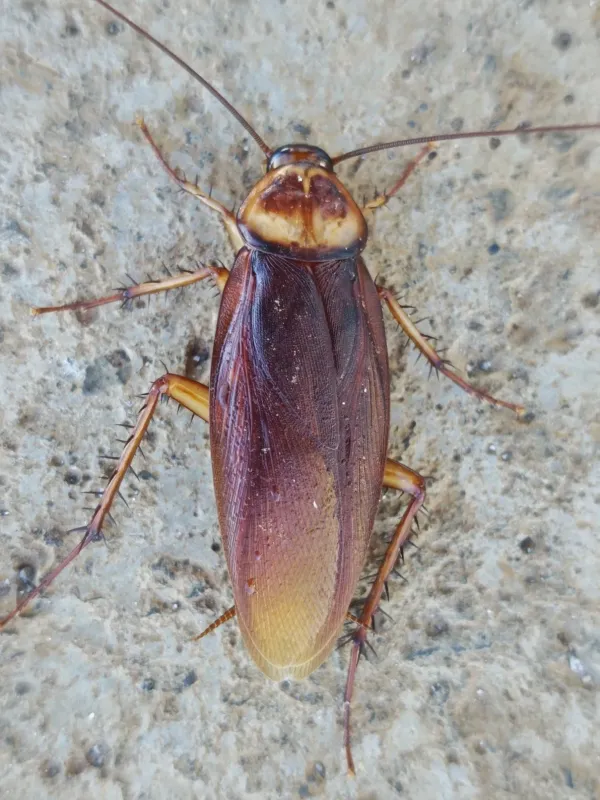
The American cockroach (Periplaneta americana) belongs to the order Blattodea and the family Blattidae. It is a large insect, with body lengths typically ranging from 35 to 50 mm.
Adult coloration ranges from reddish-brown to a deep chocolate brown. A distinctive feature is the pale yellow margin along the edge of the pronotum.
Both sexes possess well-developed wings, enabling them to make short flights, especially when ambient temperatures are high.
Nymphs go through several developmental stages, increasing in size as they molt, but they remain wingless. They resemble adults in appearance but are lighter in color.
The life cycle involves hemimetabolous development: egg, nymph, and adult. Females produce oothecae — tough capsules containing up to 16 eggs, which are deposited in secluded areas.
What it damages
This species is an omnivorous pest that poses a serious threat to greenhouse environments, nurseries, and ornamental plants.
In greenhouses, these roaches damage tender plant tissues by feeding on leaf epidermis and chewing holes in young stems.
They are particularly dangerous for seedlings, as they can destroy young shoots entirely, leading to the loss of planting stock.
Beyond direct feeding, these pests contaminate soil and plant surfaces with their feces, creating ideal conditions for secondary fungal infections.
Additionally, the American cockroach feeds on organic debris, seeds, and compost piles, which accelerates population growth within facility structures.
Signs of infestation
The first sign of an infestation is the observation of the insects themselves, which are predominantly active during the night.
The presence of the pest is indicated by fecal smears and small black droppings, which resemble ground pepper, found near harborages.
The discovery of brown, purse-shaped oothecae glued to the underside of tools, pots, or greenhouse structures indicates active breeding sites.
Irregular leaf edges and "skeletonized" tissues often signal the nocturnal feeding activity of large roach populations.
A specific, unpleasant musky odor produced by the insects' glands becomes noticeable when the population density in an area is high.
Control measures
Controlling the American cockroach requires an integrated approach that combines strict sanitation with chemical and mechanical methods.
Eliminating sources of moisture and food waste is essential, as high humidity is a critical factor for the survival of the population.
For plant protection, contact and stomach insecticides are used, but their application within greenhouses must be strictly regulated and monitored.
- Sealing cracks and crevices in structures to prevent insect migration.
- Using sticky traps and bait stations with attractants for population monitoring.
- Regular disinfection of greenhouse work surfaces and equipment.
- Utilization of biological control agents, such as entomopathogenic fungi.
It is vital to conduct regular inspections of storage areas and greenhouses to detect the pest at early stages before it spreads to cultivated crops.
Taxonomy
- Latin name
- Periplaneta
- Family
- Blattidae
- EPPO code
- PERISP
Discussion
No discussions yet — be the first.