
Common Wave moth
Peribatodes rhomboidaria
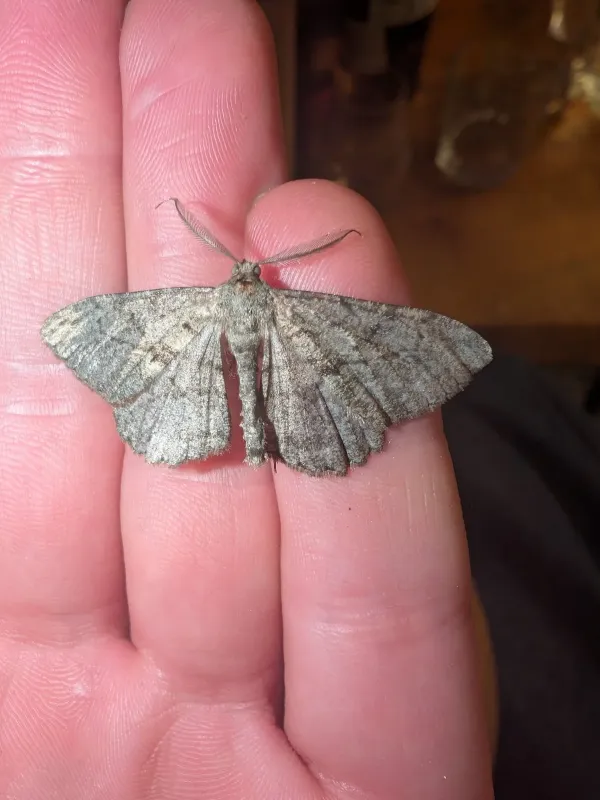
Description
How to identify
The Common Wave moth (Peribatodes rhomboidaria) is a member of the Geometridae family, known for its cryptic appearance which provides excellent camouflage.
Adult moths have a wingspan of approximately 35–45 mm, with wing colors ranging from pale greyish-brown to dark brown, often featuring a distinct rhomboid mark.
The larvae are classic "inchworms," characterized by their unique looping movement due to the reduction of prolegs along the middle of their slender bodies.
Pupae are shiny and dark brown, typically housed in loose cocoons constructed within tree bark crevices or among plant debris on the soil surface.
Taxonomically, this species is a generalist, capable of colonizing a wide variety of woody plants, which facilitates its spread across diverse garden habitats.
What it damages
Larvae cause significant damage by feeding on leaves, buds, and young shoots of various horticultural crops including apple, plum, and grapevines.
The feeding habit involves consuming leaf tissue, often leaving behind skeletonized leaves or irregular notches along the margins of the foliage.
By targeting developing buds in early spring, larvae can stunt plant growth and cause substantial losses in fruit production for the current season.
Apart from cultivated fruit trees, the pest is frequently found on hedgerows and ornamental shrubs like ivy and privet, serving as reservoirs for migration.
Defoliation caused by high populations weakens the host plant, making it more susceptible to environmental stress, secondary pests, and fungal diseases.
When it appears
Adult moths are nocturnal and are typically observed flying from mid-summer through early autumn, depending on local geographic conditions and temperature.
The species overwinters primarily as a larva, finding shelter in bark crevices or among leaf litter to survive cold winter temperatures until early spring.
Activity resumes as soon as host plants initiate spring growth; larvae become active feeders, targeting emerging buds and young leaf clusters immediately.
Pupation generally occurs in late spring or early summer, completing the life cycle before the emergence of the next generation of adults.
Monitoring for the larvae is most critical during the vegetative growth phase, as this is when their consumption rate is highest and damage is most visible.
Signs of infestation
Early signs include tattered leaf edges and small, irregular holes in the foliage, indicating that early-instar larvae have been feeding on the tissue.
Due to their remarkable camouflage, larvae are rarely seen during the day, as they remain immobile and resemble dry twigs attached to the plant stems.
Nighttime observation with a flashlight may reveal the larvae actively feeding on the foliage, often accompanied by frass deposits on the leaves below.
In vineyards, failed or damaged buds that fail to develop into shoots are clear indicators of early larval infestation during the start of the growing season.
Severe infestations are marked by significant thinning of the canopy and visible webbing used by the caterpillars to anchor themselves on twigs or leaves.
Control measures
Cultural control practices include cleaning tree trunks of dead, loose bark to remove overwintering sites and maintaining clean soil beneath the canopy.
Biological control using Bacillus thuringiensis-based sprays is highly recommended as it targets the larvae effectively while preserving beneficial predatory insects.
Chemical applications should be timed to coincide with the period of active larval feeding and are best applied in the evening for maximum effectiveness.
Encouraging local populations of birds and insectivorous predators serves as a natural barrier to prevent large-scale outbreaks within orchards and gardens.
Implementing light or pheromone traps can help agronomists monitor the flight activity of adult moths, allowing for precise timing of protective interventions.
Taxonomy
- Latin name
- Peribatodes rhomboidaria
- Order
- Lepidoptera (butterflies)
- Family
- Geometridae
- EPPO code
- BOARRH
Discussion
No discussions yet — be the first.