
Willow beauty
Peribatodes
Description
How to identify
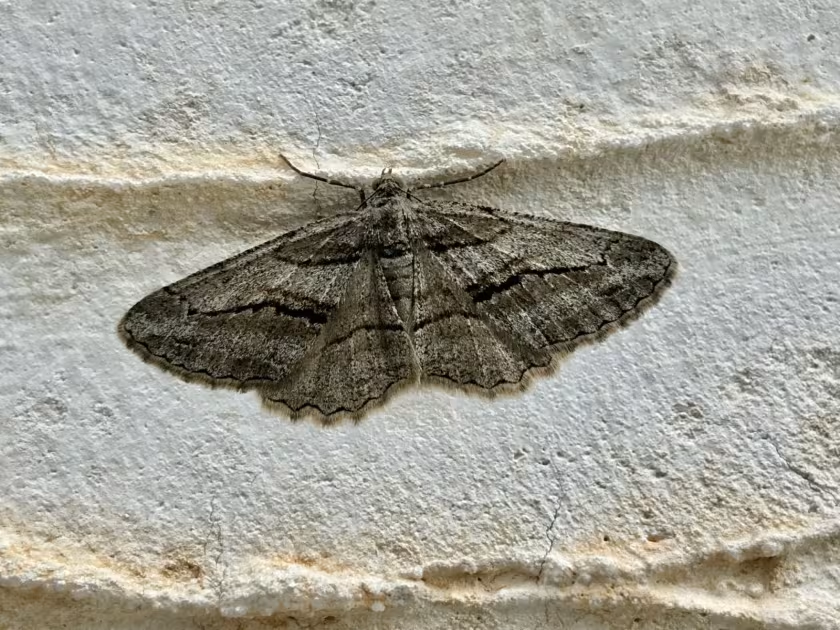
Willow beauty (Peribatodes) is a genus of moths belonging to the family Geometridae. Adult moths are typically medium-sized with greyish-brown patterns, which provide excellent camouflage against tree bark.
The larvae, known as caterpillars, exhibit the characteristic looping movement of the Geometridae family, often referred to as "inchworms." Their bodies are specialized to mimic twigs, making them highly inconspicuous.
Caterpillar coloration ranges from green to brown, often featuring mottled patterns that blend seamlessly with the twigs and branches of their host plants. This mimicry is a primary defense mechanism against avian predators.
Pupation usually occurs in the soil or within crevices of tree bark. The pupae are well-protected by hard casings, allowing them to successfully overwinter even in areas with significant seasonal temperature fluctuations.
The life cycle involves complete metamorphosis, consisting of egg, larval, pupal, and adult stages. Depending on the species and environmental conditions, there may be one or more generations per growing season.
What it damages
Peribatodes species are polyphagous, attacking a wide range of deciduous trees and shrubs. They are commonly found in both woodland areas and commercial fruit orchards, including apple, pear, and stone fruit trees.
The primary damage is caused by the caterpillars feeding on foliage and buds. Heavy infestations can lead to significant defoliation, which severely stresses the plant and inhibits its photosynthetic capacity.
Prolonged feeding reduces the tree's overall vigor, making it more susceptible to environmental stress and secondary infections. In orchards, this damage often translates to lower fruit yield and quality.
Young saplings in nurseries are particularly vulnerable, as feeding on terminal buds can cause stunted or distorted growth. This compromises the structural integrity and aesthetic value of the trees.
In forest stands, increased populations of Peribatodes can cause stress to trees already weakened by drought or other factors, contributing to the overall decline of the health of the stand.
Signs of infestation
The most immediate sign of an infestation is the presence of uneven leaf margins where caterpillars have been feeding. They typically start eating from the edge of the leaf inward toward the midrib.
Small, dark, pellet-like droppings (frass) found on leaves or silk webbing near the feeding site are clear indicators of larval presence. These droppings are often the most reliable clue for early detection.
Identifying the caterpillars themselves can be challenging because they often remain motionless during the day to mimic twigs. Careful inspection of twigs and branches is necessary for accurate diagnosis.
Failure of buds to bloom or the appearance of hollowed-out buds in early spring can indicate early-season activity. This is particularly destructive as it affects the plant's potential for new growth.
In severe cases, caterpillars may scrape the bark of young shoots, leaving scars that may serve as entry points for bacterial or fungal pathogens. These scars are visible during winter pruning.
Control measures
Controlling Willow beauty involves an integrated pest management (IPM) approach that focuses on minimizing population density before it reaches economic injury levels. Regular monitoring is essential.
Cultural practices include disturbing the soil beneath trees in late autumn to expose pupae to frost and predators. Maintaining general orchard hygiene by removing deadwood and debris is also beneficial.
Biological control involves utilizing natural predators such as birds and parasitic wasps, or applying biological insecticides based on Bacillus thuringiensis, which effectively targets caterpillars while sparing beneficial insects.
Chemical control should be used judiciously, applying targeted insecticides when monitoring confirms that the pest population has crossed the threshold. Always follow local regulations and label instructions.
- Deploying light traps to monitor adult moth activity.
- Using sticky bands on tree trunks to trap migrating larvae.
- Encouraging natural biodiversity to support pest-controlling organisms.
Taxonomy
- Latin name
- Peribatodes
- Order
- Lepidoptera (butterflies)
- Family
- Geometridae
- EPPO code
- PERBSP
Discussion
No discussions yet — be the first.