
Two-toothed door snail
Perforatella bidentata
Description
How to identify
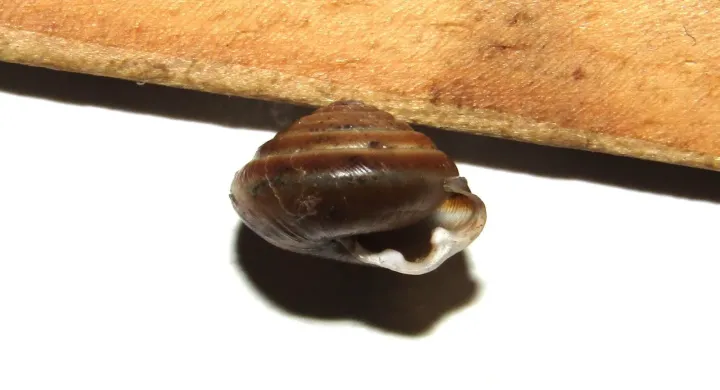
The Two-toothed door snail (Perforatella bidentata) belongs to the phylum Mollusca, class Gastropoda, and family Hygromiidae. It is a small land snail with a rounded-conical shell, typically measuring 10-12 millimeters in diameter.
The shell color ranges from yellowish-horn to brown, and the surface is characterized by fine radial striations. The species is named for the two prominent white tooth-like projections located on the aperture of the shell.
The soft body of the mollusk is usually grey or light brown. Like other gastropods, it relies on a moist environment to maintain body functions, including respiration and movement across surfaces.
Unlike large slugs, these snails lead a relatively secretive lifestyle, usually sheltering in leaf litter, dense vegetation, or under stones during the daylight hours to avoid desiccation.
Due to their small size, they are often overlooked during routine inspections. Agronomists should focus on the underside of leaves and the soil surface near the base of plants during early morning hours.
What it damages
Perforatella bidentata is a polyphagous pest that feeds on a variety of plants in humid environments. It poses a significant threat to young vegetable seedlings, small fruits, and delicate ornamental flowers.
Garden crops such as lettuce, cabbage, carrots, and various leafy greens are particularly susceptible. The snails consume tender tissues, which stunts plant growth and reduces overall vitality.
In strawberry patches, these snails can cause extensive damage by feeding on both the foliage and the ripening fruit. This activity directly reduces the market quality and commercial value of the harvest.
Besides physical feeding damage, the presence of these snails results in slime trails that deface produce. These trails can also serve as vectors for secondary bacterial or fungal infections.
In cases of high infestation, entire stands of seedlings can be decimated. Since these snails reproduce relatively quickly in favorable conditions, they can cause localized destruction that is difficult to manage without prompt action.
When it appears
The life cycle and activity of Perforatella bidentata are highly dependent on temperature and humidity levels. Their active season generally begins in early spring as soon as temperatures rise above freezing.
Peak activity is observed during summer months, especially after heavy rainfall or in persistently moist, shady microclimates. Hot, dry weather forces the snails into inactivity, leading them to hide deep in the soil or under organic debris.
Reproduction occurs throughout the warm months. Eggs are typically laid in small clusters in damp soil, where they are protected from environmental stress until they hatch into miniature versions of the adults.
As autumn approaches and temperatures drop, the snails prepare for hibernation. They seek out sheltered sites, including rock crevices, decaying logs, or leaf litter, to survive the cold winter months.
The life cycle involves an egg stage, a juvenile stage, and an adult stage. Their ability to survive harsh conditions in sheltered micro-habitats ensures that populations can quickly rebound during the following growing season.
Signs of infestation
The most common sign of infestation is the presence of irregular, ragged holes in the leaves of host plants. Unlike insect damage, which may have clean-cut or symmetrical patterns, snail feeding looks messy and uneven.
A definitive indicator of their presence is the silver, dried-out slime trail left behind on leaves, stems, or the surrounding soil. These tracks are highly characteristic of gastropod activity.
In the early morning, one can often find the snails themselves hiding in the dense foliage at the base of the plant. They are most easily detected when the morning dew is still present on the leaves.
Affected tissues often show signs of secondary decay. This is caused by the pathogens introduced via the snail's mouthparts, leading to brown or necrotic patches on the leaves.
Stunted seedling growth and the total loss of the growing point are severe signs indicating that a significant population of these snails is currently feeding on the crop.
Control measures
Integrated pest management begins with cultural practices, such as removing weeds and garden debris. Eliminating these hiding spots significantly reduces the snails' ability to thrive in the growing area.
Proper irrigation management is crucial; switching to drip irrigation can help keep the foliage and the soil surface dry, making the environment much less hospitable for mollusks.
Physical barriers like crushed eggshells, gravel, or wood ash spread around the base of vulnerable plants can deter movement, as these abrasive surfaces are difficult for snails to cross.
Chemical control using molluscicides, such as those containing iron phosphate or metaldehyde, can be effective in high-pressure situations. Always apply these according to local regulations and safety guidelines.
Biological controls include encouraging natural predators such as toads, frogs, and hedgehogs. Furthermore, simple beer or fermenting juice traps can be highly effective for monitoring and controlling snail numbers on a small scale.
Taxonomy
- Latin name
- Perforatella bidentata
- Order
- Molluscs
- Family
- Hygromiidae
- EPPO code
- PERFBI
Discussion
No discussions yet — be the first.